Start with what will stay
A sofa can look like the obvious starting point for a living room, but it is easier to choose its color after taking stock of what you are keeping. Look at the floor, walls, curtains, and any large furniture that is unlikely to change soon. You do not need to match these pieces. You do need to decide whether the sofa should blend into their overall palette or provide a deliberate contrast.
If the room already has several strong colors, a quieter sofa may give them space to work together. If the surrounding surfaces are restrained, the sofa can carry more color without making the room feel crowded. Pay particular attention to the floor and the space directly behind the sofa: those are the surfaces you will see beside its upholstery most often.
Decide how much attention the sofa should attract
A sofa takes up a substantial area, so even a muted color can have a strong effect. For a settled, continuous look, choose a color close in depth to a nearby wall or large rug, while allowing some difference in tone or texture. For a clearer focal point, choose upholstery that stands apart from its background. A dark sofa against a pale wall, for example, will have a more defined outline than two similarly toned surfaces.
Think about the view from the doorway as well as from your favorite seat. If the sofa is the first thing you see, its color will help set the room’s mood. If it sits among bookcases, art, or patterned textiles, a less assertive color may make those elements easier to enjoy. Neither approach is inherently safer; the useful choice is the one that gives the room a clear visual priority.
Judge the color on fabric, not on a screen
Upholstery color is affected by weave, pile, and texture. A flat, tightly woven fabric can look more uniform than a nubby one in the same named shade. Velvet and other fabrics with a directional surface may appear lighter or darker as the light or viewing angle changes. This is why a color name or product photograph is not enough to judge how a sofa will look at home.
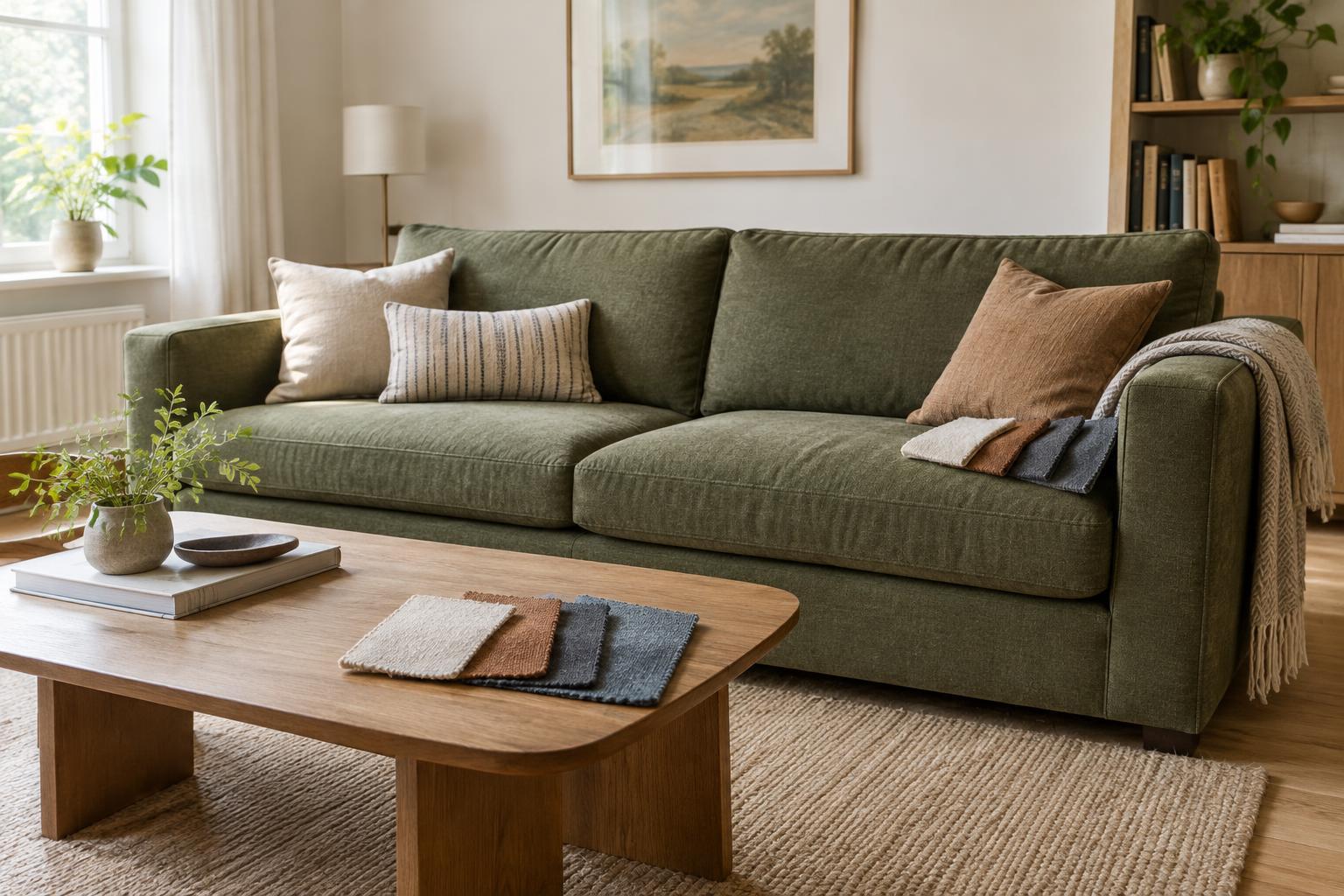
If samples are available, place them where the sofa will sit rather than holding them under a bright shop light. View them beside the wall and floor in daylight and after your usual lamps are on. Move a sample from an open spot into a shaded corner, too. You are looking for a color you still like across ordinary conditions, not one that looks perfect for a few minutes at a particular time of day.
Consider upkeep without assuming dark means easy
The best color for everyday use depends partly on what tends to land on the sofa. Very pale upholstery may show dark marks readily, while very dark, flat fabric can make lint, dust, and light-colored pet hair conspicuous. A midtone or gently varied weave may be more forgiving of small visual changes, though the result depends on the fabric and the household.
Color should not replace a check of the upholstery itself. Ask whether covers can be removed, read the maker’s care instructions, and consider how the fabric feels against skin. If possible, take a sample home long enough to see how it handles ordinary contact. A shade that looks appealing but demands more care than you want to give is unlikely to feel like a good choice over time.
Make the final choice with a simple room test
Before ordering, narrow your options to two or three colors and describe what each would do in the room. One might connect the sofa to the curtains; another might create contrast with the wall; a third might leave more freedom to change cushions and throws. This is more useful than trying to find a color that works with every possible future scheme.
Then check each option against three questions: Does it look good beside the fixed elements? Does it suit the amount of attention you want the sofa to draw? Can you live with its likely upkeep? If an option answers all three, it is a stronger candidate than a shade chosen because it is fashionable or looks striking in isolation. Smaller accessories can change later; the sofa color should make the room feel comfortable to use now.