Start with the tasks your hands need to do
A glove can feel comfortable in the shop yet become inconvenient the moment you reach for keys. Before comparing materials, picture a typical outing: carrying a bag, holding a railing, opening a door, or checking a phone. If you often need precise finger movement, look for a close-fitting pair rather than a bulky one. If you mainly want warmth on a walk, you may be happier trading some dexterity for thicker insulation.
Think about how long you spend outside, too. Gloves for a brief trip from home to a car have a different job from gloves worn through an extended walk. One pair does not have to cover every situation. A lighter pair for errands and a warmer pair for colder outings may be more useful than a single compromise pair.
Check the fit with your hands in motion
To judge fit, put on both gloves and make a fist, spread your fingers, and pick up a small object. Your fingertips should reach near the ends without being pressed tightly against them. Excess fabric at the tips can make simple tasks awkward, while a tight glove may restrict movement. Check the space between your thumb and index finger as well: if the material pulls there when you grip something, the glove may be too short or narrow for your hand.
Pay attention to the cuff as you bend your wrist. A short cuff can leave a gap between glove and sleeve; a longer one may tuck neatly under or over a coat, depending on its shape. Neither is automatically better. If possible, try gloves with the outerwear you usually wear. A pair that stays comfortable with your coat sleeves is more likely to make it into your daily routine.
Match materials and grip to the conditions
Soft knit gloves are flexible and easy to carry, but an open knit may let wind through. Fleece can feel warm without much weight, though its surface and thickness vary. Leather or coated fabrics may help block wind, but construction matters: seams, linings, and openings can change how a glove feels. For damp conditions, check the product’s stated features rather than assuming that a dense-looking fabric will keep water out.
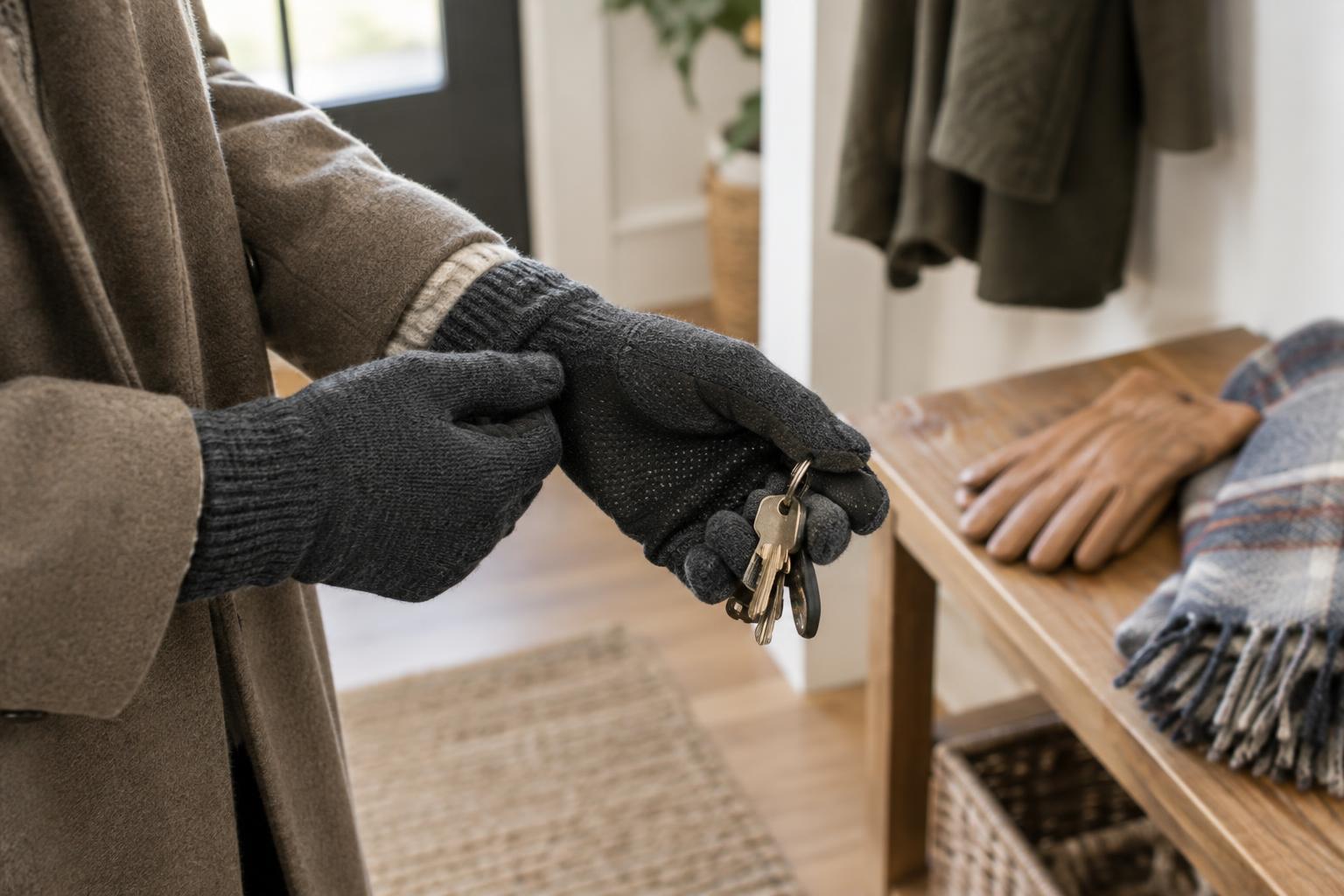
Grip is easy to overlook until you are carrying a smooth cup or holding a bike handle. Examine the palm and fingers for a texture that suits your tasks, then test it on an everyday object if you can. Touchscreen-compatible fingertips can be convenient, but they are worth trying on your own device before relying on them. If screen use is central to your day, a glove that fits precisely at the fingertip may work better than one with extra material there.
Choose a pair you can maintain and find
Care instructions deserve a glance before purchase. A glove you can clean according to its label, without changing your routine much, is easier to keep in regular use. Consider color in practical terms as well as style: pale gloves may show marks sooner, while a visible color can be easier to spot in a crowded bag. If a pair has a lining, check whether it stays in place when you pull your hand out.
Finally, decide where the gloves will live between outings. A dedicated coat pocket, bag compartment, or entryway spot makes it less likely that one glove disappears when you need it. When comparing two pairs, choose the one that meets your most common needs rather than the one with the longest feature list. Comfortable fit, appropriate warmth, and dependable grip will usually matter more than a feature you rarely use.