Start with the wardrobe, not the accessory
Before choosing a scarf, pull out the outer layers and tops you wear most. A wool coat, a denim jacket, a plain knit, and a work shirt all create different opportunities. Notice which necklines feel unfinished, which coats already have a strong texture, and whether you usually leave the house carrying a bag that competes for attention. Taking this small inventory is more useful than imagining an outfit around a single product photograph.
UniqueYou’s positioning makes particular sense through that lens: elegant, approachable accessories chosen to work with a woman’s existing wardrobe. If your clothes are mostly navy, charcoal, and cream, a scarf can provide the one warm note that keeps the combination from feeling flat. If your clothes already contain several prints, a calm solid color may do more work. An accessory should have a job in at least a few outfits you already enjoy, rather than requiring several new purchases to justify it.
Understand what the different shapes actually do
A long scarf offers room to drape, loop, or tuck the ends into a coat. Its length matters as much as its color: too much fabric can overwhelm a short jacket, while a narrow scarf may disappear against a broad collar. A shawl or wrap covers more of the shoulders and can be useful over a dress or a lighter layer when you want coverage without changing the whole outfit. A square scarf invites smaller, neater gestures, from a loose neck knot to a fold worn near the hair.
UniqueYou includes women’s scarves, shawls, wraps, and square scarves, so begin with the form you will realistically use. Picture putting it on while leaving home, sitting down for a meal, and taking off your coat. Will you keep adjusting it? Do you like a tidy knot, or would you rather throw a larger piece over your shoulders? These ordinary movements are better selection criteria than a styling idea you would never repeat.
Read material descriptions carefully
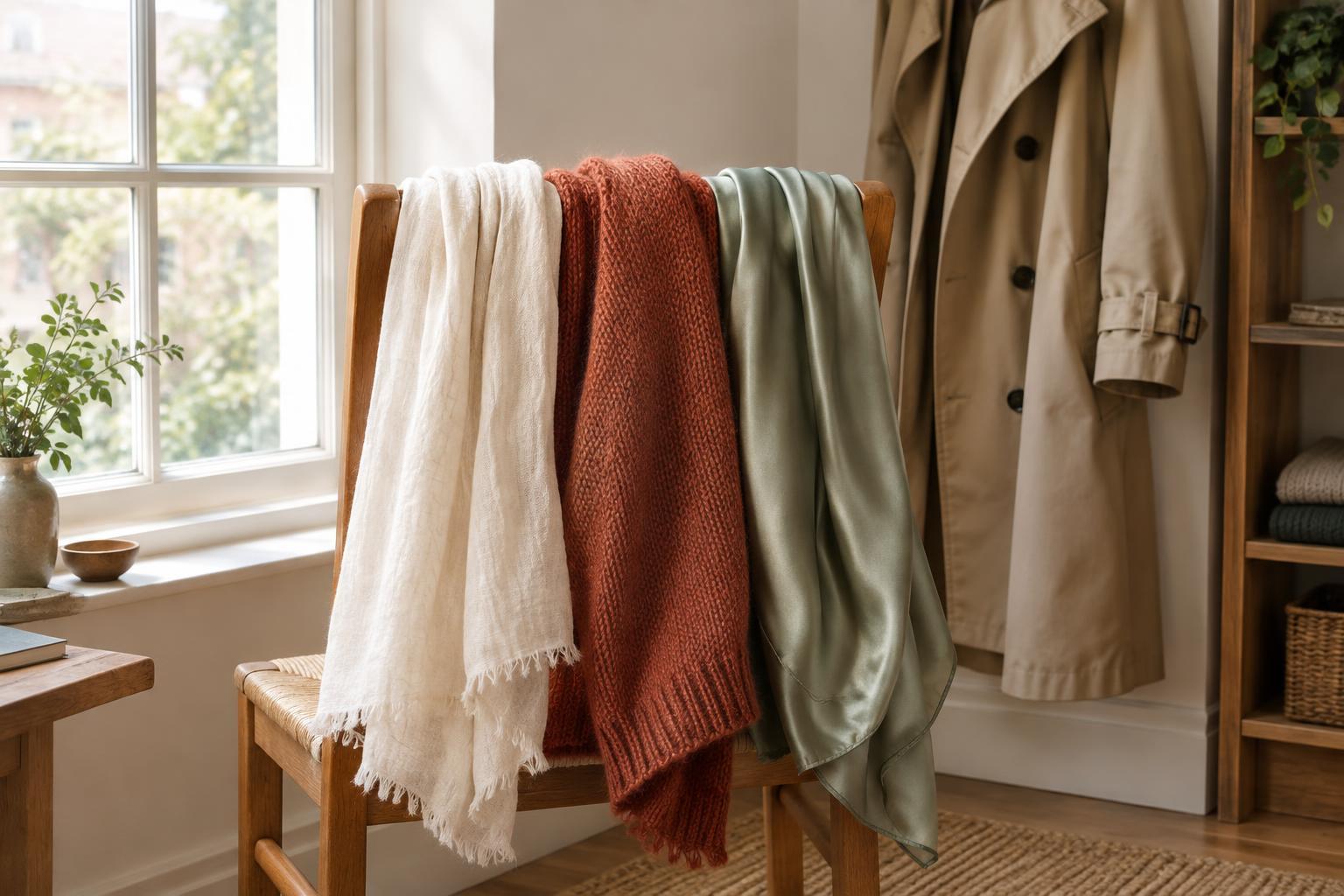
Material influences warmth, weight, drape, and how a scarf feels against skin. Silk can suit a smaller, fluid accent; wool is worth considering when warmth is the priority; cashmere categories may appeal when you are looking for a soft-looking winter layer. Those are starting points for comparison, not guarantees about every item. UniqueYou has silk, cashmere, and wool categories, but composition varies by product, so check the individual description rather than assuming that a category name describes the entire fabric.
If you are sensitive to texture, think about where the cloth will sit. A scarf worn close to the neck needs a different feel from a wrap that rests over a jacket. Check dimensions and care information when available, especially for a gift or a piece you expect to wear frequently. A beautiful accessory that does not suit your tolerance for upkeep is less practical than one you can fold, store, and wear with confidence on an ordinary morning.
Use color as a connection, not a rule
The easiest color choices often repeat something already present: the brown in a bag, the blue in a shirt, or a muted tone in a patterned dress. Repetition creates a relationship without demanding an exact match. A scarf can also provide deliberate contrast. Red beside a dark coat feels different from red beside a bright jacket, so test the pairing against the clothes you actually own rather than judging the color in isolation.
Pay attention to where the scarf sits. Near the face, a color can affect the impression of the entire outfit; farther down over a coat, it reads more as part of the outer layer. Beige, white, black, and brown are not automatically safer than saturated colors: their usefulness depends on your wardrobe and the amount of contrast you like. If you tend to wear quiet interiors-inspired tones such as taupe, cream, and warm gray, one stronger accessory may be more versatile than a second nearly identical neutral.
Style it for the pace of a real day
For a quick departure, try one uncomplicated method and repeat it until it feels natural. Let a long scarf hang evenly under an open coat, fold a square scarf into a loose band, or rest a wrap over both shoulders without arranging an elaborate knot. Each approach changes the outline of an outfit. The useful test is whether it stays comfortable when you walk, carry groceries, or move between indoors and outdoors.
A scarf can also bridge different parts of the day. The same simple knit and trousers may feel more finished for lunch with a small square scarf, while a generous wrap can sit beside you when a room feels cool. Rather than collecting styling tricks, find two or three combinations that work with your usual jackets and necklines. That small repertoire makes an accessory easy to use instead of something reserved for an imagined special occasion.
Choose gifts with fewer guesses
A scarf can be a thoughtful gift because it does not require the same fit judgment as a tailored garment, but it still calls for observation. Look at the recipient’s existing coats, preferred jewelry, and tolerance for prints. Do they wear colors close to the face, or do they keep accessories subdued? Is there a favorite outer layer that needs a warmer companion? A gift feels more personal when it connects to something the recipient already chooses for herself.
When you do not know a precise preference, consider a shape with several wearing options and a color that relates to two or three familiar outfits. Check the listed dimensions, fiber composition, and care details before deciding. Avoid making a gift depend on an assumption that every silk-category item has the same feel or every winter scarf has the same warmth. If you are uncertain, the most useful question is not ‘Is this impressive?’ but ‘Can I picture her reaching for it next week?’
Make room for an accessory at home
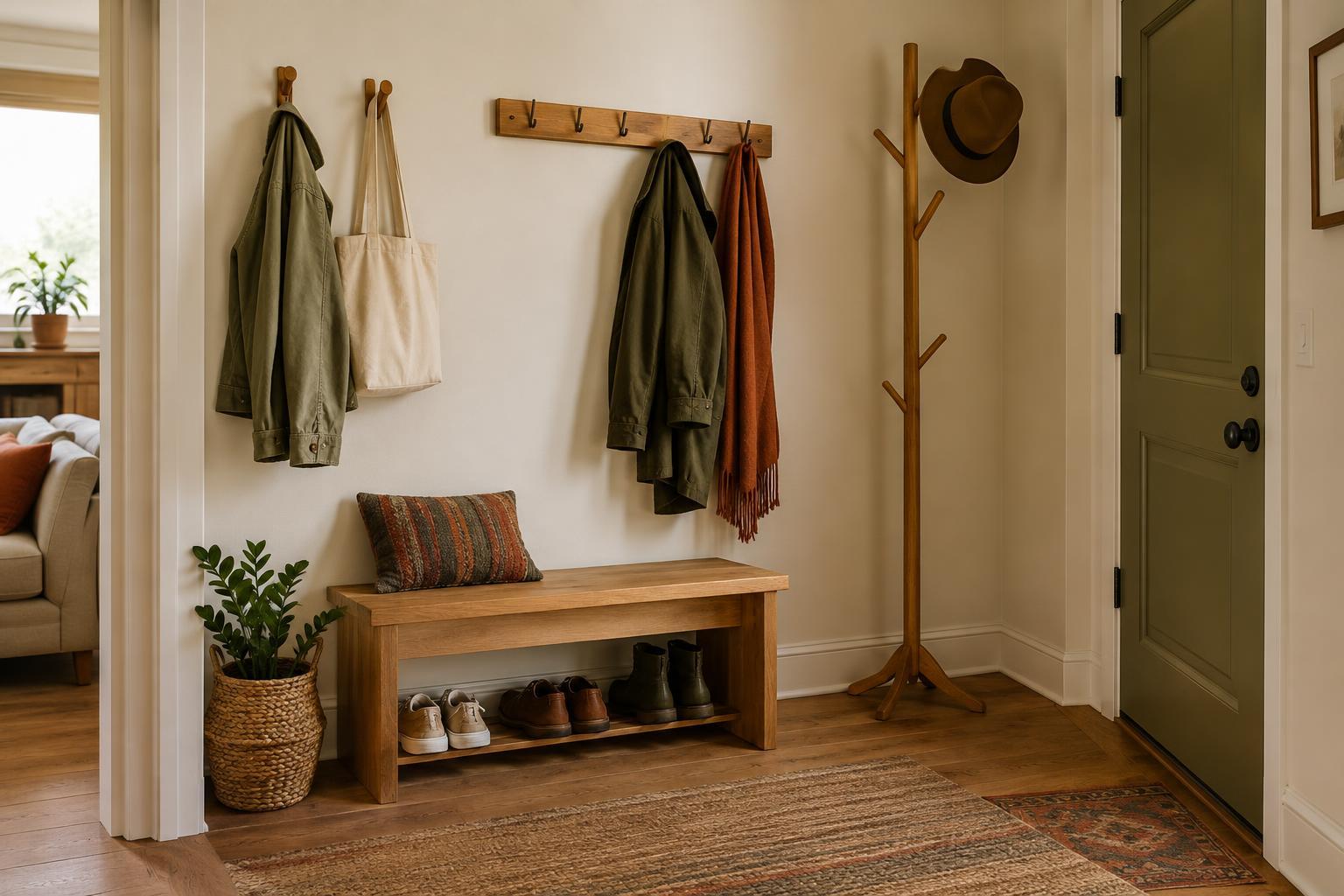
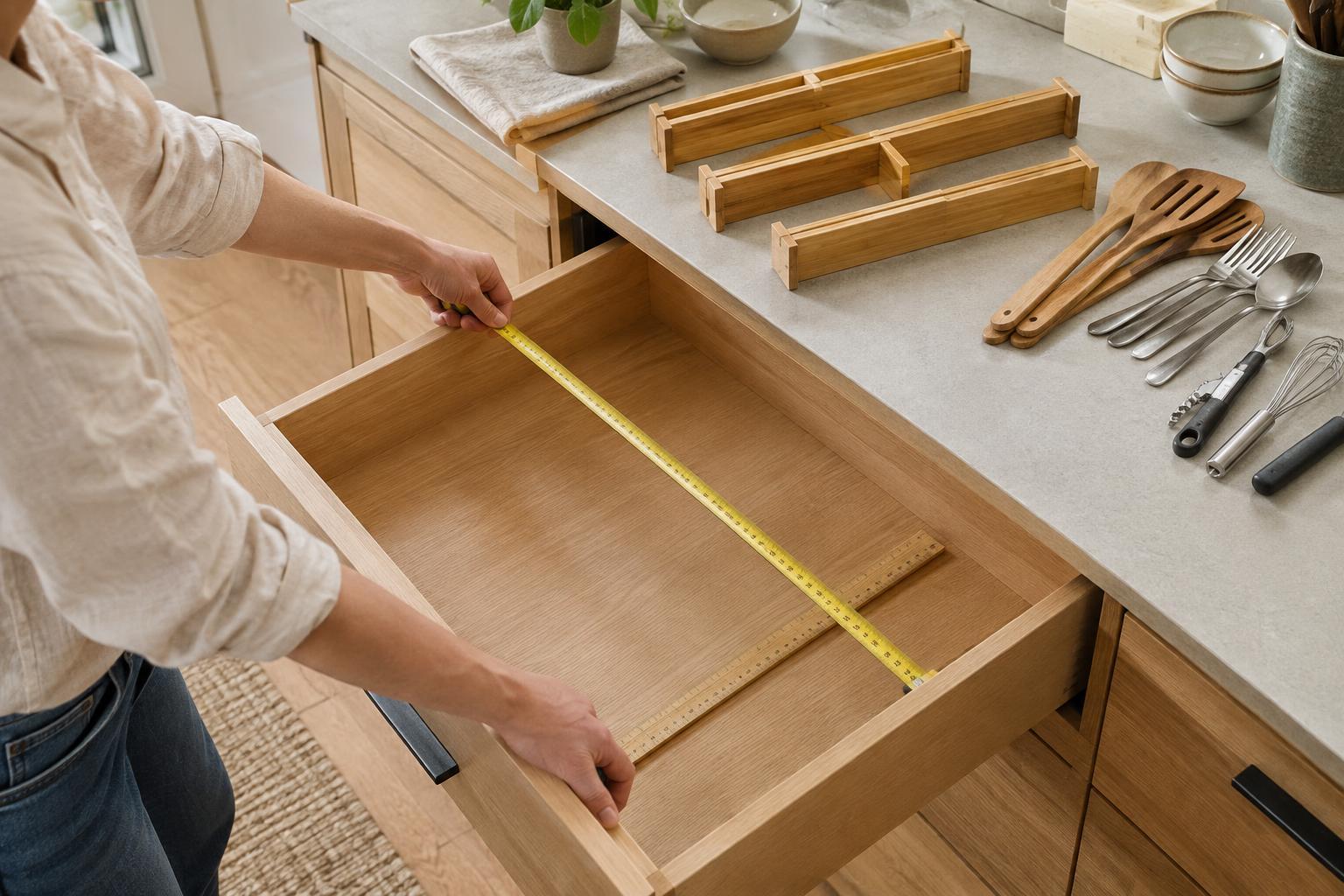
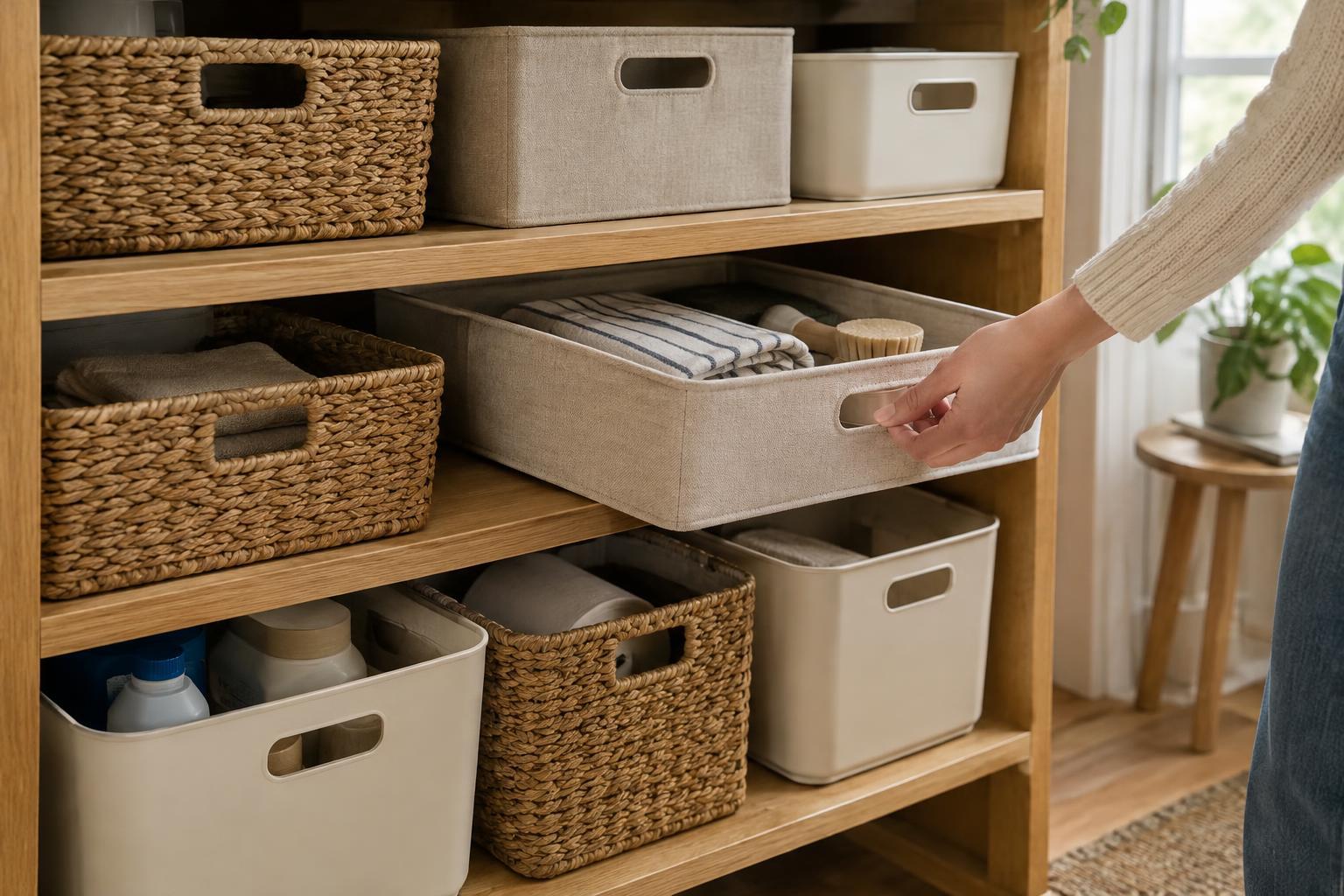
Useful objects are easier to enjoy when they are easy to find. A small drawer divider, a clear shelf, or a dedicated section of a wardrobe can keep scarves visible without leaving them piled on a chair. Fold pieces according to their fabric and size, and follow any care guidance supplied for the particular item. A square scarf may fit neatly beside other small accessories, while a larger wrap needs more space so that it is not crushed beneath heavy clothing.
This is less about creating a perfect display than removing friction from the morning routine. Keep the pieces you wear most near the coats or bags they complement. If you routinely forget a scarf until you are already at the door, place one where you decide on outerwear. Like a well-chosen tray or an organized kitchen shelf, a simple storage habit helps a good object become part of everyday life.
A little context behind the name
UniqueYou began in 2014 with scarves and clothing. Its history includes a pause and a later return after the domain was recovered, so it is more accurate to describe a brand with a beginning and a return than to suggest uninterrupted trading. Its original brown wordmark includes a horse motif and the words ‘Since 2014’; a neutral taupe palette supports an understated visual identity.
The identity is useful context, but it should not replace product-level questions. A familiar-looking brand mark cannot tell you how a particular scarf will drape, what a particular wrap contains, or whether a color suits your coat. Treat the name as a starting point for browsing and the individual item details as the basis for a decision. That balance keeps the shopping experience grounded in what you can actually wear.
Shop in the language that helps you compare
UniqueYou has 20 regional domains, 21 regional-language versions, and 16 distinct languages. Those figures are different because countries can share a language, and one country can have more than one language version. Germany and Austria, for example, both have German-language destinations; several English-language destinations serve different countries. The United Arab Emirates has an Arabic root version and an English /en version on the same regional domain.
The guide below separates every destination by country and language. Use the version whose descriptions are easiest for you to understand, then compare the relevant shape, color, material, and product details. A collection can be a convenient place to begin, but its title is a browsing aid, not a substitute for checking the individual scarf. The aim is to make a considered choice that fits your wardrobe and your routine.
Regional guide: find a useful place to begin
Each entry names both the country and the destination language. Some point toward a color or material category; others offer a broader starting point. The local-language terms belong to their destinations, while the practical questions—what will you wear it with, how will it feel, and how will you care for it—remain the same.
Poland — Polish
For the Polish-language destination, begin with the regional home at UniqueYou if you want to compare several accessory shapes. For a women’s headscarf, the local Polish search phrase leads to a head-and-hair-scarf collection — apaszka na głowę damska UniqueYou. If you are considering more head-covering options, the Polish-language head-scarf collection is at UniqueYou. Think about whether the scarf must stay secure through a busy day or serve mainly as a finishing detail.
Germany — German
The German-language home at UniqueYou is a broad starting point. If beige could connect several coats and knits already in your wardrobe, the German local term for women’s beige scarves points to that color collection — beige schal damen UniqueYou. For a different feel and a smaller accessory decision, explore the German-language silk neck-scarf collection at UniqueYou. Compare each item’s dimensions and composition rather than treating all neutral or silk-category pieces as interchangeable.
Czechia — Czech
Start at the Czech-language home, UniqueYou, to orient yourself before narrowing the choice. When warmth and a soft-looking winter layer are the priorities, the Czech local term for a cashmere scarf leads to the relevant collection — šála kašmír UniqueYou. For a lighter styling direction, the Czech-language silk-scarf collection is at UniqueYou. Check the individual materials and decide whether the piece will sit against your neck or over a coat.
Spain — Spanish
The Spanish-language home at UniqueYou gives you room to compare shapes first. If your usual outfits are navy, cream, or dark gray, red may be a purposeful accent rather than a difficult color; the Spanish local term for red scarves leads to the color collection — bufandas rojas UniqueYou. Before choosing, picture the scarf beside your most-worn jacket in daylight. The useful red is the one that feels comfortable with the clothes you already reach for.
France — French
Use the French-language home at UniqueYou for an overview. A brown scarf can pick up the warmth of a leather bag, shoes, or a camel coat; the French local phrase for a chic brown scarf leads to that color collection — écharpe marron chic UniqueYou. If you want to compare the color against other options, visit the broader French-language scarf collection at UniqueYou. Look at scale as well as shade: a large wrap and a narrow scarf make different impressions.
Hungary — Hungarian
At the Hungarian-language home, UniqueYou, you can start with the overall range. A black scarf may be useful when you want texture or a change of silhouette without introducing another color; the Hungarian local term for a black scarf opens that collection — fekete sál UniqueYou. For a wider comparison of shapes and shades, use the Hungarian-language scarf collection at UniqueYou. Against a dark coat, check whether the fabric provides enough visible contrast for the look you want.
Italy — Italian
The Italian-language home at UniqueYou is the place to begin if you have not decided between a scarf and a larger layer. If you are dressing for a meal, celebration, or cool evening and want shoulder coverage, the Italian local phrase for an elegant women’s shawl leads to the shawl collection — scialle donna elegante UniqueYou. Compare the width with your dress or jacket: the right amount of fabric should feel easy to manage when you sit down.
Romania — Romanian
Browse the Romanian-language home at UniqueYou when you want to weigh colors and shapes together. For a black women’s scarf, the Romanian local term leads to a focused color collection — esarfa neagra dama UniqueYou. Black can be a quiet companion to print or a sharper line beside a pale coat, but its usefulness depends on texture and size. Consider what the scarf adds to your usual black pieces instead of assuming the color alone makes it versatile.
Slovakia — Slovak
The Slovak-language home at UniqueYou offers the broadest starting point. If you prefer a neck scarf with cotton as the category focus, the Slovak local phrase for women’s cotton neck scarves leads there — dámske bavlnené šatky na krk UniqueYou. For accessories intended for the head or hair, use the Slovak-language head-and-hair-scarf collection at UniqueYou. Think through how you plan to tie the piece, then check its actual dimensions and composition.
Finland — Finnish
Begin with the Finnish-language home at UniqueYou if you want to compare more than one color. A white scarf can brighten a dark outer layer, though its effect changes with the fabric and the shade of white; the Finnish local online-shopping phrase for a white scarf leads to the focused collection — valkoinen huivi verkkokauppa UniqueYou. Check the item’s care details and picture it next to your most-used coat, rather than choosing by the color label alone.
Sweden — Swedish
The Swedish-language home at UniqueYou is useful for an initial look across the range. If a pale accent would make your winter layers feel less heavy, the Swedish local term for a white women’s scarf leads to that collection — halsduk dam vit UniqueYou. White can look crisp beside navy or gentle beside taupe; its size and texture determine which effect you get. Consider whether you want a visible statement or a light finishing layer.
Denmark — Danish
Visit the Danish-language home at UniqueYou to browse before choosing a particular shape. If the basic need is a scarf rather than a square neck accessory or a shoulder wrap, the Danish local term for a scarf leads to the scarf collection — halstørklæde UniqueYou. Start with the coat you wear most, then decide how much length you want for a single drape or a loop. A manageable everyday tie is often the best guide.
Belgium — Dutch
This is the Dutch-language destination for Belgium: begin at UniqueYou for the overall selection. If you prefer a small accessory that can change a shirt or jacket without adding much bulk, the Dutch local term for women’s little scarves leads to that collection — dames sjaaltjes UniqueYou. The Dutch-language silk little-scarf collection is at UniqueYou for a more specific material category. Check each piece’s size and composition before planning a knot.
Austria — German
Austria has its own German-language destination, with the regional home at UniqueYou. If you are pairing a dress with a shoulder layer for an evening occasion, the German local phrase for a stole with an evening dress leads to the relevant collection — stola abendkleid UniqueYou. Try to imagine the stole both while standing and while seated. Enough coverage to feel comfortable matters more than an elaborate arrangement that needs constant attention.
Netherlands — Dutch
Use the Dutch-language home at UniqueYou to start broadly. For a deliberate color accent, the Dutch local phrase for a stylish red scarf points to the red-scarf collection — stijlvolle rode sjaal UniqueYou. If you would rather add coverage across the shoulders, the Dutch-language stole collection is at UniqueYou. A red scarf and a stole solve different wardrobe problems, so decide whether you need color near the face or an extra layer over an outfit.
United States — English
The English-language United States home is at UniqueYou. If a larger layer appeals more than a neck scarf, the English local term for a shawl leads to the shawl collection — shawl UniqueYou. Before choosing one for regular use, compare its dimensions with a jacket or dress you already own. Think about how you will fold it when you are not wearing it, too; convenience matters when an accessory moves through a full day.
United Arab Emirates — Arabic
The United Arab Emirates’ Arabic-language root destination is at UniqueYou. For a seasonal starting point, the Arabic-language winter-scarf collection is at UniqueYou. Use that collection to compare shapes and item details, not as a guarantee that every piece has the same warmth or fiber content. If you will wear a scarf across different indoor and outdoor settings, consider how easily you can adjust or remove the layer.
United Arab Emirates — English
The same United Arab Emirates regional domain also offers an English-language /en version. If English descriptions make comparison easier, the English local phrase for an online scarf shop leads to that version — online scarf shop UniqueYou. This is a language choice, not an additional country or domain. Once there, begin with the shape you would actually wear and check the individual item details before deciding on a material or color.
Ireland — English
Begin at the English-language Ireland home, UniqueYou, if you are still deciding on size. For shoulder coverage, the English local term for a shawl leads to the shawl collection — shawl UniqueYou. If a smaller, foldable accent would better suit your coats and shirts, the English-language square-scarf collection is at UniqueYou. Ask which one you would use more often on an ordinary weekend, not just which looks best laid flat.
United Kingdom — English
The English-language United Kingdom home is at UniqueYou. If you want to compare scarves before narrowing by color or material, the English local phrase for women’s scarves leads to the broader collection — womens scarves UniqueYou. Keep your main coat in mind as you browse: collar height, fabric weight, and the amount of room at the neckline all affect how comfortably a scarf will sit.
Portugal — Portuguese
Start with the Portuguese-language home at UniqueYou for the overall range. If you like a scarf with enough presence to drape or loop, the Portuguese local term for a large scarf leads to the scarf collection — cachecol grande UniqueYou. Check the listed measurements before assuming a particular piece has the scale you want. A generous-looking scarf should still be comfortable with your usual coat and easy to carry when the day warms up.
A good scarf earns its place through repeated use. Start with the clothes you own, choose the shape and material that suit your days, and let color provide either a familiar connection or one considered change.
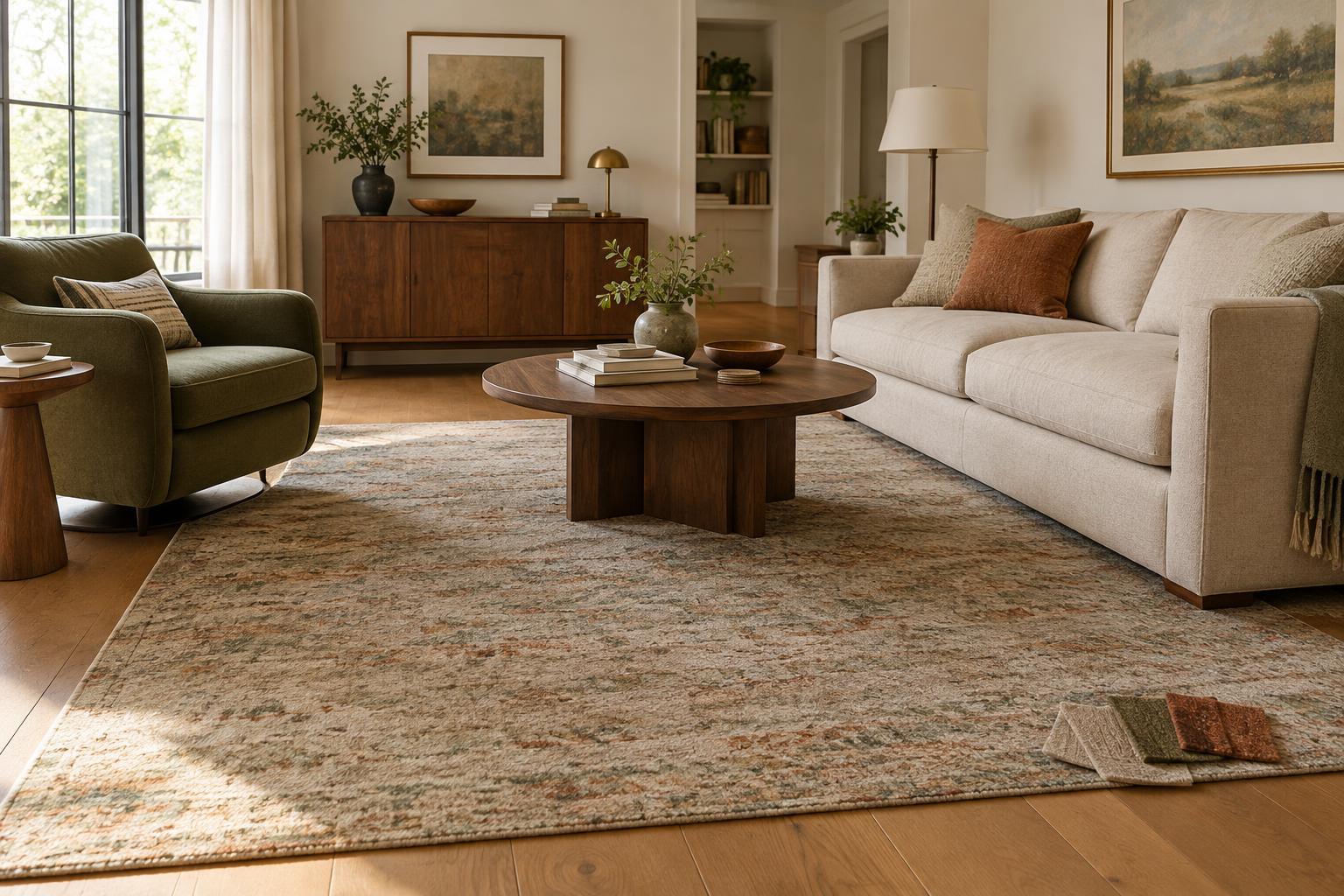 Color and Interiors