Start with your laundry, not the rack
A clothes-drying rack can look wonderfully compact in a product photo and still be awkward to use at home. Before comparing designs, think about what you regularly hang: a few delicate tops, a full wash of everyday clothes, or bulky items such as towels and bedding. Count the loads you tend to dry at once, and consider whether you need wide bars for draping or smaller gaps for socks and lightweight pieces.
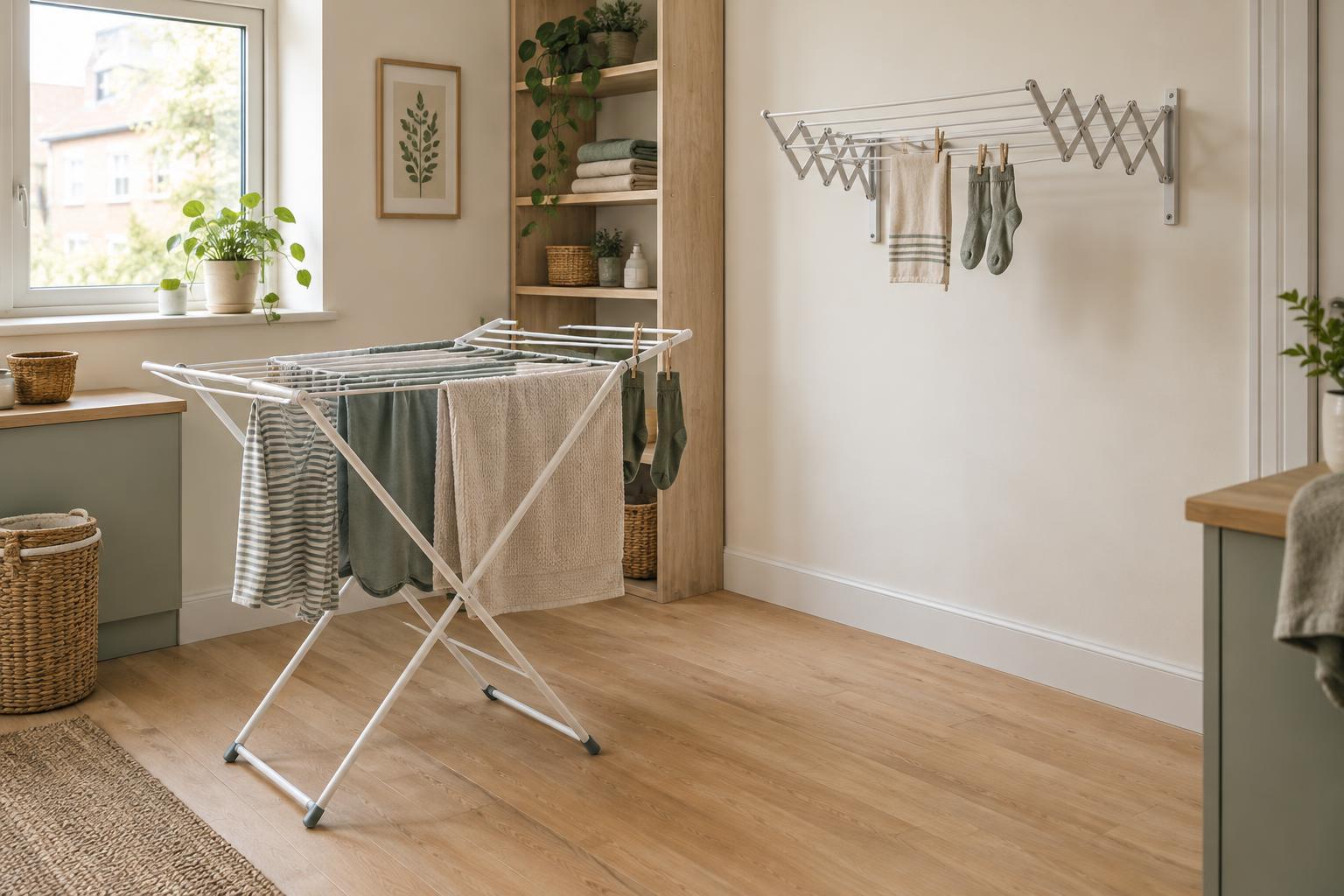
Next, identify a realistic drying spot. A rack needs room not only for its frame but also for clothes hanging from it, for air to move around them, and for you to walk past. A foldable rack borrows floor space temporarily; a wall-mounted rack claims a fixed part of a wall and the space in front of it when opened. The better choice is the one that fits your room while laundry is actually on it.
When a foldable rack makes sense
A foldable rack is useful if your drying spot changes with the weather, the season, or the activity in a room. You can set it up where there is good airflow, then put it away when the clothes are dry. It also avoids drilling, which may matter if you rent or simply prefer not to alter a wall. Choose one you can lift and unfold comfortably; a rack that is difficult to handle may end up staying out all the time.
Check its open footprint as carefully as its folded size. Look at bar spacing, the height of the lowest rails, and whether longer garments would touch the floor. A broad, low rack may suit a spare room but block a narrow hallway. If you plan to store it behind a door or beside a cabinet, measure that gap and check whether the folded rack can stand securely there. For heavier wet items, follow the maker’s load guidance and spread the weight rather than crowding one side.
When a wall-mounted rack earns its place
A wall-mounted rack can be a tidy solution when laundry often dries in the same place. Many designs fold against the wall between uses, keeping the floor clearer for cleaning and movement. They can work especially well above an area you already keep open, provided you can reach the bars without stretching and the clothes will not brush against furniture, doors, or a work surface.
Installation is the main trade-off. The rack and its fixings must suit the wall construction and the loads described by the manufacturer; wet laundry can be heavier than it looks. Check whether the proposed location has suitable support and enough clearance for the rack to open fully. If you are unsure how to fix it securely, seek help rather than guessing. In a rental, confirm what alterations are permitted before buying a rack that requires holes.
Compare the details you will touch every wash day
Capacity labels are a starting point, but the shape of the drying area matters too. Several short rails may be fine for small garments yet frustrating for trousers or towels. Smooth, sturdy bars are easier to wipe down and less likely to catch fabric. Examine hinges and locking points on a foldable model, or the opening mechanism on a wall-mounted one: both should feel manageable when your hands are full of laundry.
Consider where moisture will go. Drying clothes indoors works best in a space with suitable ventilation and some separation between garments. Avoid pressing wet fabric against a wall or packing every rail so tightly that items remain damp for a long time. If you plan to use the rack in a bathroom or another humid area, check that its materials and fittings are appropriate for that setting, and make a habit of letting the rack dry before folding it away.
Make the choice with a simple floor plan
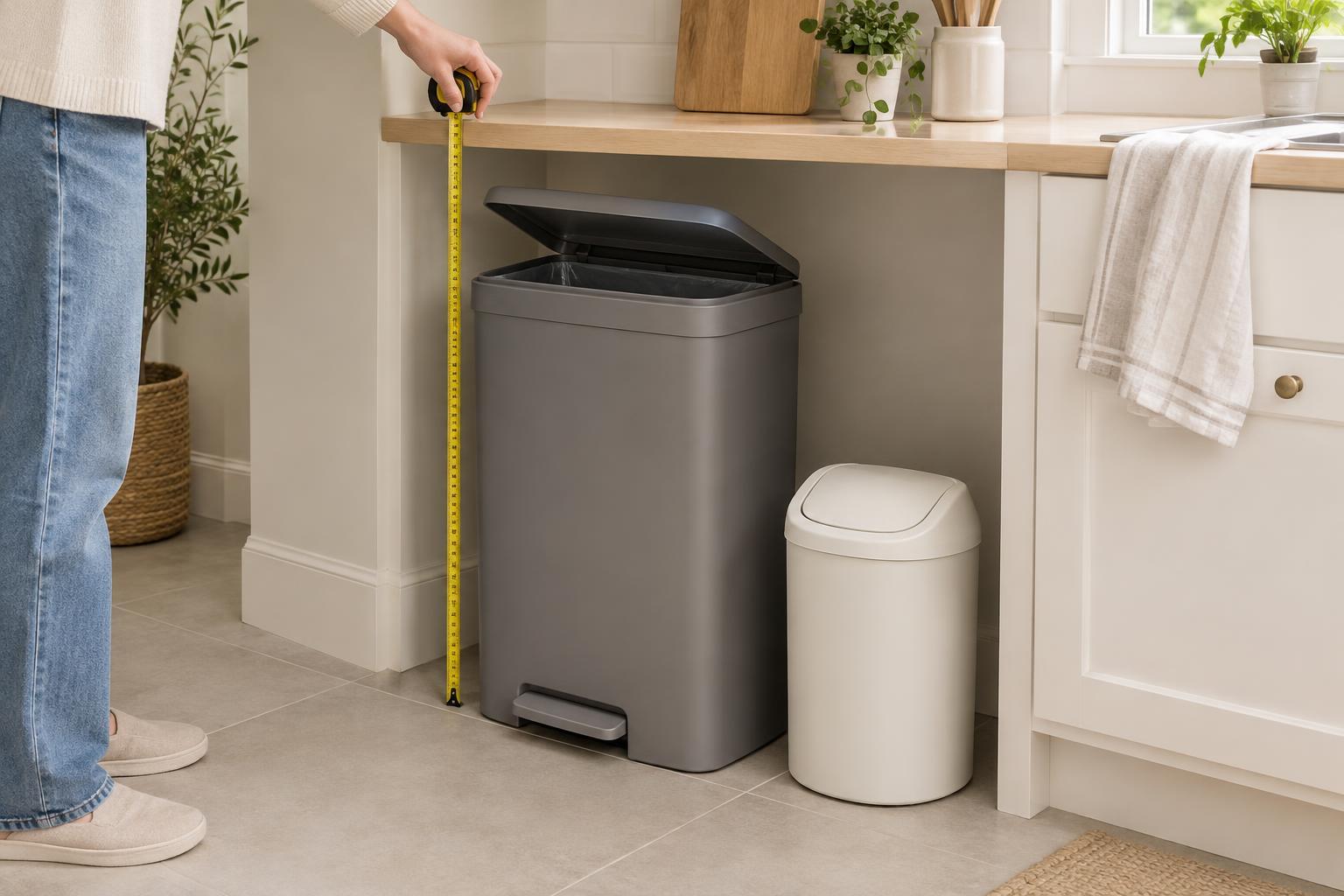
Mark out the open dimensions of a candidate rack with tape or a few household objects. Walk around the outline, open nearby doors, and imagine the longest item you would hang there. For a wall-mounted option, mark its open projection as well as its closed position. This quick test can reveal an obstruction that measurements on a product page do not make obvious.
Choose foldable if flexibility, no-drill setup, or occasional larger loads are your priorities and you have a sensible storage spot. Choose wall-mounted if you have a reliable drying location, a suitable wall, and a strong reason to keep the floor clear. Neither style is automatically more convenient: the right rack is the one you can set up, fill, empty, and put away without rearranging your home each time.