Start by separating what can catch or rub
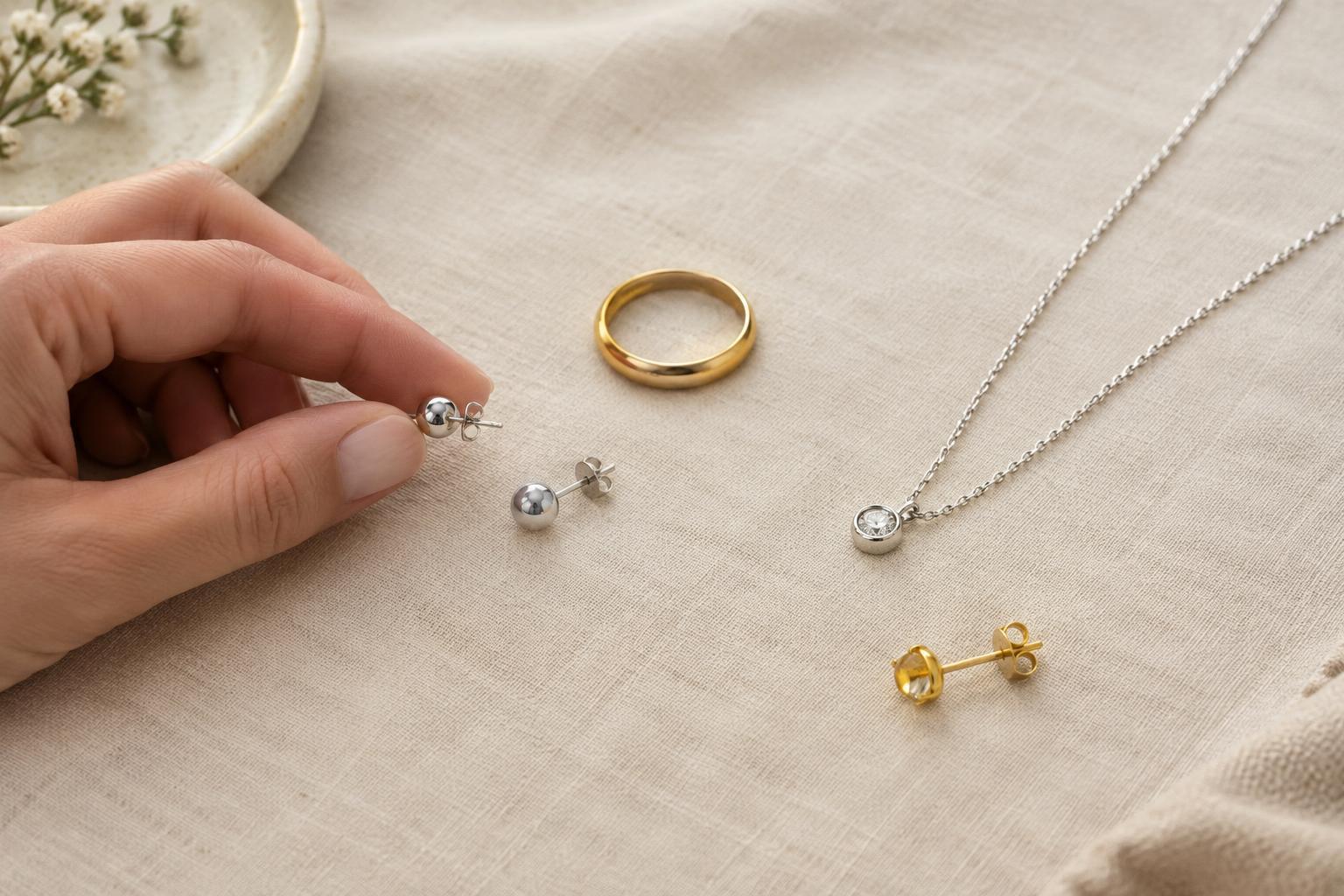
The most useful jewelry storage rule is simple: pieces should not have to compete for space. Loose necklaces can knot together, while rings, clasps, and textured metal can rub against smoother surfaces. Lay out what you own and group it by type before choosing a box, tray, or organizer. This lets you see whether you need more room for chains, small earrings, or larger pieces rather than buying storage with the wrong compartments.
Give frequently worn pieces a place you can reach without disturbing everything else. An open tray on a dresser may work for a watch and a few sturdy daily favorites, but crowded trays tend to become a pile. Use small divided spaces or separate soft pouches for pieces that touch one another. If an item is unusually delicate or valuable to you, check its care guidance before deciding how to store it.
Give each necklace a clear path
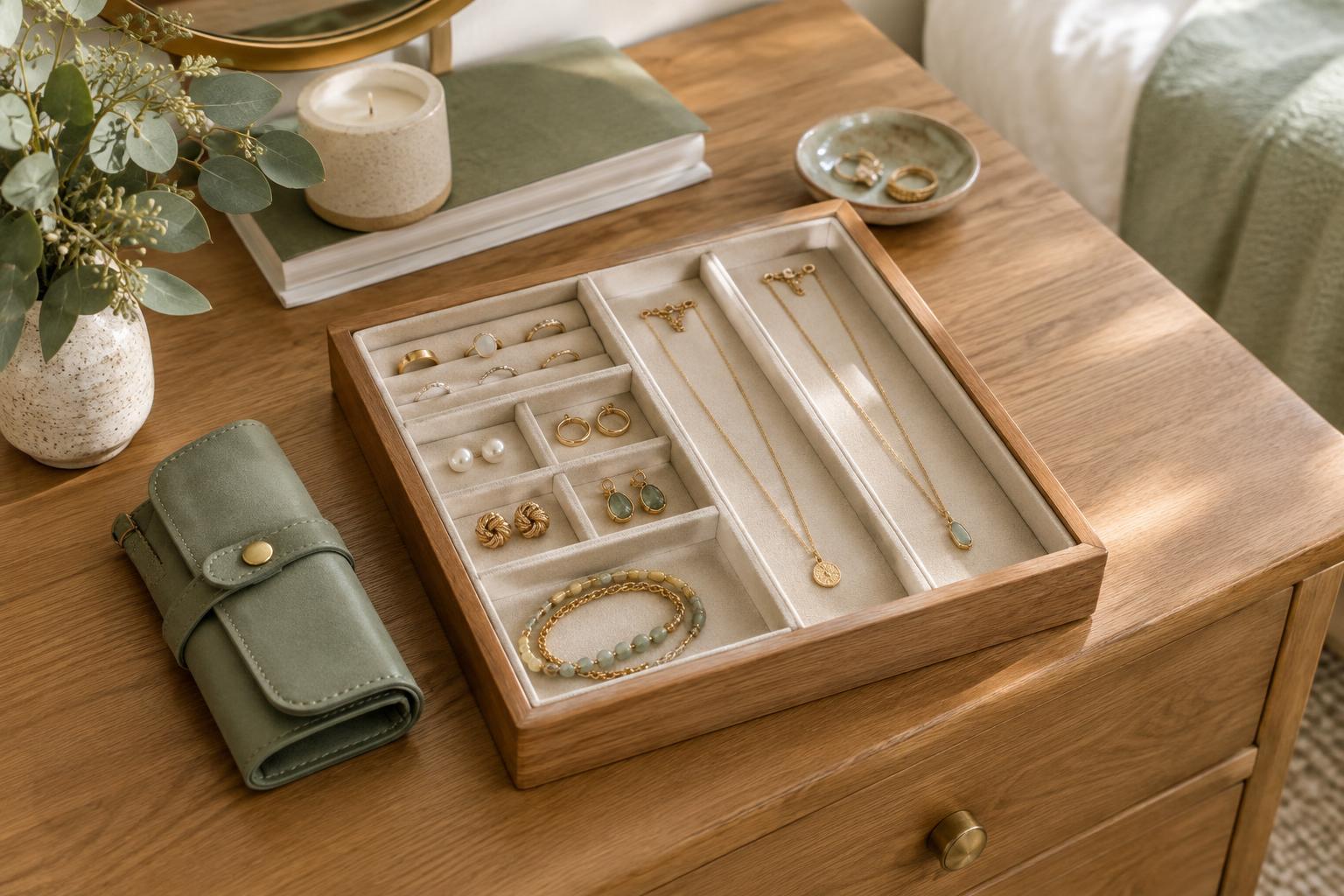
Store necklaces one at a time whenever possible. In a shallow drawer, lay each chain in its own fabric-lined compartment or small pouch, with the clasp fastened. Fastening a chain can help keep its ends from weaving through nearby pieces. For long necklaces, a wall-mounted or standing organizer with spaced hooks can make each one visible; leave enough distance between hooks that pendants and clasps do not overlap.
A hanging display is convenient, but it is not the best choice for every necklace. Very fine or heavy chains may be better supported lying flat, especially if hanging would put constant weight on a delicate section. Before putting a necklace away, check that it is not already twisted. Taking a few seconds to straighten it is easier than working out a tight knot later.
Protect surfaces with soft, separate spaces
A jewelry box with a soft lining and fitted dividers is useful because it limits movement when the box is opened or moved. Place rings in slots rather than dropping them together, and keep earrings in pairs using a divided tray or earring holder. Bracelets can lie in separate compartments; rigid bangles need enough room that they are not pressed against other pieces. Avoid stacking jewelry simply because a drawer looks deep enough to hold it.
Pay particular attention to pieces with stones, beads, or finishes that may scratch or be scratched. Store them apart from harder edges and sharp clasps. Soft cloth pouches offer flexible separation, though a pouch can hide what is inside; labels or a consistent arrangement help if you have several. For pearls and other delicate materials, follow the item’s care instructions rather than assuming one container or cleaning routine suits everything.
Choose a storage spot that supports the habit
The right organizer is one you will actually use. If you remove jewelry beside the bed, place a small divided dish there for sturdy daily pieces, then return more delicate items to their longer-term storage. If you get dressed near a mirror, a compact drawer insert may be more convenient. Choose compartments by measuring a few of your largest pieces first: an attractive box is less helpful if its lid presses on a bracelet or its slots cannot hold your rings.
Keep storage away from spots where jewelry may get wet or be knocked over. A closed box or drawer also reduces dust and accidental contact with other objects. If you use a display, place it somewhere stable and leave space around each piece. The aim is not a perfect arrangement; it is a clear home for every item so putting jewelry away takes less effort than leaving it in a heap.
Pack for travel without undoing your system
For a trip, use the same principles on a smaller scale: fasten chains, separate pieces, and stop them shifting. A travel case with individual necklace tabs and small compartments makes this straightforward. You can also place necklaces in separate small pouches and pack earrings in a compact divided case. Do not tuck several loose pieces into one pocket of a bag, where clasps and settings can catch during transit.
When you return home, unpack jewelry rather than leaving it in its travel case indefinitely. This is a good moment to check for a loose clasp, a missing earring back, or a chain that needs straightening. A simple routine—separate, secure, and return each piece to its place—does more to prevent everyday tangles and scratches than an elaborate organizer that is difficult to maintain.