Start with the portions, not the ingredients
Before changing a recipe, decide what you want the finished dish to provide. A recipe that serves four can become dinner for six by multiplying its quantities by 1.5; to make two servings, multiply by 0.5. Writing the new amounts beside the original list helps prevent a missed ingredient halfway through cooking. It also makes awkward quantities easier to spot before you begin.
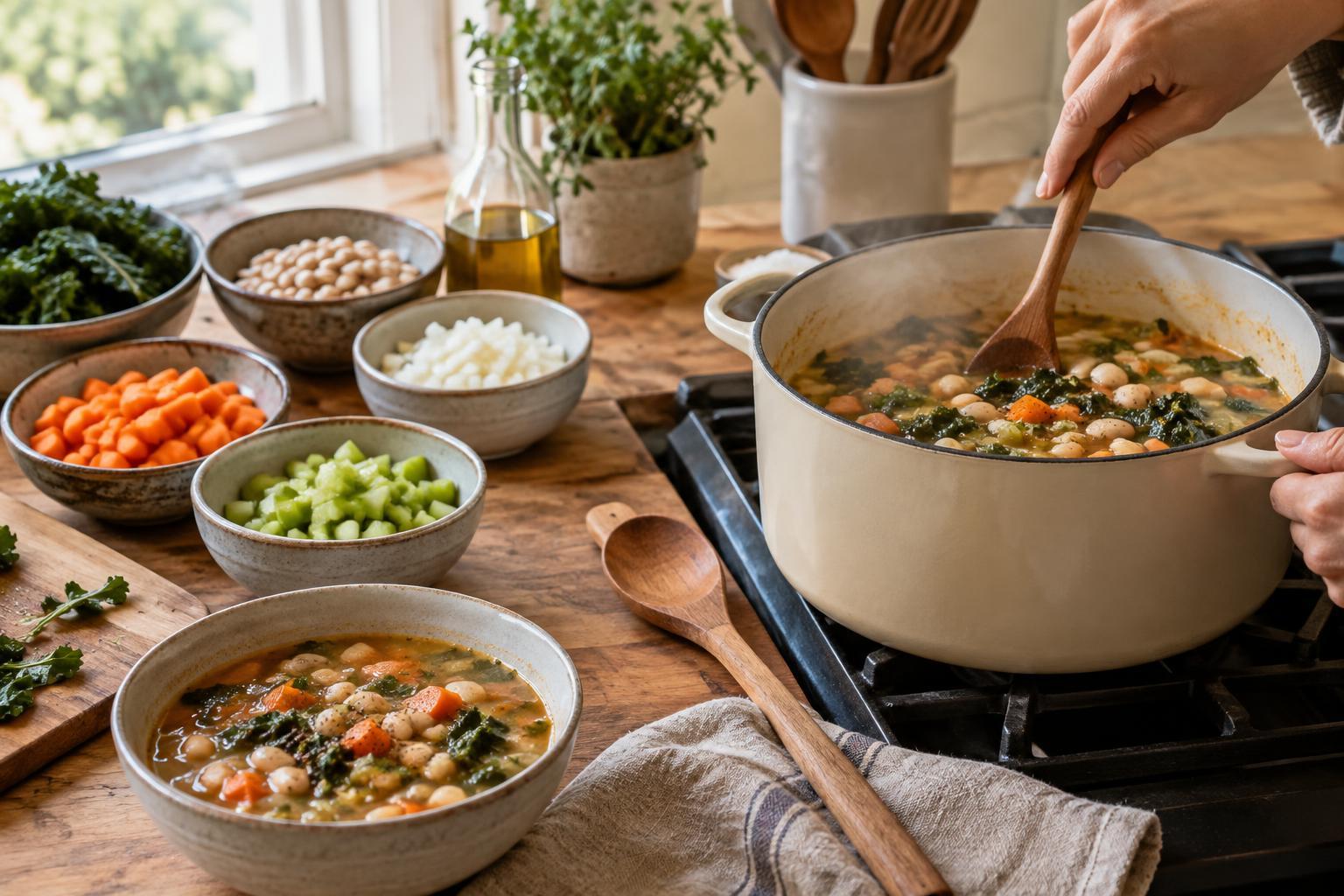
Check what the stated yield means in practice. Four servings of a hearty stew may suit four main meals, while four servings of a side dish may be much smaller. If you are cooking for leftovers, consider how well the dish keeps. A pot of soup is usually simple to make in a larger batch; a dressed salad is often better prepared in smaller batches, with extra components stored separately.
Know what scales cleanly
The main ingredients in a dish generally follow the multiplier. If you are increasing a pasta recipe by half, you will likely need half as much pasta again, along with a similar increase in vegetables and protein. Ingredients that form a structure, such as the flour and liquid in a batter, also need to stay close to their original proportions. A kitchen scale can make these calculations simpler, especially when dividing small amounts.
Some ingredients deserve more caution. Salt, hot pepper, strong spices, vinegar and lemon juice can be increased conservatively, then adjusted near the end. Their impact depends on the ingredients around them and on how much moisture evaporates during cooking. You may also need less than a straight multiple of cooking oil: a larger batch needs enough to coat the food and pan, not necessarily twice the oil because it has twice the vegetables.
Match the cookware to the new batch
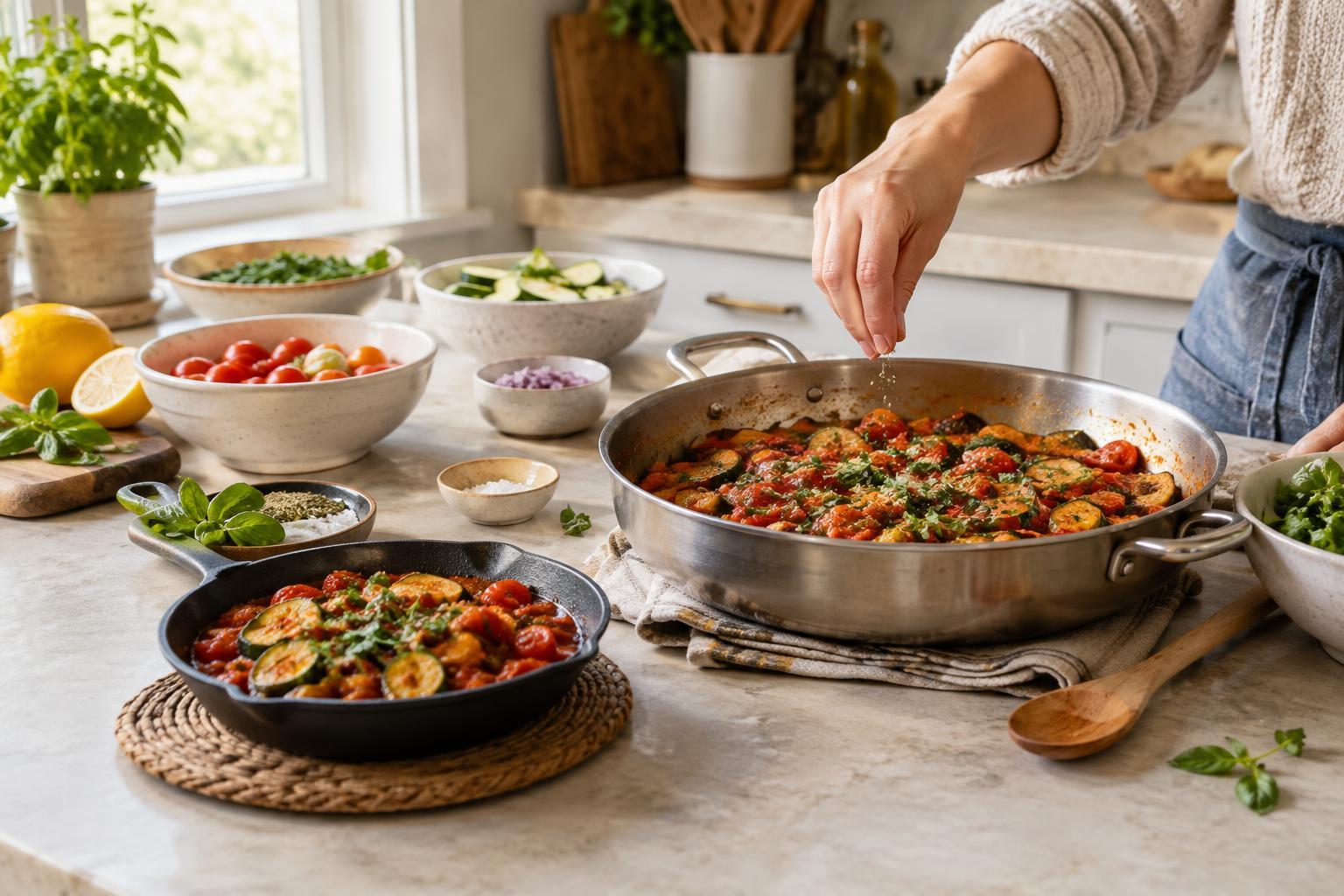
Changing the amount of food changes how it fits in the pan. Crowded vegetables release moisture and steam instead of browning, so doubling a sauté may work better in two batches than in one full skillet. A larger pot gives soup room to simmer and stir, but using a very wide pot for a small batch can make liquid evaporate faster than expected. Choose cookware based on the depth and spacing the original recipe seems to need.
Cooking time rarely follows the same multiplier as ingredient quantity. A larger pot of soup may take longer to come to a simmer, but it does not automatically need twice as long at that simmer. Thin pieces cooked in separate batches may take roughly the same time per batch. Use the recipe’s descriptions—tender vegetables, a thickened sauce, browned edges—as your main cues, and begin checking around the original cooking time.
Give baking extra attention
Baking leaves less room for casual adjustment because ingredient ratios, pan size and baking depth work together. For a straightforward cake or tray bake, scale the ingredients carefully and aim for a similar depth of batter in the pan. Pouring twice as much batter into the original pan may leave the center underdone while the edges overbake. Two pans of the original size are often easier to manage than one much deeper pan.
Small batches can bring awkward fractions of eggs or tiny amounts of baking powder. If a recipe calls for one egg and you want half a batch, you can beat the egg and use approximately half of it, measured by weight if possible. For recipes with many small quantities or a delicate texture, choosing a recipe written for your desired yield may be more reliable than scaling it. Whatever the batch size, check baked goods for the doneness cues given in the recipe rather than assuming the time will stay fixed.
Finish by tasting and taking notes
Keep a little flexibility in the final stages. Add broth or water gradually if a scaled-down sauce reduces too far; let a thin sauce cook a little longer if a larger batch has released more liquid than expected. Taste after the main ingredients are cooked, then adjust salt, acidity and heat in small steps. If a dish includes a garnish or dressing, you can often prepare a modest amount first and make more only if it needs it.
The first scaled version is a useful trial, not a test of perfect arithmetic. Note the pan you used, any timing changes and whether you wanted more sauce or seasoning. Those details turn a familiar recipe into one that works for your household, whether you are making a quiet dinner for one or sharing a table with friends.