Start with a steady setup
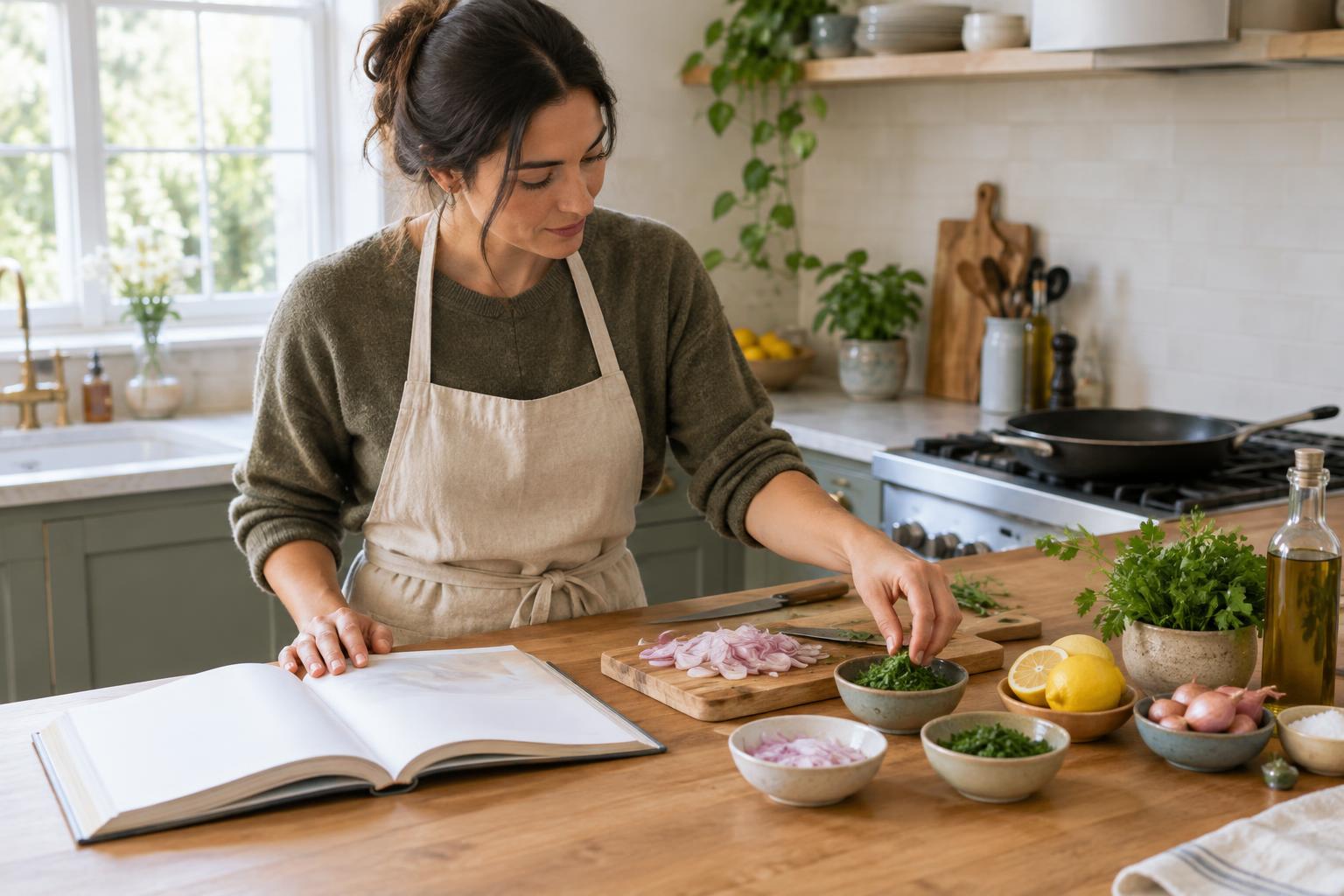
Faster prep begins before the first cut. Put a cutting board on a level surface and place a damp towel beneath it if it tends to slip. Keep a bowl nearby for scraps and give yourself enough clear space to move prepared ingredients off the board. A comfortable, sharp chef’s knife is enough for most vegetable prep; a smaller paring knife can handle tasks such as trimming strawberries or peeling garlic.
Hold the knife with a secure, relaxed grip, with your thumb and index finger near the base of the blade. Use your other hand to steady the food, curling your fingertips back so the side of the knife can rest against your knuckles. Work at a pace you can control. A stable ingredient and a deliberate cut are more useful than trying to move quickly from the start.
Slice for predictable cooking
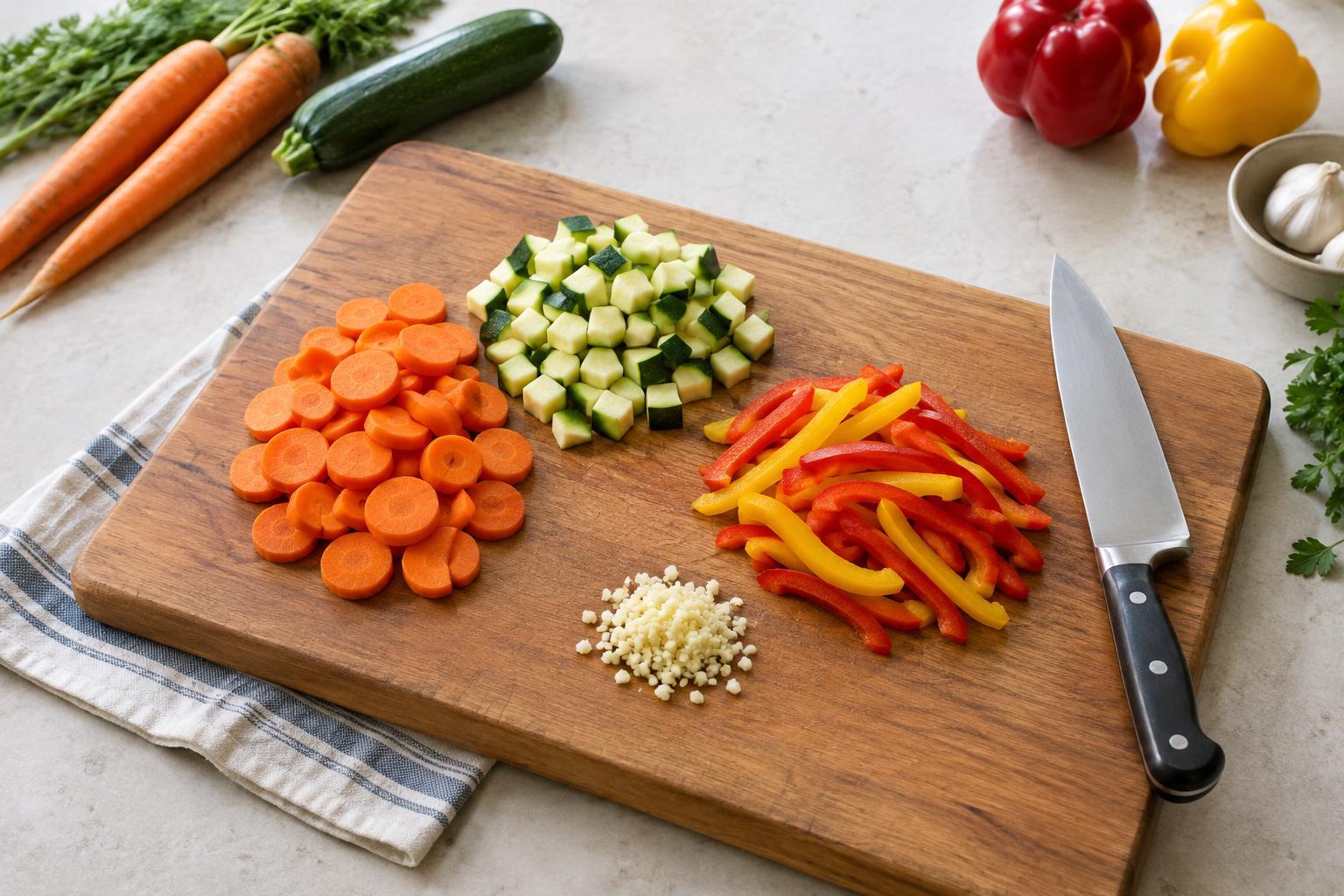
Slicing is the most versatile everyday cut. Thin slices soften quickly in a pan, while thicker slices keep more of their shape when roasted. The goal is not perfect geometry: it is making pieces of roughly the same thickness so they finish cooking at about the same time. For a carrot, zucchini, or cucumber that rolls, trim a narrow strip from one side first to create a flat base.
Match the slice to the dish. Cut onions thinly for a quick sauté, mushrooms a little thicker if you want them to retain some texture, and potatoes into even rounds when layering a bake. To cut an onion, halve it through the root and place each half flat-side down. Leaving the root end intact while you slice can help hold the layers together until you reach the end.
Dice when ingredients need to mingle
Dicing turns an ingredient into small, roughly cube-shaped pieces. A small dice works well when you want onion, carrot, and celery to blend into a sauce. A larger dice is often easier for a tray of roasting vegetables, where tiny pieces could brown before larger ones are tender. Choose a size based on how long the food will cook, then aim for consistency rather than exact measurements.
The easiest route to a dice is to make the ingredient stable first. Cut a pepper into flat panels or a potato into thick slabs. Cut those pieces into strips, then turn the strips and cut across them. You can use the same sequence for many firm vegetables. Keep the pieces you have already cut to one side of the board so they do not crowd your knife hand.
Use strips and mince with a purpose
Strips are useful when you want ingredients to remain distinct in a stir-fry, salad, or sandwich. Cut peppers into flat panels, then into strips of similar width. For a carrot, first make manageable lengths and a flat side, then cut thin slabs and stack a few at a time before cutting strips. Avoid stacking so many that they slide under the knife.
Mincing is for ingredients you want distributed throughout a dish, such as garlic, ginger, or herbs. Cut them into small pieces, gather them into a pile, and make additional controlled passes with the knife until the texture suits the recipe. If finely cut herbs begin to look crushed, stop; a few slightly larger pieces are often preferable to bruised leaves. For leafy herbs, stacking or loosely rolling the leaves before slicing gives you fine ribbons for a finishing touch.
Let the recipe set your pace
Before chopping everything, read through the cooking steps. Ingredients that enter the pan together can often share a prep bowl; those added at different times are easier to manage separately. Cut longer-cooking vegetables somewhat smaller than tender ones if they need to finish together, or add the tender pieces later. Either approach reduces the need to rescue one ingredient while waiting for another.
As you practice, focus on one cut at a time and check a few pieces for size before continuing. Move finished food with the side of the blade or a bench scraper rather than dragging the sharp edge across the board. Wash the knife after handling raw meat, and clean the board and work area before preparing foods that will not be cooked. These small habits make prep calmer—and leave you ready to cook as soon as the pan is hot.