Give the afternoon a gentle boundary
A reading afternoon feels more restful when it has a place in the day, even if you have only an hour. Pick a stretch of time after the most pressing chores are done, then decide what can wait. You do not need an empty to-do list. A simple stopping point, such as putting away the lunch dishes, can make it easier to settle down without repeatedly wondering what you should be doing instead.
Choose a book that suits the time you have and the attention you can bring to it. A familiar novel, a short story, or a collection of essays may feel more inviting than a book you have been trying to finish out of obligation. Keep a second option close if you like, but avoid turning the choice into a project. The aim is to enjoy reading, not to make the afternoon productive.
Choose a spot you can stay in
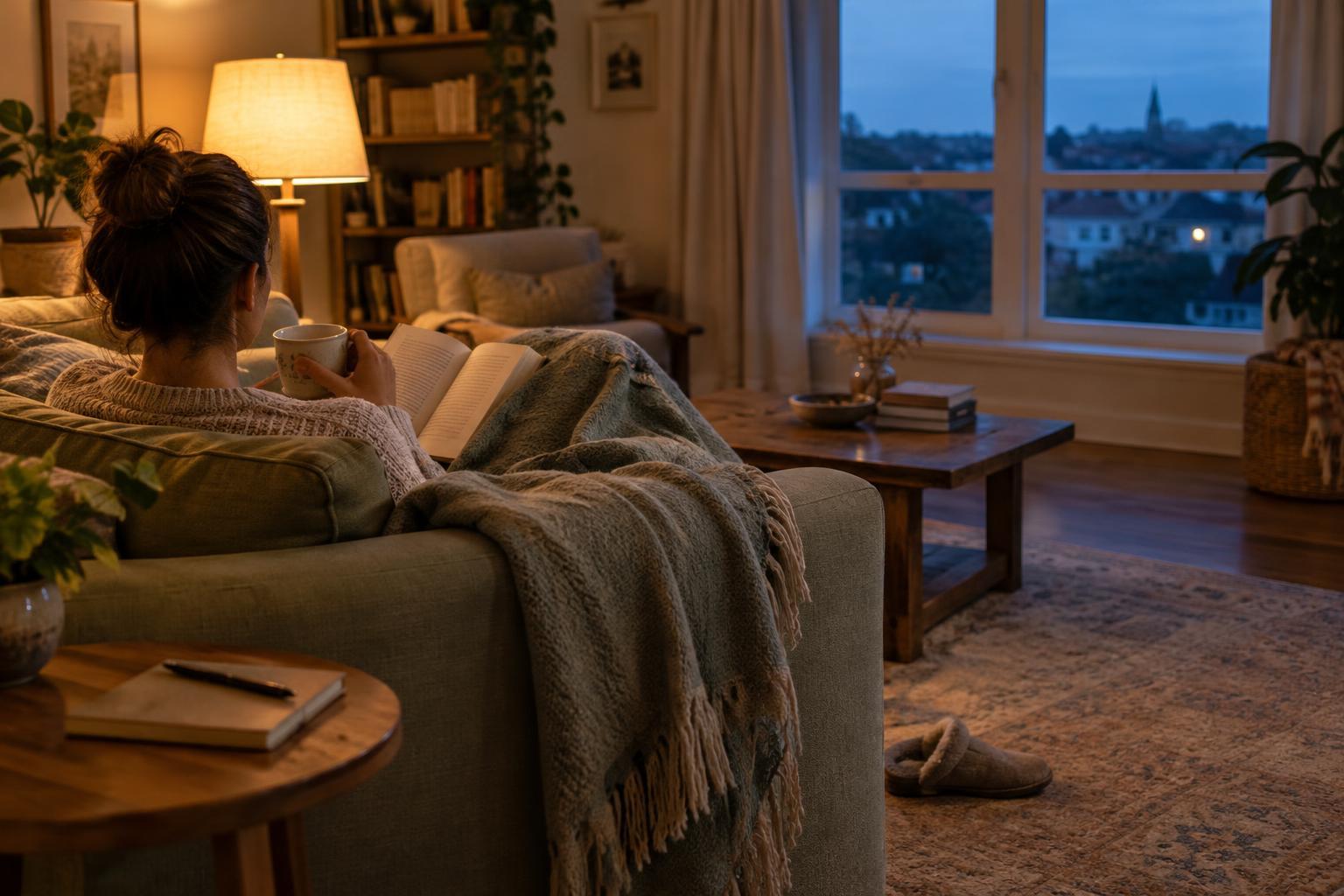
The best reading seat is not necessarily the most photogenic one. Sit in it for a few minutes before getting settled: can you support your back, rest your feet, and hold a book without straining? A cushion behind your lower back, a footstool, or a folded blanket can make an ordinary chair more comfortable. If the sofa is your favorite place, clear enough space to stretch out without balancing your book and drink on the cushions.
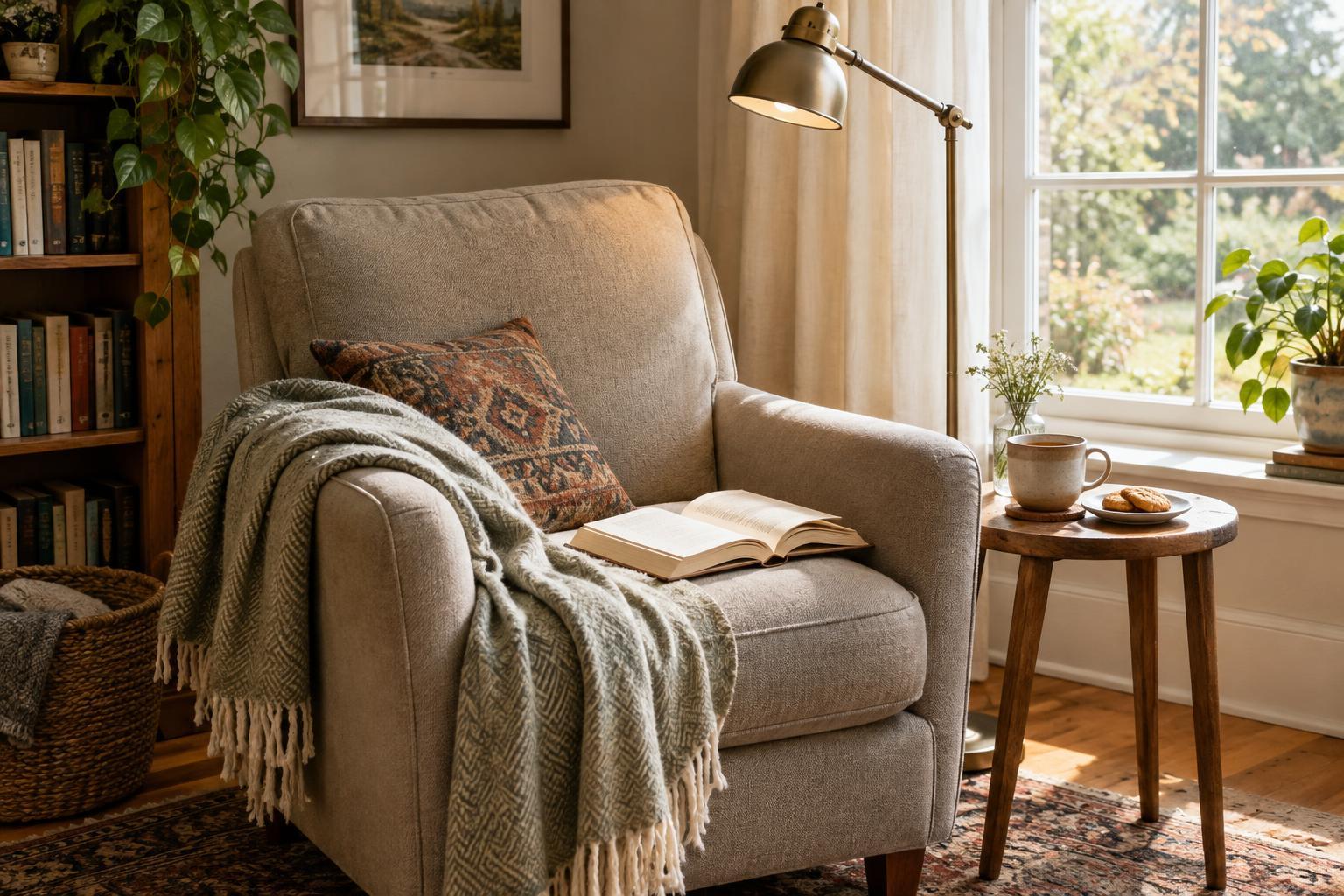
Put a small, stable surface within reach for a cup, glasses, and anything else you might need. A side table is useful, but a cleared shelf or sturdy stool can work just as well. Keep the setup modest. When everything has a place, you are less likely to interrupt a good chapter to search for a bookmark or move a precarious mug.
Make the light and temperature easy to adjust
Start with the light you already have. A seat near a window can be pleasant in the afternoon, provided the page is bright enough and glare is not falling directly across it. If the light shifts as the day goes on, place a lamp nearby so you can turn it on without moving. Aim the lamp toward the book rather than into your eyes, and adjust it until the page is comfortable to read.
Keep one layer within reach even if the room feels warm at first. A light throw or cardigan lets you adapt without leaving your seat. If fresh air is welcome, open a window before you begin; if street noise is distracting, close it and choose a quieter room. These small adjustments matter more than creating a perfect atmosphere. Comfort is something you can change as the afternoon unfolds.
Bring a drink and a low-effort snack
A drink makes the pause feel deliberate, whether you prefer tea, coffee, or water. Choose a cup you can set down securely, and bring enough that you will not need to get up immediately. If you want a snack, pick one that is simple to eat and unlikely to leave sticky fingers on the pages. Sliced fruit, crackers, or a small bowl of nuts are easy options; a plate or napkin keeps crumbs off the book.
There is no need to prepare an elaborate tray unless that is part of the pleasure for you. The useful question is what will make the next hour easier. Fill the kettle, wash the fruit, or set out a coaster before you sit down. Then let the food and drink remain a pleasant accompaniment rather than the main event.
Leave room for a slower pace
Silence is appealing to some readers, while others settle better with quiet background sound. Put your phone out of reach or silence notifications if they tend to pull you away from the page. You can also let people at home know that you are taking a little reading time, without making the afternoon feel off-limits. A few ordinary interruptions do not spoil it.
Resist measuring the break by chapters completed. Pause to look out the window, reread a passage, or put the book down when your attention fades. If you want to continue later, mark your place and leave the book where you will see it again. A comfortable reading afternoon is not a reward you have to earn; it is a simple way to make space for a story in an ordinary weekend.