Start with what the shelf needs to hold
Before buying bins, look at the objects already living on the shelf. Group them by how often you use them, rather than only by size. Spare candles and seasonal decorations can sit behind other things or on a high shelf. Charging cables, cleaning cloths, or the dog’s lead need a spot you can reach without rearranging the shelf. A bin is useful when it makes one of these groups easier to find and put away.
Notice how you use the space. Do you pull a container out and carry it to another room, or take one item from it while it stays on the shelf? Do several people need to recognize its contents? These habits will help you decide whether you need a sturdy handle, an open top, a clear side, or a label. Start with one awkward shelf rather than buying matching bins for every room at once.
Measure the usable space, not just the shelf
Measure the shelf’s width, depth, and height at its narrowest points. Include anything that reduces the opening, such as a cabinet frame, hinge, support, or lip at the front. A bin that technically fits between two shelves may still be difficult to lift out. Leave enough room above it for your hand and, if you plan to use a lid, for the lid to open or come off.
Check the bin’s outside dimensions when shopping. Tapered sides can make the inside noticeably smaller than the footprint suggests, while protruding handles can make the outside wider. If you want several bins in a row, allow a little space between them so you can grip one without shifting its neighbors. For a deep shelf, consider whether you can see and reach the back of the bin once it is in place.
For heavy contents, consider both the bin and the shelf. Small bins keep books, tools, and pantry jars in manageable groups; one large container can become unpleasant to lift even when it fits perfectly. Make sure the shelf is suited to the weight you intend to put on it.
Match access to frequency of use
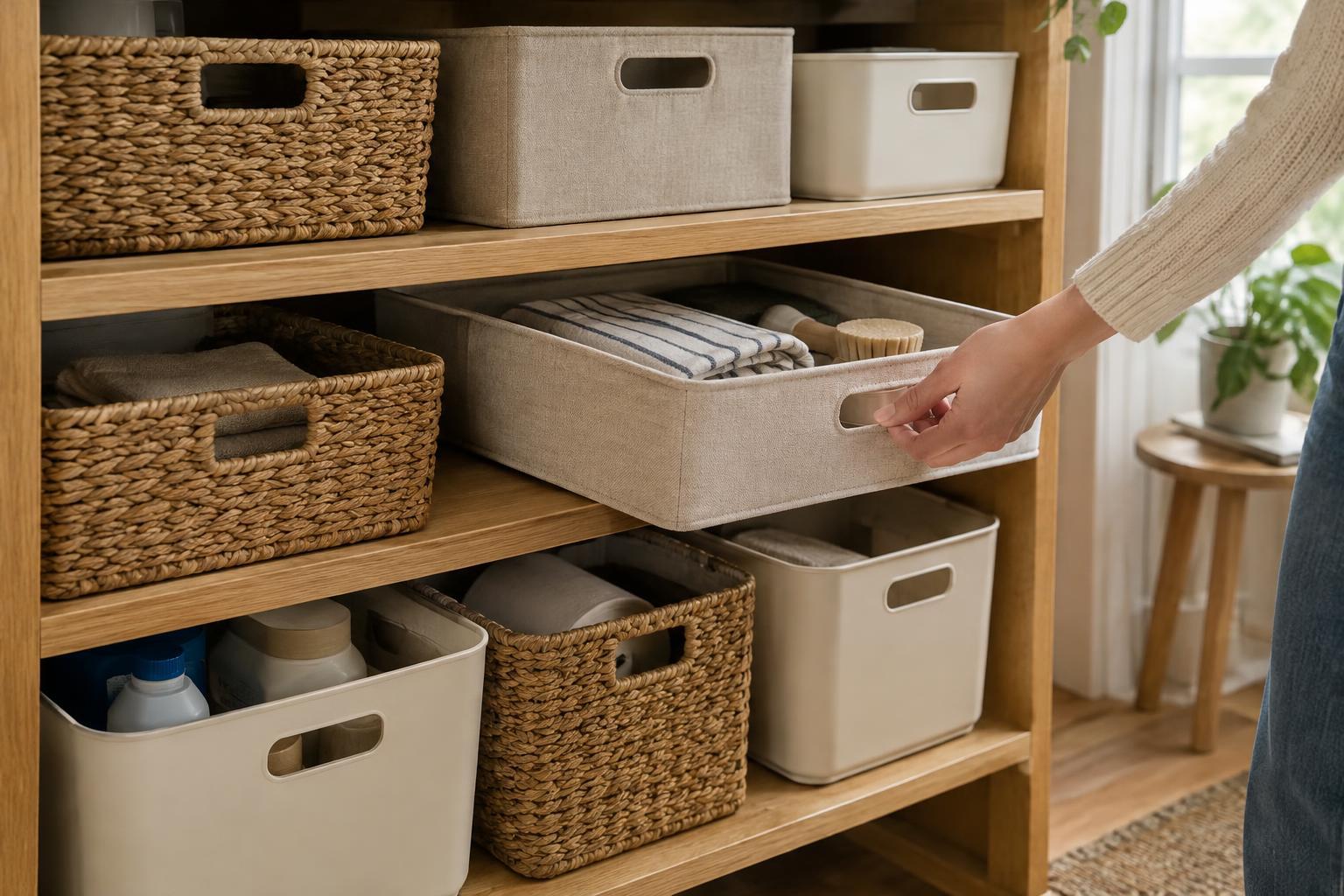
Open bins suit items you reach for often and return quickly, such as tea towels or everyday accessories. They remove the small but real step of opening a lid. Lidded bins are better for things that need protection from dust or are used occasionally, provided you can remove the lid comfortably where the bin sits. Stackable bins may save space, but ask whether you will willingly unstack them each time you need something from the bottom one.
Think about the direction of access, too. A low bin on a high shelf lets you see inside when you pull it forward. On a low shelf, a taller bin may keep loose items contained, but a front handle makes it easier to slide out. In a cupboard, a clear or partly open front can help you identify contents without lifting every container. The best choice is the one that makes both taking things out and putting them back feel simple.
Choose materials for the room and the contents
Plastic bins are often easy to wipe clean, which can be useful for cleaning supplies or items that might spill. Fabric bins can soften the look of an open shelf, but they may sag under heavy objects and can take more effort to clean. Rigid metal or wood containers can hold their shape well; check their edges and bases if they will slide across a shelf you want to protect.
The surface matters as much as the material. A smooth bin may be easier to wipe down in a kitchen or utility area, while a textured finish can be pleasant in a living space but harder to dust. If you are storing food, use containers intended for that purpose rather than assuming any decorative bin is suitable. For damp items, let them dry before storage and avoid enclosing them in a bin with little airflow.
Test a small system before filling the shelves
Once you have a likely size and style, try one bin in the space if possible. Put a realistic load inside, slide it in and out, and check whether you can see or identify its contents from your usual position. A paper label or simple category name helps when several bins look alike. Keep categories broad enough that putting things away does not require careful sorting.
Leave some unfilled room inside each bin. A container packed to the top is harder to search and more tempting to leave out after use. If one category keeps overflowing, decide whether it needs a larger home or whether the contents need editing. Storage bins cannot create more shelf space, but well-chosen ones can make the space you have easier to use every day.