Start with where the throw will live
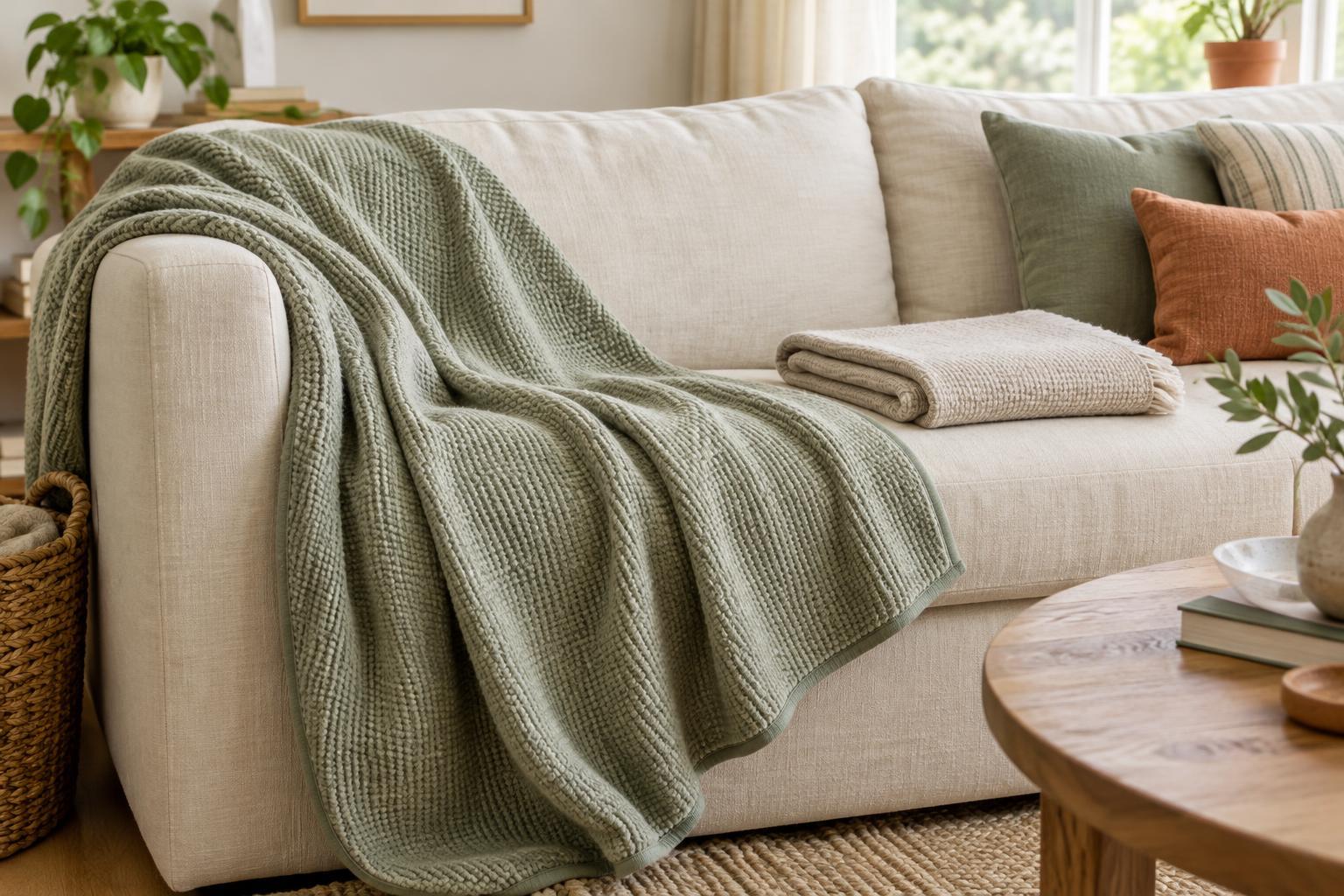
Before comparing fabrics, picture an ordinary evening with the blanket. A throw kept on the sofa may need to stand up to frequent use, crumbs and the occasional spill. One at the foot of a bed might be used less often but need to cover your legs comfortably. If children or pets regularly share it, straightforward machine washing may matter more than a delicate texture.
Think about the warmth you want, too. A blanket for a cool room needs more substance than one you mainly want for light coverage. Thickness can be helpful, but it is not the whole story: a loosely made blanket may let more air through than a dense one that feels similarly heavy. If you can handle a throw in person, drape it over your arms and notice whether it feels substantial without being awkward to move.
Compare fabrics by feel and care, not appearance alone
Polyester fleece and microfiber throws are common choices when softness and easy washing are priorities. They can feel warm without being especially heavy and often dry relatively quickly. Their feel varies, though: some are smooth, while others have a fluffy pile that may collect lint or change texture with repeated washing. Check the care label rather than assuming every synthetic throw can go in a hot dryer.
Cotton throws can be a good fit if you prefer a breathable feel or want a blanket that works across seasons. A dense cotton knit or weave may feel cozy, while a loose weave can feel lighter and airier. Cotton can take longer to dry than some synthetics, and certain constructions may shrink or lose their shape if washed or dried contrary to the label.
Wool and wool-blend throws can offer comfortable warmth, but they call for a closer look at care instructions. Some are machine washable; others require gentler handling or professional cleaning. If easy washing is a firm requirement, choose a throw whose label clearly permits a routine you are willing to follow. An appealing fabric is less useful if you will hesitate to clean it.
Look closely at construction and size
The way a throw is made affects both warmth and upkeep. A tight weave or close knit can provide more coverage than an open, decorative one. Long fringe, loose loops and raised textures add character, but they can also snag or tangle, especially in a busy household. Examine the edges for secure stitching or a tidy finish, and gently stretch the fabric to see whether it returns to shape.
Check the listed dimensions instead of relying on a product photo. For one person sitting on a sofa, the throw should cover your shoulders or lap without constant tugging. If you like to tuck it around your feet or share it, look for more length and width. Measure a blanket you already own to identify what feels too small, too large or just right. Remember that a larger throw also takes up more space in the washing machine and dryer.
Read the care label before you buy
“Machine washable” is a useful start, not the full answer. Check the recommended water temperature, wash cycle and drying method. A throw that must be laid flat to dry may be manageable if you have the space; it may be inconvenient if you need it ready again quickly. If you plan to use a tumble dryer, confirm that the label permits it and follow any heat setting specified.
Consider color and surface texture alongside those instructions. Very pale blankets may show everyday marks sooner, while dark ones can make light-colored lint more noticeable. A smooth surface is often simpler to brush off than a shaggy pile. If you expect to wash the throw often, a durable, uncomplicated finish may serve you better than elaborate trim.
Choose the blanket you will actually use
A practical final check is to ask three questions: Does it cover you comfortably? Does it feel warm enough for the room where it will be used? Can you wash and dry it without rearranging your day? If a throw meets those needs, color and pattern can do the enjoyable work of tying it into the space.
Once it is home, follow the label for the first wash, avoid overloading the machine and let the blanket dry fully before storing it. Give it a regular place within reach rather than treating it as a display piece. The best throw is one that makes a quiet evening more comfortable and is easy to bring back into use after laundry day.