Start with what is staying
Before looking at rugs, identify the room’s largest surfaces and the pieces you are unlikely to replace. The floor, sofa, walls, and substantial wood furniture provide a more reliable starting point than a cushion or vase. Make a short list of their colors, then note which ones feel warm, cool, muted, or vivid. You do not need exact color names; the aim is to see what a new rug will sit beside every day.
Decide what job the rug should do. It might quietly connect existing pieces, bring a needed color into an otherwise neutral room, or soften a strong contrast between the floor and furniture. Choosing one primary job makes it easier to compare options. A rug does not have to repeat every color in the room, but it should have a clear relationship to at least one substantial element.
Consider the floor and furniture together
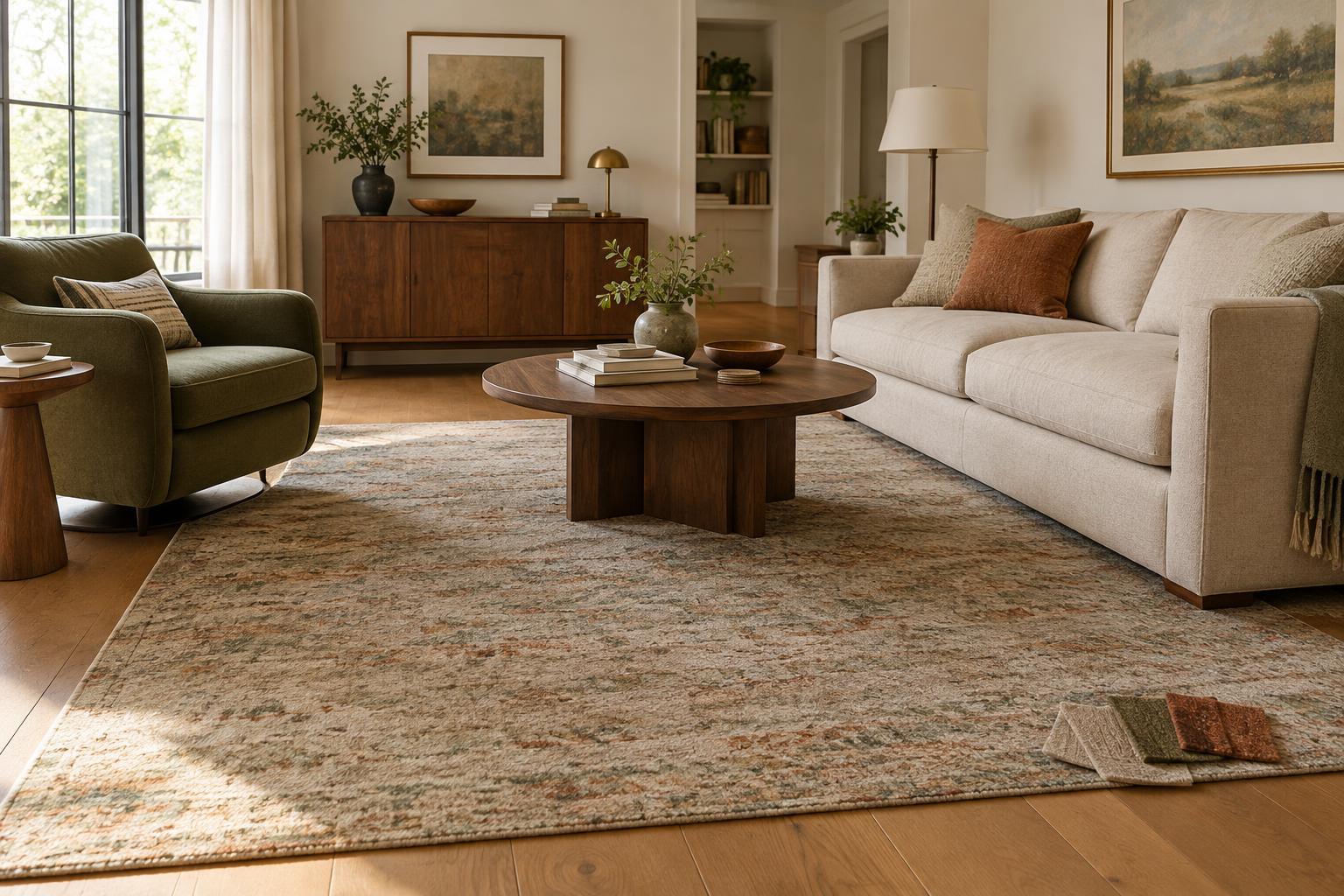
A rug is seen against the floor, so compare those two surfaces first. On a dark floor, a lighter rug can make furniture outlines easier to see, while a rug close to the floor color can create a calmer, less divided look. On a pale floor, a medium-toned rug can define a seating area without the sharp contrast of a very dark one. Neither approach is inherently better; think about whether you want the rug to stand out or settle in.
Next, look at the furniture that will overlap the rug. If a sofa and rug are almost the same solid color, their edges may blend together. That can feel restful, but it can also make the arrangement look flat. A small difference in shade or a subtle variation in the rug can give the pieces definition. If the furniture already has several colors, consider a rug that picks up one of the quieter tones rather than adding another competing hue.
Pay attention to the floor’s undertone without trying to match it perfectly. A warm wood floor can sit comfortably beside many colors, including cool ones, when another item in the room helps connect them. For example, a rug with a muted blue ground and small warm details may feel more at home near warm timber than a uniformly icy blue rug. Judge the combination as a whole, not by a rigid matching rule.
Choose how much color and variation you want
A single-color rug makes its color easy to read and can give a room a clean visual base. It also leaves texture, furniture, and artwork to provide interest. A rug with gentle shifts of color may be more forgiving if the room contains several finishes that do not match exactly. A stronger multicolor design can bring separate items together, provided the room has enough visual space for it.
Try naming a rug’s main color from a few steps away. Product images and close-up views can emphasize tiny details that barely register once the rug is on the floor. If your plan depends on a small accent color in the design, check whether you can still notice it at a normal viewing distance. Similarly, a rug that appears neutral online may read distinctly pink, green, or yellow beside your own walls and flooring.
Everyday use matters as much as appearance. Very pale, even-colored rugs may show tracked-in dirt more readily, while very dark ones can make lint and pale pet hair more noticeable. A mid-tone or gently varied color may be easier to live with in a busy area. Think about who uses the space and how often you are willing to clean the rug, rather than assuming one color is universally practical.
Test the choice in the room
If samples are available, place them directly on the floor where the rug will go. Look at them beside the furniture in daylight and again under the lights you normally use in the evening. Color can look different in each setting, and a sample gives you a better basis for judgment than a screen alone. If you cannot get one, check product photos for multiple views and read the color description carefully, while allowing for some uncertainty.
Before deciding, picture a broad area of that color rather than the small image in your hand. A pale sample may feel subtle, but a large pale rug can become one of the brightest surfaces in the room. A bold sample can have an even stronger effect at full size. You can place a large piece of plain fabric or paper on the floor to get a rough sense of how much visual attention that area will command.
Finally, ask whether the rug still makes sense if you change a few smaller accessories later. A choice based on the floor, main furniture, and the atmosphere you want is likely to be more adaptable than one chosen to match a single temporary detail. The goal is not a perfect color match; it is a room whose parts feel comfortable together.