Start with the job the scarf needs to do
Before choosing a fabric, picture an ordinary day in which you would wear the scarf. Will you wrap it around your neck on a cold walk, tie it loosely over a shirt, or keep it in your bag for a cool evening? The answer matters more than the season printed on a shop label. A breezy spring day may call for more coverage than a mild winter afternoon, while a heated commute can make a thick scarf feel cumbersome.
Think about how much of the day you will spend outdoors and whether you want warmth, a light layer, or simply a finishing touch. Size also changes how a scarf performs. A long rectangle can be wrapped twice for extra coverage; a small square is better suited to a neat knot. If you often remove your scarf indoors, choose one that folds easily into a coat pocket or bag.
Cotton: an easy layer for mild days
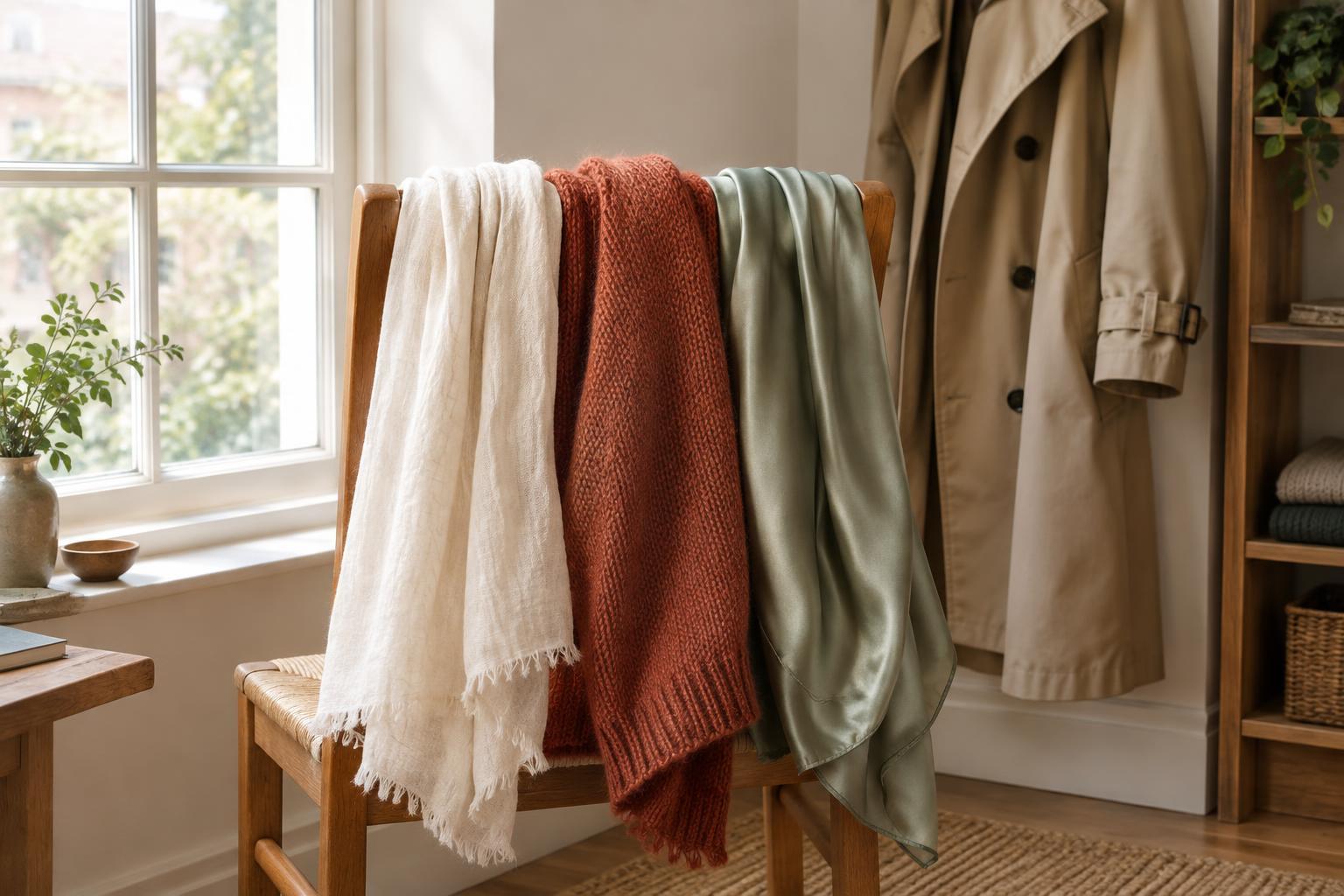
Cotton is a useful starting point for spring, early autumn, and days when the temperature shifts. A lightweight cotton scarf can cover your neck without the bulk of a winter wrap. It often suits casual clothes, from a plain T-shirt to a denim jacket, and many cotton scarves are straightforward to wash. Check the care label rather than assuming every piece can go into a regular laundry load.
Look closely at the weave. An airy, loosely woven cotton scarf feels different from a dense cotton twill, even though both carry the same fiber name. Hold the fabric up to the light and feel its thickness between your fingers. For a scarf that will live in a bag, consider whether it creases in a way you enjoy; some cotton looks relaxed when rumpled, while a crisp print may need more attention to stay neat.
Cotton is less compelling when you need substantial insulation. A large, heavy cotton scarf may provide coverage, but it can feel bulky for the warmth it gives. In colder weather, it often works best as a light indoor accessory rather than your main outdoor layer.
Wool: choose the weight as carefully as the fiber
Wool is a practical choice when warmth is the priority. A soft, loosely wrapped wool scarf can help close the gap at a coat collar, while a broader wrap offers more coverage on a long walk. Not all wool scarves belong to deep winter, though. A fine, lightweight wool fabric may be comfortable in transitional weather; a thick knit is better reserved for genuinely cold days.
Comfort at the neck is personal. If you can, try a scarf against bare skin before buying it, especially if you usually wear an open collar. A scarf that feels rough in your hand may be distracting after an hour of wear. Consider its shape, too: a substantial knit should still let you turn your head and fasten your coat comfortably. If it creates too much bulk, a thinner scarf that fits beneath the collar may get more use.
Wool care varies by construction and finish. Read the label before washing, and give a scarf room to air between wears. When storing it for a warmer season, make sure it is clean and dry, then fold it rather than hanging a heavy knit that might stretch.
Silk: a light option with year-round uses
Silk is often chosen for its smooth feel, gentle drape, and ability to add color near the face without adding much bulk. A small silk square can sit comfortably inside a jacket collar, tie around a bag handle, or dress up a simple shirt. A larger silk scarf offers more styling options, though it will not take the place of a thick wool scarf on a cold outing.
For warm weather, silk can be an appealing light layer when you want a little neck coverage. In cooler months, it can sit beneath a coat without crowding the neckline. Pay attention to the finish and care instructions: a delicate printed square may need gentler handling than an everyday cotton scarf. If you tend to toss accessories into a bag, consider whether you will be happy carrying silk in a separate pouch.
Make the final choice in your own wardrobe
The most useful scarf is one you will reach for, not necessarily the most luxurious fabric. Lay a possible scarf beside the outerwear and tops you wear most. Does its color work with several outfits? Can you tie it the way you like without wrestling with excess length? Is it comfortable at your neck and realistic for you to care for?
If you want one scarf for changing weather, a medium-size, lightweight option may be more versatile than an oversized wrap. Choose cotton for easygoing coverage on mild days, wool when dependable warmth matters, and silk when you want a light, compact accent. Fabric is the starting point; weight, size, feel, and your routine make the decision.