Start with a belt that already fits
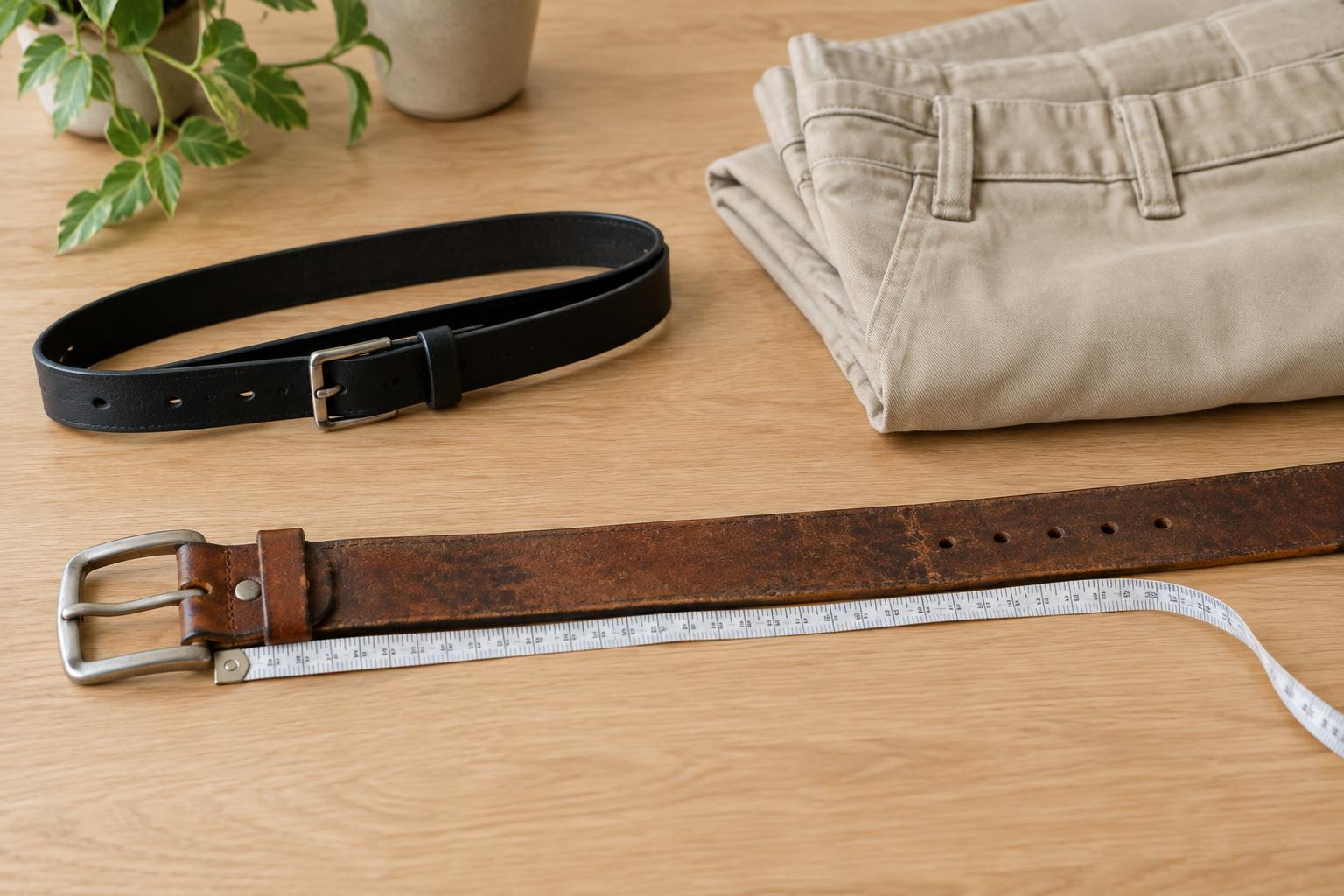
The most useful starting point is a belt you wear comfortably with the kind of trousers your new belt will accompany. Lay it flat without stretching it. On a belt with a traditional prong buckle, measure from the point where the prong meets the buckle frame to the hole you use most often. That distance is a better guide to your wearable size than the belt’s full end-to-end length.
If you usually switch between two holes, note both measurements. Ideally, a new belt will fasten near its middle hole, leaving room to adjust in either direction. Do not assume that the size stamped on an old belt is its exact measured length: brands may label belts differently. Use your measurement alongside the seller’s size guide, checking where that guide says to begin and end the measurement.
No suitable belt to measure? Thread a flexible tape measure through the belt loops of the trousers you plan to wear, at the height where the belt will sit. Keep the tape comfortably snug rather than pulling it tight. This gives you a useful starting measurement, but compare it with the maker’s instructions before ordering.
Account for the trousers and buckle
A belt may fit differently over lightweight trousers than over thick denim, and trousers worn higher on the waist may call for a different length than those worn at the hips. Measure while wearing the relevant pair if those differences matter to you. If one belt must work across several outfits, check the shortest and longest comfortable measurements against the belt’s available holes.
Buckle design matters too. A prong buckle, a frame buckle and a sliding closure may each use a different sizing convention. For a belt without holes, follow the maker’s guidance on its adjustable range. If the product page does not explain how its size is measured, asking the retailer is more reliable than guessing from your trouser size.
Look at the tip after fastening. It should pass securely through the buckle and reach a keeper or trouser loop without leaving an awkwardly long tail. Product photos can help you judge the intended proportions, but your own measurement and the belt’s hole placement are the practical checks.
Choose a width that fits the loops
Width is a separate decision from length. Measure the inside height of a belt loop on the trousers you will wear most often, then choose a belt slightly narrower than that opening. A belt that only just squeezes through may be frustrating to thread, particularly if it is thick or has pronounced edges. Also check whether the buckle is designed to pass easily around nearby loops.
As a general styling guide, a narrower belt tends to look quieter with tailored trousers, while a wider belt can feel more at home with jeans or casual workwear. These are choices, not rules: the belt loops and the visual weight of your outfit matter more than a category name. If you want one belt for varied use, compare it with the narrowest loops in your wardrobe first.
The material changes how a width feels. A firm belt can look substantial even when relatively narrow, while a soft woven belt may sit more casually. Consider how much structure you want at the waist as well as how the belt looks laid flat.
Check the details before you buy
Once you have a length and width in mind, inspect the less obvious parts of the listing. Check the number and spacing of holes, whether a keeper holds the loose end, and whether the buckle can be removed or adjusted. Read the measurement diagram if one is provided; it can reveal whether the stated size includes the buckle or refers to a particular hole.
For an everyday belt, picture it with two or three outfits you actually wear. A buckle that feels comfortable when seated and a width that threads without effort are likely to matter more in daily use than an exact color match. Keep your measurements handy for future purchases, but recheck them when changing trouser styles or choosing a belt with a different closure. A few minutes with a tape measure can make a small accessory much easier to live with.