Start with the task, not the stool
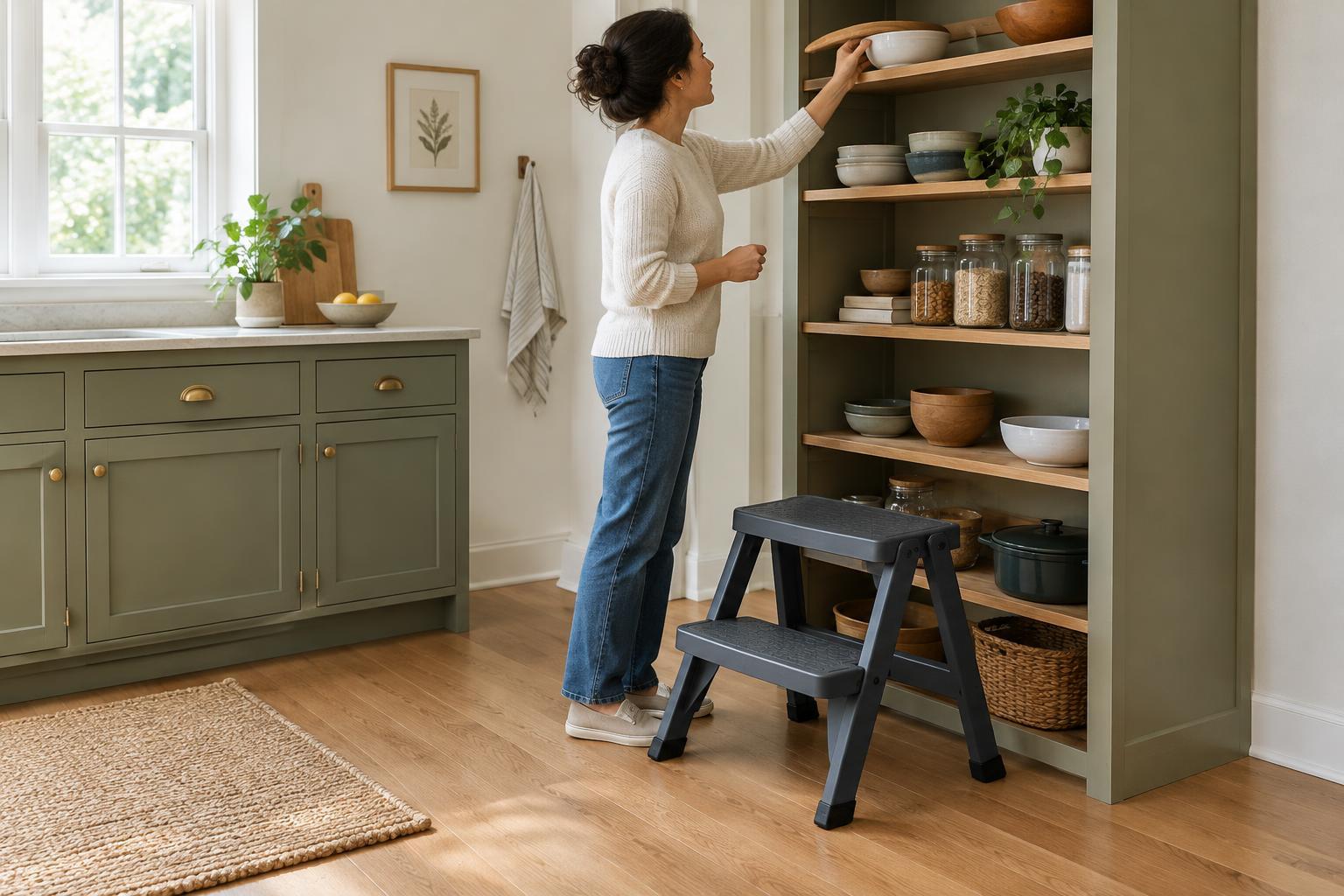
A step stool is most useful when it matches a specific, repeated need: reaching an upper kitchen shelf, changing bedding on a tall bed or putting away items in a closet. Before shopping, note where you will use it and what you need to reach. A compact single-step stool may be enough for one cabinet, while a two-step model may make several household tasks more comfortable.
Choose a height that lets you work without standing on tiptoe or stretching far to one side. The extra height of a taller stool is not automatically an advantage; it can make the stool bulkier and leave you higher than necessary. If a task requires leaning, lifting something heavy above shoulder level or working for an extended period, a suitable ladder or another approach may be a better choice.
Look closely at the base and steps
Stability starts where the stool meets the floor. Look for a base that feels broad relative to its height, with feet that sit evenly and do not slide easily on the surfaces in your home. Rubber or other grippy foot pads can help, but they should be securely attached and in good condition. Try the stool on a level floor before relying on it; a wobble is a reason to investigate, not something to work around.
The step should offer enough room to place your whole foot comfortably. A textured or otherwise slip-resistant surface is especially helpful in a kitchen, laundry area or entryway, where floors or shoes may occasionally be damp. Avoid using any step stool on a wet, cluttered or uneven surface, regardless of its features.
For a folding model, check how positively it opens and locks. It should be easy to tell when it is fully set up, and it should not start to fold when moved or stepped on. A handle or upper rail may offer a convenient place to steady yourself, but it does not replace a solid base and careful footing.
Check capacity, construction and ease of use
Read the maker’s stated weight capacity and follow its use instructions. Remember to account for anything you might carry while standing on the stool. Capacity alone does not describe how stable a stool will feel, so consider the overall construction as well: steps should feel firm, joints should be secure and the stool should not twist under ordinary use.
Materials involve practical trade-offs. Plastic can be light and easy to move, but examine how rigid a particular model feels. Metal may be slim and sturdy, though edges, hinges and feet deserve attention. Wood can look at home in a living space, but check that its finish and joints suit the wear it will receive. No material is inherently the best choice; the details of the individual stool matter more.
If possible, practice carrying, opening and putting the stool away before deciding. A stool that feels cumbersome is more likely to be left in a walkway or replaced, in the moment, by an unsuitable chair. Ease of use is part of making the safer choice the convenient one.
Plan where it will live
Measure the storage spot as carefully as the shelf you want to reach. A folding stool might fit beside a refrigerator or inside a closet, but confirm its folded depth and whether it can stand securely when stored. A nonfolding stool can work well if it has a dedicated place and will not obstruct a doorway or walking route.
Appearance matters when an object stays visible, but it should come after fit and function. A color that blends with cabinetry or a finish that suits the room can make a frequently used stool feel intentional. Choose a surface you can clean easily, particularly if the stool will move between shoes, kitchen floors and storage spaces.
Use it within its limits
Set the stool on a clear, level floor and make sure it is fully open before stepping up. Face the task, keep your weight centered and step down to move the stool rather than reaching beyond a comfortable range. Do not stand on a step or platform the maker does not designate for standing.
Inspect the stool from time to time, especially its feet, hinges and step surfaces. Loose hardware, worn grips or a damaged step can change how it behaves. If children will use the stool, choose one appropriate for them and supervise its use; an adult household stool is not automatically a suitable child’s stool. The right choice is the one you can place, use and put away confidently for the modest everyday tasks it is meant to handle.