Start with the egg you want to eat
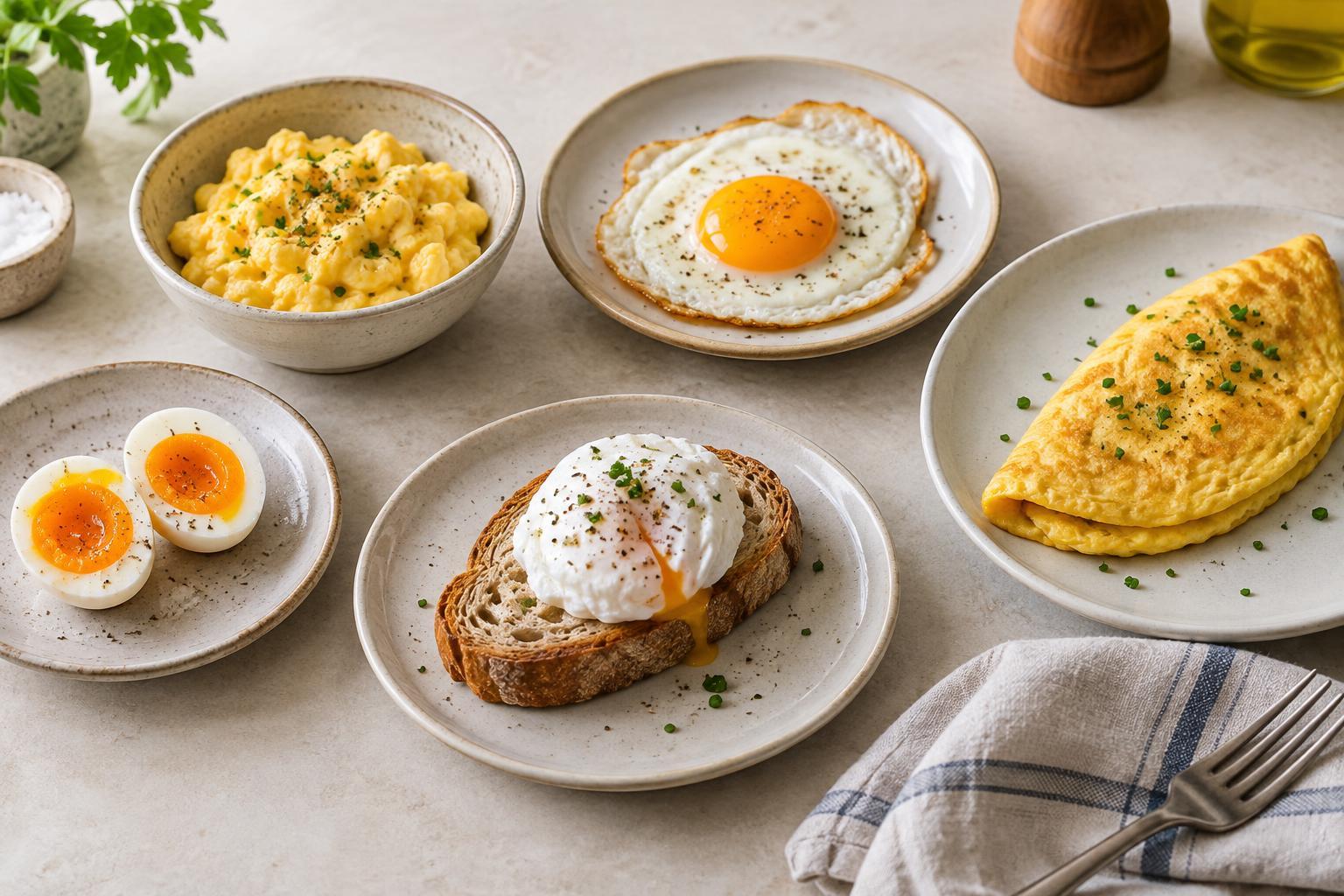
Eggs can become a quick breakfast, a filling for a sandwich, or the finishing touch on a bowl of rice. The main choice is texture: do you want a firm yolk for slicing, soft curds for toast, or an egg you can fold around leftovers? Start with one method that suits the meal, then repeat it a few times. Small changes in heat and timing will make more sense once you know what to look for.
A small nonstick or well-seasoned skillet, a saucepan, a spatula, and a slotted spoon cover all five methods below. Cooking times are guides rather than guarantees; egg size, pan material, and stove settings all vary. If you are cooking for someone who needs to avoid undercooked eggs, cook the whites and yolks until firm rather than serving them runny.
Boiled eggs: choose your yolk
Bring enough water to cover the eggs to a gentle boil, then lower the eggs in carefully with a spoon. Reduce the heat so the water bubbles steadily without tossing them around. For large eggs, begin checking your preferred result at around 7 minutes for a softer yolk or 11 minutes for a firm one. Starting temperature and egg size can shift the result, so treat your first batch as a useful test.
Move the eggs into a bowl of cold water to stop them cooking and make them easier to handle. To peel, tap the shell all over and start at the wider end, where there is often an air pocket. Firm-boiled eggs are handy for salads and lunches; softer ones are best served soon after cooking.
Scrambled eggs: keep the heat gentle
Crack two eggs into a bowl, add a pinch of salt, and beat until the yolks and whites are combined. Warm a little butter or oil in a skillet over low to medium-low heat. Pour in the eggs and use a spatula to move them slowly from the edges toward the center, letting the liquid egg flow onto the exposed pan.
For tender curds, take the pan off the heat when the eggs look just set; they can continue cooking briefly from the pan’s warmth. If they set before you can move them, lower the heat next time. Add herbs, cheese, or cooked vegetables near the end so you can still see and control what the eggs are doing.
Fried eggs: control the heat and the top
Heat a lightly oiled skillet over medium-low heat. Crack an egg into a small bowl first, then slide it into the pan; this gives you a chance to remove any shell and helps you place the egg neatly. Let it cook until the white is set. If the underside is browning before the white finishes, turn the heat down.
For a sunny-side-up egg, cover the pan briefly to help set the top without flipping it. For an over-easy egg, slide a thin spatula underneath, flip gently, and cook the second side briefly. Leave it longer if you prefer a firmer yolk. Fried eggs are especially useful when a meal needs a quick, satisfying addition, whether that is toast, cooked greens, or leftovers.
Poached eggs: use a quiet simmer
Fill a saucepan with a few inches of water and bring it to a gentle simmer, not a rolling boil. Crack an egg into a small cup. Stir the water once to create a mild swirl, then tip the egg close to the surface. A fresh egg may hold a neater shape, but a few loose strands of white are normal.
Let the egg cook until the white is set, usually a few minutes, then lift it out with a slotted spoon. Rest it briefly on a clean towel to remove excess water. Poaching takes practice because the egg is not held in place by a pan; begin with one egg at a time and focus on the gentle movement of the water rather than a perfect shape.
Omelets: make a simple fold
Beat two eggs with a pinch of salt. Heat a little butter or oil in a small skillet over medium-low heat, pour in the eggs, and tilt the pan to spread them. As the edges set, lift them gently so uncooked egg can run underneath. When the surface is mostly set, place a small amount of cooked filling on one half and fold the other half over it.
Keep the filling modest so the omelet folds without tearing. Cooked mushrooms, leftover vegetables, or a little cheese work well; raw ingredients that need time to soften should be cooked before the eggs go in. If folding feels awkward, slide the omelet onto a plate and fold it there. The goal is a meal you enjoy, not a flawless crescent.