Measure the space you can actually spare
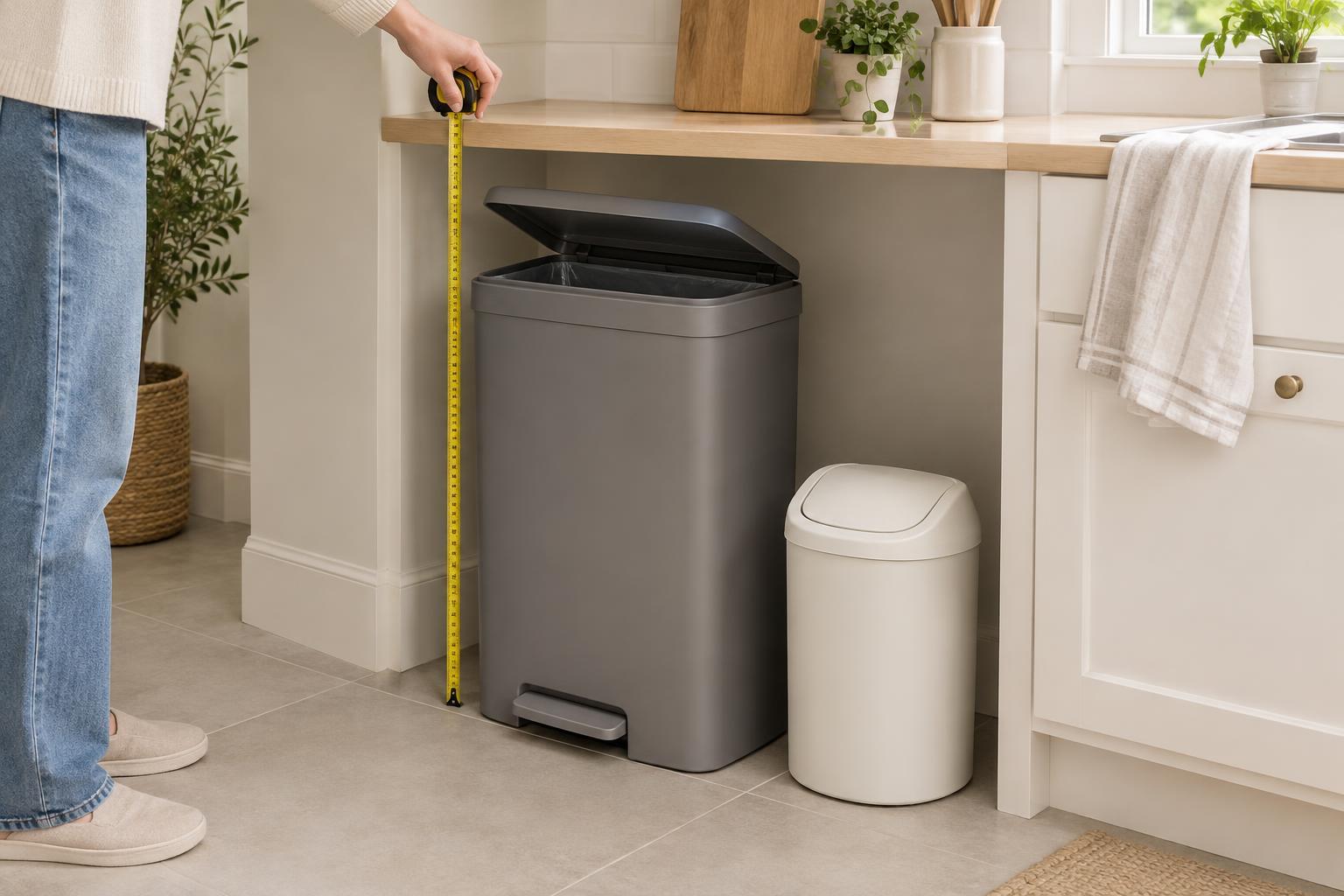
Start with the counter, not the rack. Measure the clear area beside the sink, leaving room for the faucet, cabinet doors, and anything you use regularly, such as a kettle or chopping board. If you prepare food on the same stretch of counter, decide how much space you are willing to give up every day. A rack that technically fits but blocks your usual prep area is likely to feel too large.
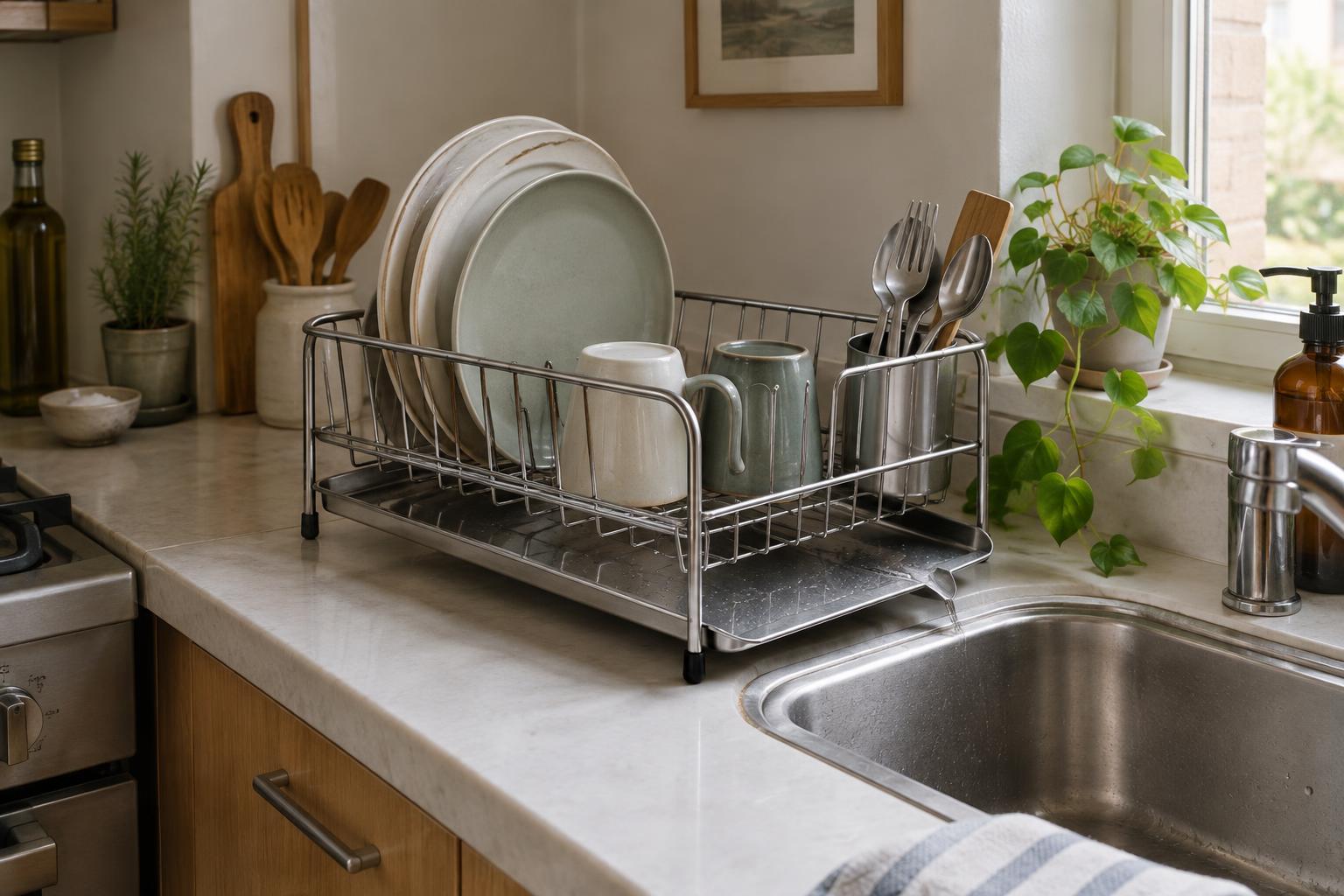
Check the rack’s full dimensions, including its drainboard, utensil cup, and any side-mounted glass holders. Some accessories extend beyond the main frame. If you plan to store the rack between uses, measure that storage spot too and look for a model that is easy to lift without pieces slipping off. A paper template cut to the rack’s footprint can help you picture how much counter will remain.
Match the capacity to your usual dishes
The right capacity depends less on the number of advertised slots than on what you wash by hand. A rack with many narrow plate dividers may be helpful for dinner plates but awkward for bowls, pans, or food containers. Think through a typical load: a few plates, mugs, cutlery, and perhaps one large pot. Look for an open area where your less regular items can rest without balancing on top of everything else.
Consider height as well as width. Taller plate slots can hold dishes upright and make better use of a small footprint, provided there is enough clearance under any cabinets above. A removable utensil holder offers flexibility, but check that it has enough openings for water to escape and a secure place to attach. If you often wash only a couple of items, a compact rack may serve you better than one sized for an occasional large meal.
Plan where the water will go
A dish rack needs a clear drainage plan. Some sit on a tray that collects water; others use a sloped board or spout to direct it into the sink. A drainboard can spare you from emptying a tray, but only if its outlet reaches the sink from the position where the rack fits. Check which direction the water flows and whether the spout can be adjusted. Avoid assuming that a rack marked as draining will work with your sink layout.
If you choose a collecting tray, make sure you can remove and empty it without lifting a full rack of dishes. The tray should also be easy to see and reach so standing water does not go unnoticed. Whichever design you prefer, allow space around the rack for air to circulate. Dishes dry more comfortably when they are not packed tightly against a wall or stacked inside one another.
Choose materials you can maintain
Dish racks are exposed to water, soap residue, and frequent handling, so surface details matter. Look for smooth joints, accessible corners, and parts you can separate for washing. Closely spaced wires and deep grooves may take more effort to wipe clean. A rack that looks simple on the shelf can become a chore if its drip tray is difficult to remove or its utensil cup cannot be rinsed thoroughly.
Metal, plastic, and coated racks can all be useful; the better choice is one that suits your cleaning habits and budget. On a metal rack, inspect the finish and any points where wires meet, since damaged coatings can be difficult to keep tidy. On a plastic rack, check that the base feels sturdy and does not flex excessively under your usual dishes. Whatever the material, follow its care instructions and expect to clean the rack as well as the dishes.
Check stability and everyday convenience
A small rack should feel secure when loaded unevenly. Look for a steady base, feet that grip the counter, and plate supports that hold dishes without forcing them close together. If possible, imagine removing a mug or heavy bowl with one hand: will the rest stay put? Features that fold or slide can save space, but they should lock or sit firmly in the positions you expect to use.
Before buying, rank your priorities. If counter space is scarce, a narrow footprint and reliable drainage may matter more than maximum capacity. If you wash pots daily, an open, stable base may be worth a little extra space. The best dish rack for a small countertop is not necessarily the smallest one; it is the one that gives your usual dishes a safe place to dry while leaving the rest of the kitchen workable.