Start with the food, not the material
A useful food storage collection does not need to match perfectly. It needs to fit the meals and routines in your home. Before buying a set, think about what you store most often: dinner leftovers, cut vegetables, packed lunches, sauces, or dry pantry ingredients. A container that works beautifully on a refrigerator shelf may feel heavy in a commuting bag. One that is easy to carry may not be the one you want for reheating.
Pay attention to shape as well as capacity. Shallow containers make leftovers easier to see and can be convenient for portioning meals. Taller ones may suit soups or pantry staples while taking up less shelf space. Measure the space where containers will live, including the height of your refrigerator shelves and the depth of your drawers. A modest selection of sizes that fit your storage space is often more useful than a large assortment with lids you cannot find.
Glass: visible and versatile at home
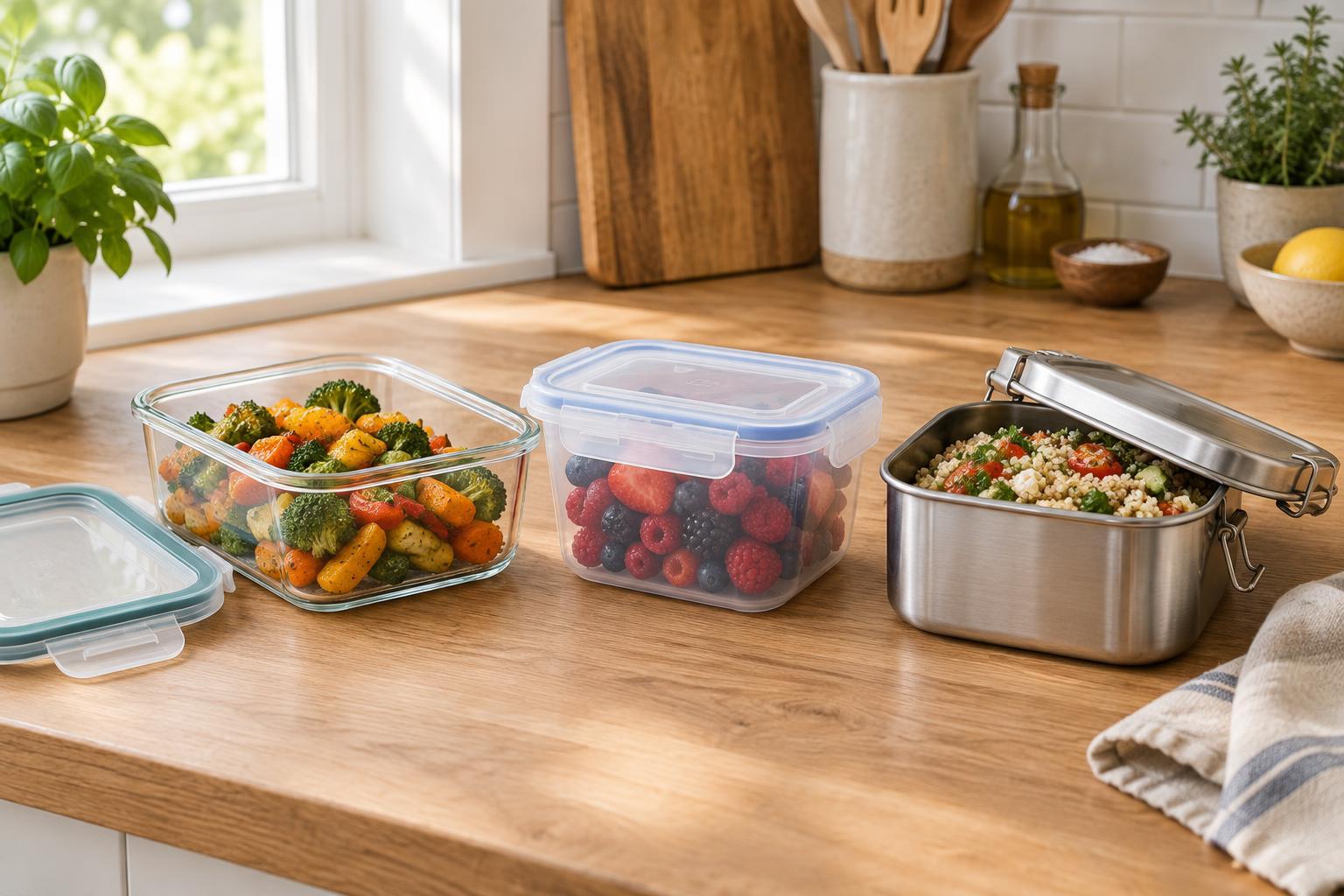
Glass lets you see what is inside without opening the lid, a small advantage when the refrigerator is crowded. It generally resists stains and lingering food odors, so it is a practical choice for tomato-based leftovers, strongly seasoned meals, and foods you expect to store repeatedly in the same container. Many glass bases can be used for reheating, but check the product instructions: the lid may have different limits, and not every glass container is intended for oven, freezer, or microwave use.
The trade-offs are weight and breakability. Glass can be less comfortable to carry every day, and a dropped container may chip or shatter. Avoid sudden temperature changes unless the maker explicitly says the product can handle them; for example, do not assume a cold glass dish can go directly into a hot oven. For a home-focused collection, glass is especially appealing when you want to spot leftovers quickly and move them from storage to the table.
Plastic: light and easy to carry
Plastic earns its place when weight matters. It is often a convenient option for packed lunches, snacks, and containers that travel back and forth in a bag. Many plastic containers also stack or nest neatly, though this varies by design. If you expect to reheat food in one, follow the maker’s microwave instructions for both base and lid. A container meant for food storage is not automatically intended for every heating or washing method.
Plastic can pick up stains or odors, particularly after repeated contact with strongly colored or aromatic foods. Scratches, warping, or a lid that no longer sits securely can make a container less pleasant to use. When shopping, look for a surface that is easy to clean and a lid you can attach without a struggle. If your usual routine involves taking food to work and reheating it there, consider whether carrying a lightweight plastic container and transferring food to a suitable dish feels simpler than relying on one container for every step.
Stainless steel: sturdy, but less visible
Stainless steel is a useful choice for food you want to carry without the weight of glass. It does not show the contents, so it helps to have a simple way to identify leftovers, such as labeling the lid. Steel containers can work well for lunch components, chopped ingredients, and snacks. Designs vary, however: a plain metal box, a container with a sealing gasket, and an insulated food jar serve different purposes. Check the particular product rather than assuming it will keep food hot or contain soup without leaking.
Standard stainless steel containers should not go in a microwave. If reheating is part of your routine, plan to transfer the food to a microwave-suitable dish or choose another material. Also check how the lid and any seal should be cleaned. A sturdy base is only convenient if the whole container is easy to wash, dry, and put away.
Check the lid before you buy the set
Whatever material you prefer, the lid often determines whether a container becomes a favorite. Try the closure if you can: it should align easily, feel secure, and be comfortable to open. A removable gasket can make thorough cleaning easier, provided it is simple to take out and replace. If you pack liquids, look for an explicit leak-resistant or leakproof design and test it over a sink before trusting it in a bag. A tight-looking lid is not proof that it will hold soup upright, let alone sideways.
Choose a few containers around specific jobs rather than expecting one type to do everything. Glass might hold dinner leftovers at home, lightweight plastic could carry a sandwich or snack, and stainless steel could handle a sturdy packed lunch. Buy enough to support your normal rotation, then see what you reach for. The right collection is the one whose bases and lids fit your space, clean up easily, and make tomorrow’s meal a little simpler.