Start with the UV claim
The most useful words on a sunglasses label are “100% UV protection,” “100% UVA and UVB protection,” or “UV400.” These indicate that the lenses are intended to block ultraviolet light, rather than simply make the view darker. UV400 refers to protection against ultraviolet wavelengths up to 400 nanometers, covering the UVA and UVB range. If a pair has no clear UV claim on its tag, packaging, or product description, do not assume it offers that protection.
Read the claim for the lenses you are actually buying. A display card may describe several models, while a product page may list multiple lens options. Check the selected color and version before ordering. For prescription sunglasses, ask the optical provider what UV protection is included with the finished lenses. Clear prescription lenses may also have UV protection, but their presence in a tinted frame is not proof of it.
Separate UV protection from darkness and polarization
Lens darkness describes how much visible light gets through; it does not tell you how much UV light is blocked. A pale lens can provide full UV protection, and a very dark lens might not. Choose tint partly for comfort and the conditions in which you will wear the glasses, but look for an explicit UV claim separately.
Polarized lenses reduce certain kinds of reflected glare, such as glare from a road or water. That can make a bright day more comfortable, but “polarized” alone is not a UV-protection label. If you want both features, look for both claims. Likewise, terms such as “mirrored,” “gradient,” and “photochromic” describe a finish or how the tint behaves; they do not replace a UV specification.
Some labels also show a lens category, often as a number from 0 to 4. This describes visible-light transmission, with higher categories generally indicating darker lenses. It is useful when judging whether a tint suits your plans, but it is a different measure from UV protection. Very dark category 4 lenses are generally not suitable for driving, so check the product’s use restrictions rather than treating the darkest option as the best all-purpose choice.
Look at the label in context
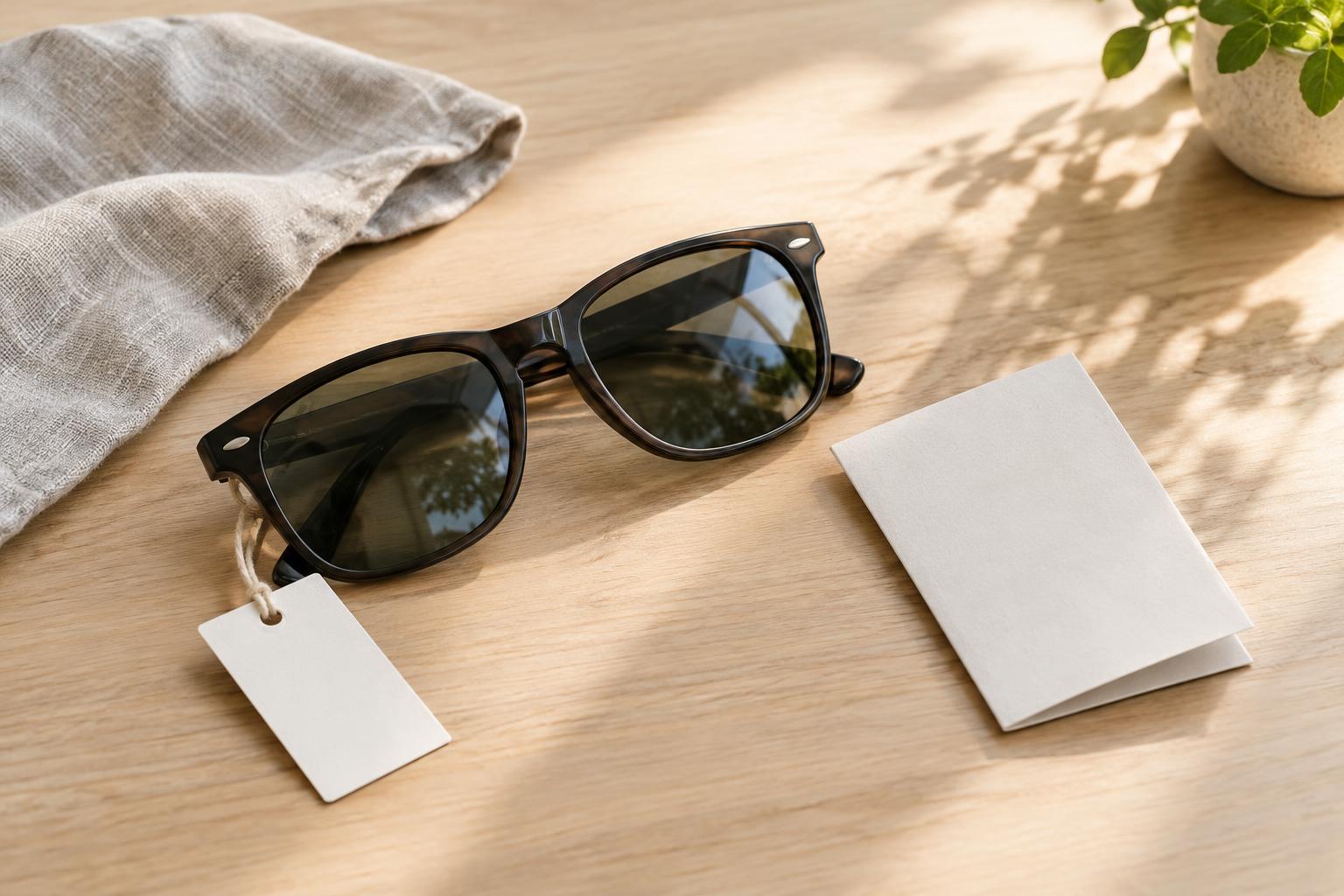
A straightforward label should make it easy to identify the UV claim and any limits on use. Packaging may also name a sunglasses standard or include care and safety information. Those details can help you assess the product, but an unfamiliar logo or a technical-looking tag should not distract from a missing UV statement.
Buy from a retailer that provides a clear product description and can answer questions about the lenses. If you already own a pair with no tag and cannot establish its UV protection, some optical shops can check lenses with suitable equipment. This is more dependable than trying to judge protection by holding the glasses up to a light or comparing how dark they look.
Choose a fit you will actually wear
Once the UV label is clear, consider coverage. Lenses that sit close to the face and cover the eye area well can limit light entering from above and the sides. Larger frames or wraparound shapes may be useful in very bright surroundings, provided they fit comfortably. Frames that slide down your nose or press behind your ears are less likely to become an everyday habit.
Try looking down, turning your head, and walking around while wearing a pair. The frame should stay reasonably steady without pinching. Check that the lenses give you a comfortable view and that any tint works for the activities you have in mind. If you use screens or instrument displays while out and about, it is worth checking how they appear through polarized lenses before deciding.
Keep the useful details after purchase
A good label is easier to rely on when you can connect it to the pair in your hand. Keep the packaging or a copy of the product description if you might later forget which lens option you chose. Use a case when the glasses are in a bag, and clean the lenses with methods recommended by the maker. If lenses become badly damaged or vision through them seems distorted, consider replacing them.
The shopping checklist is short: find an explicit UV400 or 100% UVA and UVB claim, treat tint and polarization as separate choices, read any use restrictions, and pick a fit that feels easy to wear. Sunglasses work best as an everyday accessory when their protection is clear and reaching for them feels effortless.