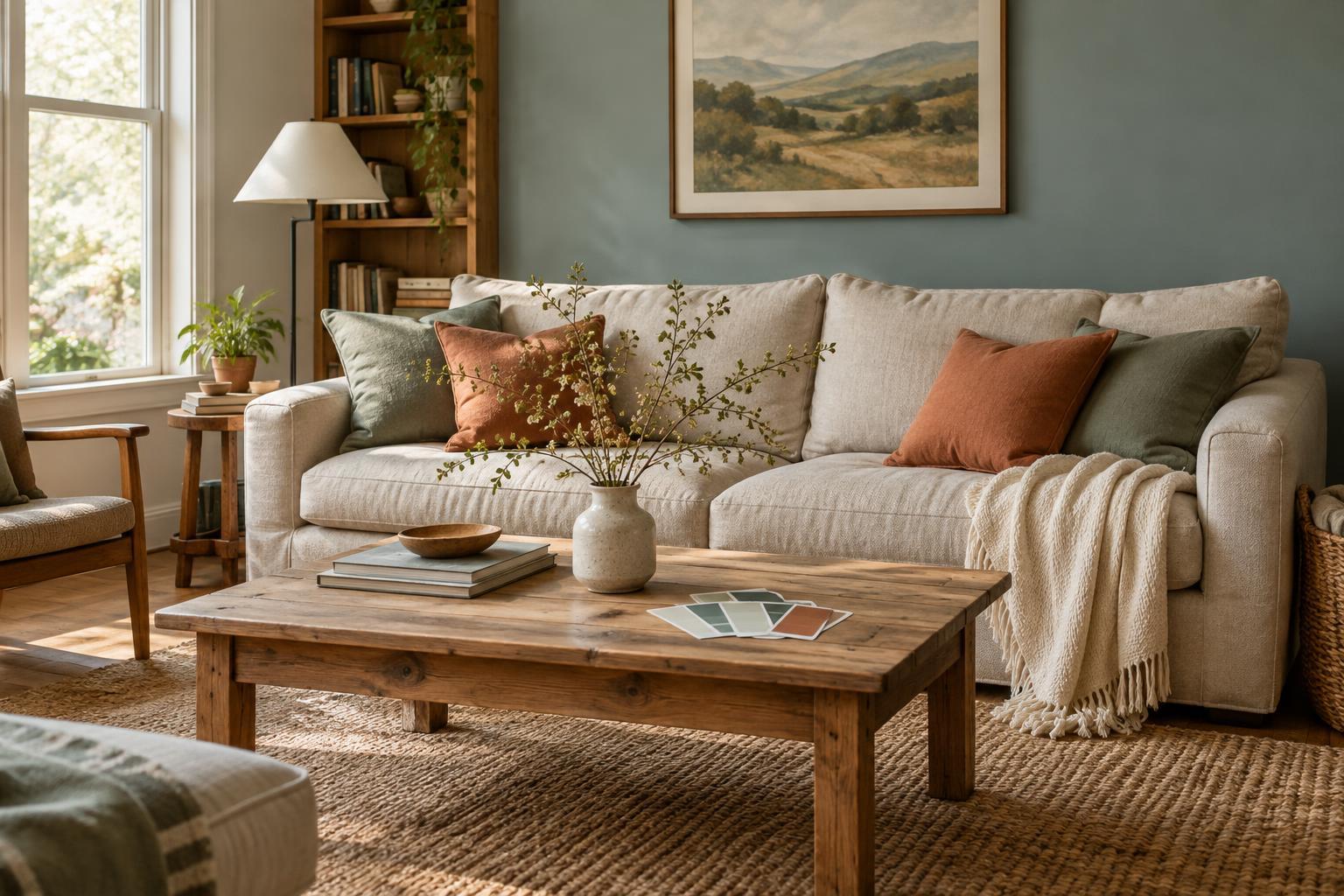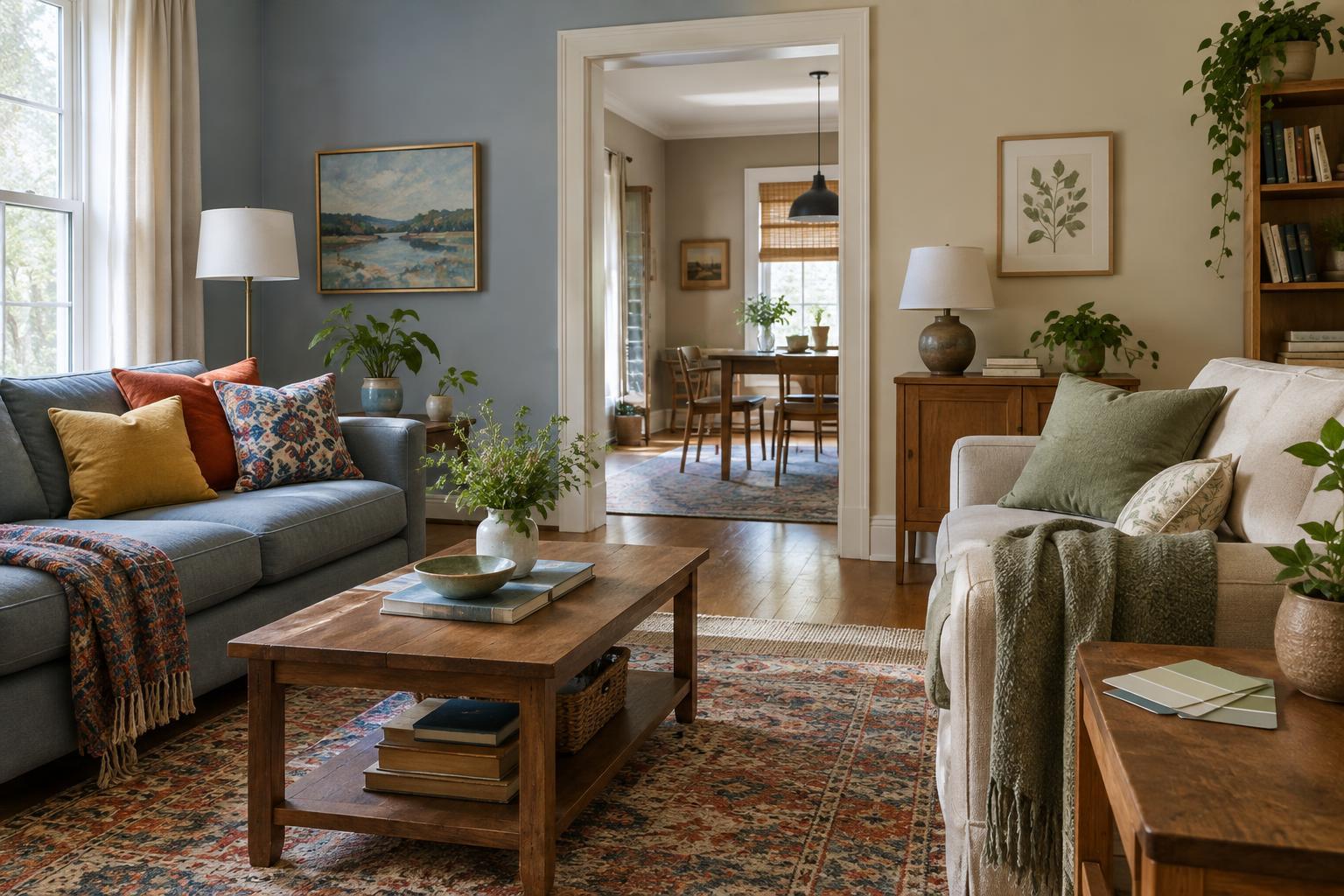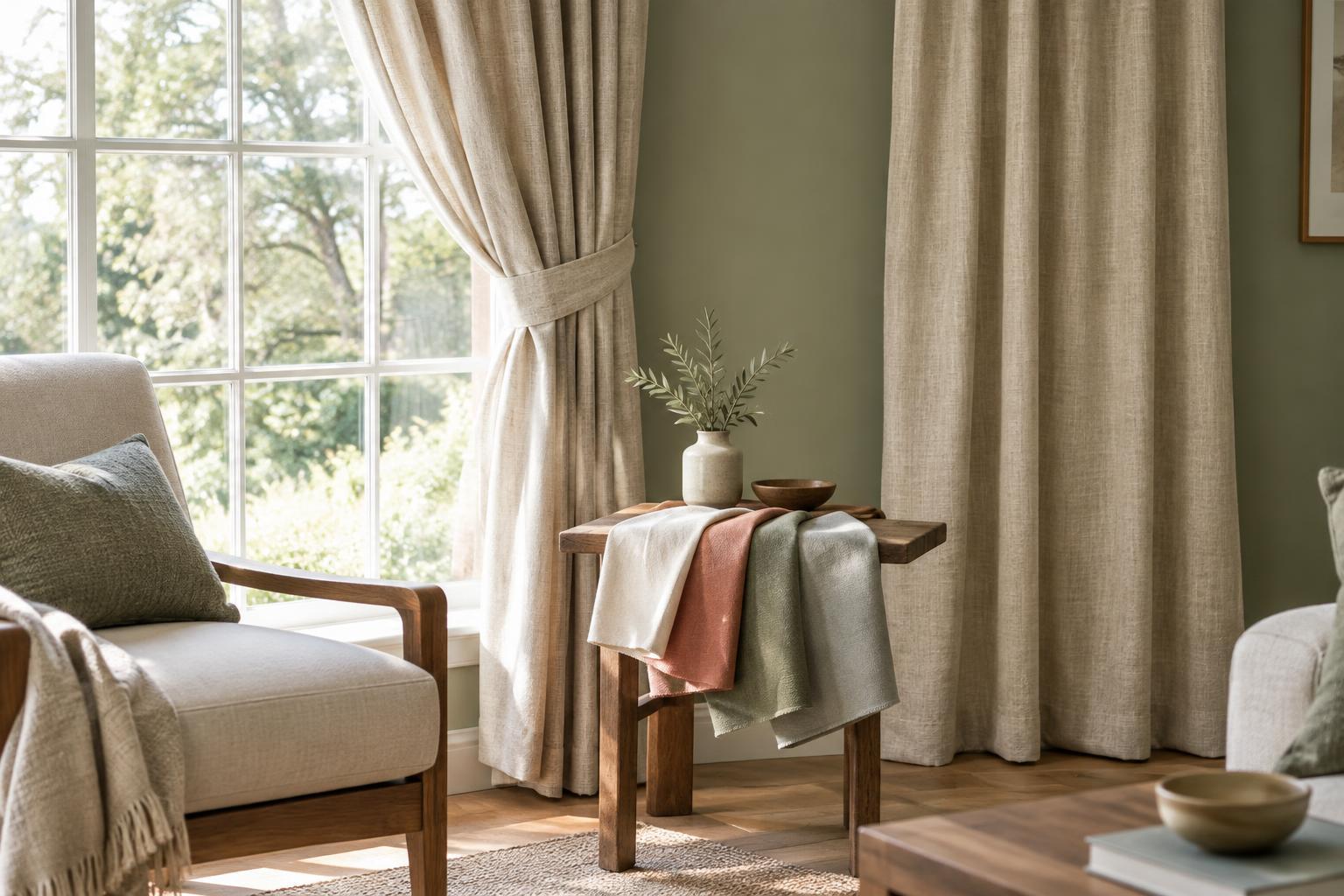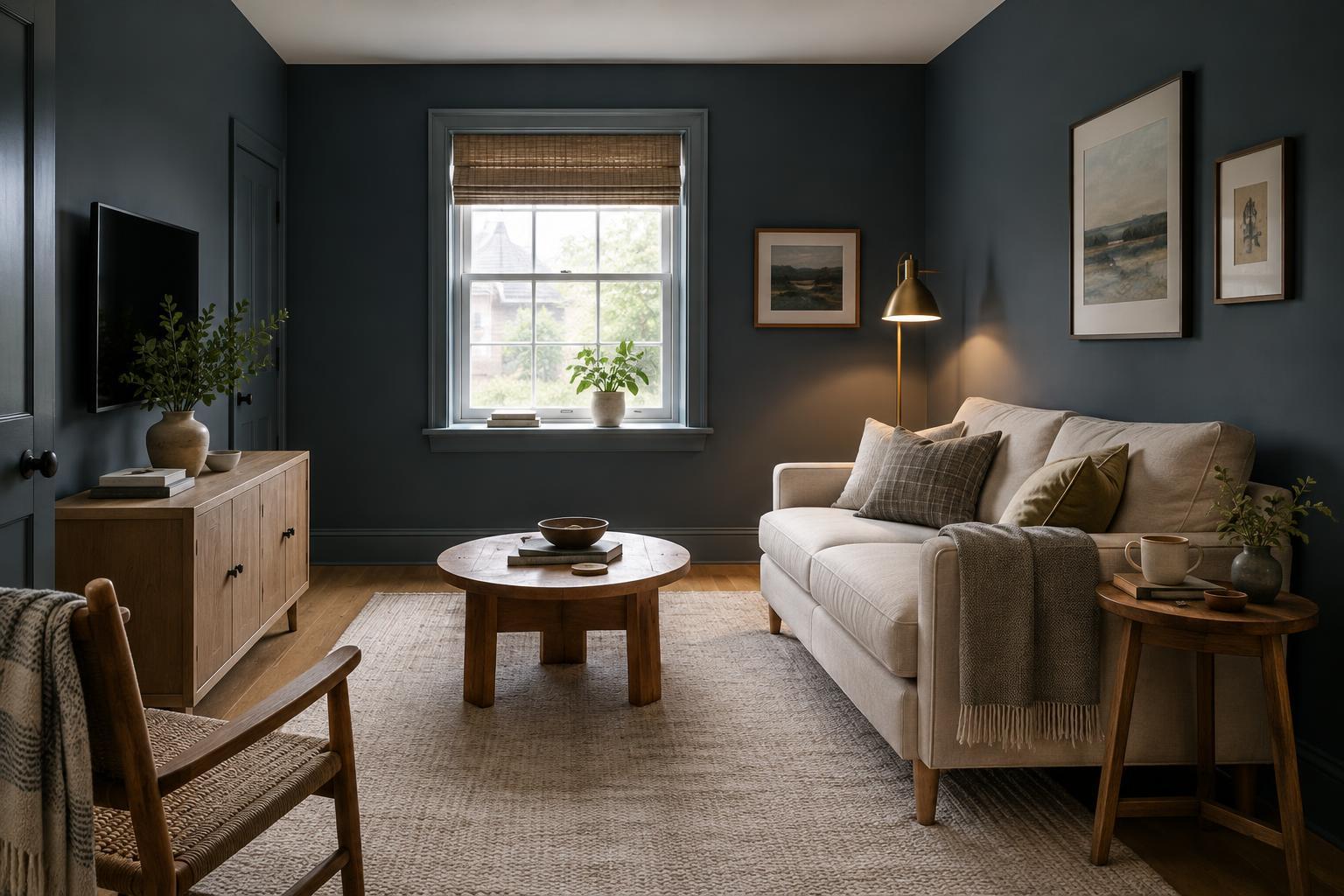
Decide what you want the room to feel like
Dark color does not automatically make a small room feel cramped. It can give a bedroom a restful backdrop, make a reading corner feel settled, or bring definition to a compact dining area. The useful question is not whether the room is too small for a deep shade, but what you want to notice when you enter it. A dark wall might frame a favorite piece of furniture; a room painted throughout can feel more enveloping.
Before choosing paint, look at what must stay. Flooring, large furniture, window coverings and fixed finishes all affect the result. A charcoal wall next to a cool gray floor will read differently from the same wall beside warm wood. If the room already has several strong colors, a muted dark shade may be easier to live with than a vivid one. Choose a direction that works with the objects you use every day, rather than building the whole room around a paint chip.
Test color in the light you actually have
Dark colors can shift noticeably as the light changes. Deep blue may look nearly black in one corner and distinctly blue beside a window. Forest green can appear cooler under one lamp and warmer under another. Bring home several samples with different undertones, then view them beside the floor, trim and largest furnishings. Looking at a small chip in a store is rarely enough to judge how a shade will feel across a wall.
If possible, paint sample areas on more than one wall, or use movable sample boards. Check them in daylight and again with the lights you normally use in the evening. Consider the finish as well as the hue: a low-sheen finish often gives a dark wall a calm, even appearance, while a glossier finish draws more attention to reflections and surface imperfections. Test the actual product you plan to use, since finishes can change how a color appears.
Choose a placement that suits the room
Painting every wall dark can create a cohesive backdrop, especially when the room has awkward corners or many short stretches of wall. Continuing the color across those breaks may make the layout feel less busy. If you want a lighter overall impression, start with one wall, a recessed area, or the lower portion of a wall. An accent wall works best when it has a clear purpose, such as anchoring a bed or drawing attention to a dining nook.
Think about the ceiling and trim at the same time. Crisp white trim creates a pronounced outline around dark walls; softer off-white or trim painted close to the wall color creates a gentler transition. In a very compact room, too many sharp color boundaries can call attention to every edge. There is no need to paint everything the same shade, but deciding where each color begins and ends will make the result feel considered.
Keep the room useful, not just dramatic
A dark palette benefits from layered lighting. A ceiling fixture alone may leave corners dim, so add light where you actually need it: beside a chair, on a desk, or near a mirror. A lamp that illuminates a wall can also bring out the paint color after sunset. Keep window coverings easy to open if daylight matters to you, and avoid placing tall, bulky pieces where they block the window.
Furniture can provide contrast without turning the room into a strict light-versus-dark scheme. A pale table, woven shade or medium-tone wood can give the eye a place to rest. Pieces with visible floor beneath them may help a crowded room feel less packed, but storage matters too; a closed cabinet that contains everyday clutter can be more useful than a visually airy piece that holds very little. Leave comfortable paths around the furniture before adding decorative objects.
Finish with texture and edit what competes
Once the main surfaces are in place, use texture to keep a dark room from feeling flat. Linen, wood grain, ceramics and a soft rug each respond to light differently, even when their colors are restrained. A mirror can be useful where it reflects a window, lamp or pleasant view; placed opposite a crowded shelf, it may simply double the visual clutter. Choose its position for what it will show, not just for its size.
Live with the room for a little while before adding more accents. Dark walls can give artwork, books and everyday objects plenty of presence, so fewer pieces may have greater impact. If the result feels heavy, try a lighter textile, a better-placed lamp or a clearer surface before repainting. A successful small dark room is not one that looks large at all costs. It is one that feels comfortable, works for your routines and makes its limited space feel deliberate.