Start with the meal, not the package
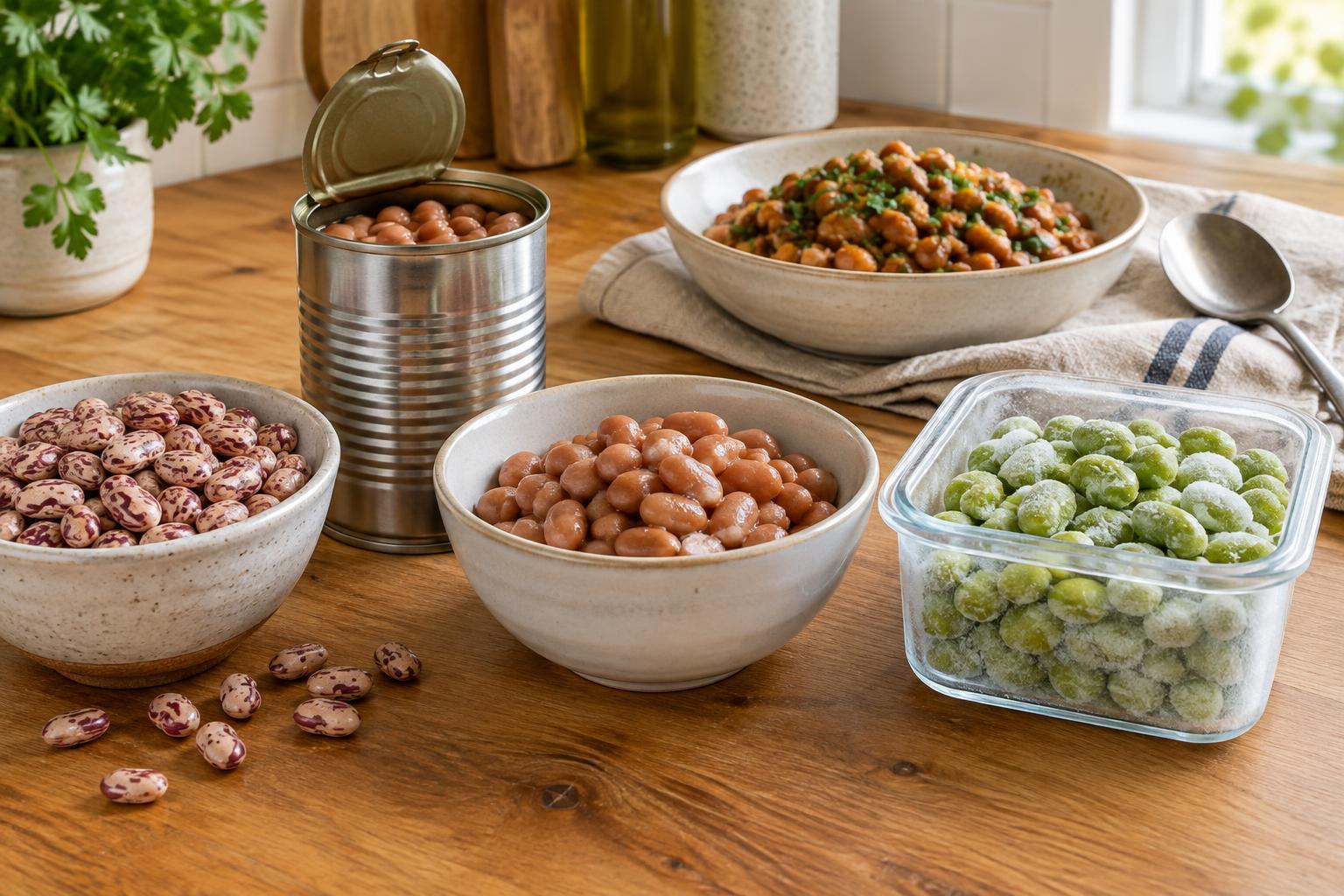
Beans can make an easy lunch, stretch a soup, or become the center of dinner. The choice between dried, canned, and frozen is less about finding one superior form and more about matching the beans to the time and attention you have. Canned beans are ready for a last-minute salad. Dried beans reward a little planning when you want a pot of beans and its cooking liquid. Frozen beans can be convenient when you want to use a small amount without opening a whole can.
Before comparing them, check what a recipe means by “beans.” Frozen green beans are vegetables used differently from cooked chickpeas or black beans. Frozen edamame also has its own texture and flavor. This guide focuses mainly on mature beans and chickpeas, whether bought dried, canned, or frozen after cooking. If you are making a dish built around green beans, choose those on their own terms rather than treating them as a direct swap.
Choose dried beans when you can plan ahead
Dried beans give you control over the finished texture and seasoning. You can cook them until firm enough for a salad or soft enough to settle into a stew, and you can add aromatics to the pot. Their cooking liquid is useful for soups and saucy dishes. Dried beans also store compactly in a cupboard, making them appealing if you cook beans regularly and have room for a few dependable varieties.
The trade-off is time. Some dried beans benefit from soaking, and all need to be cooked until fully tender; the time varies with the variety and age of the beans. Follow reliable package directions, especially for kidney beans, which require thorough boiling rather than a low-temperature start in a slow cooker. Cook a generous batch when you have a quiet stretch of time, then refrigerate or freeze portions in some of their liquid for later meals.
At the shop, look for intact beans in a well-sealed bag and buy an amount you are likely to use. A large bag is not much of a convenience if it sits untouched while you keep reaching for a can.
Choose canned beans for speed and predictability
Canned beans are already cooked, so they suit meals assembled in minutes: grain bowls, quick soups, bean salads, and pasta. They also make it easier to try a variety you do not cook often. For a recipe that calls for cooked beans, a can usually saves the most work, though the amount of beans after draining may differ from the amount listed on the label.
Texture varies by brand and type. Some canned beans hold their shape well, while others are softer and better suited to mashing or blending. If seasoning matters to you, compare labels: plain, salted, and seasoned versions serve different purposes. Draining and rinsing removes the packing liquid and gives you a cleaner starting point for a salad. In soup or stew, you may prefer to keep some of that liquid for body, provided you like its flavor.
Keep a couple of cans that fit the meals you make most often. Chickpeas, for example, work well in salads and quick skillet dishes, while black beans can go straight into a warm bowl with rice and vegetables. The useful pantry staple is the one you will actually open.
Choose frozen beans for flexible portions
Frozen cooked beans are particularly handy when you want a handful for a single serving or when you have cooked more dried beans than you can use soon. Store-bought options differ by shop, so read the package to confirm whether the beans are fully cooked and whether they contain sauce or seasoning. If you freeze your own, portion them in amounts suited to your usual meals, leaving a little space in the container for expansion.
Frozen beans can often go directly into a simmering soup or skillet dish; heat them through according to the package instructions or your recipe. For a cold salad, thaw and drain them first so extra moisture does not dilute the dressing. Freezing may soften some beans, so it is an especially comfortable choice for chili, soup, purées, and other dishes where a perfectly firm texture is less important.
Build a small, useful bean routine
There is no need to commit to one format. Keep canned beans for evenings when cooking time disappears, dried beans for a planned weekend pot, and frozen portions for filling the gaps between them. When choosing in the store, ask three questions: How soon will I use these? Do I want firm, distinct beans or a softer result? Will I use the whole package?
A simple routine makes the choice easier. Cook dried beans when you want their flavor and cooking liquid; label and freeze the extra portions. Replace a used can so there is always a quick option in the cupboard. Then let the meal decide: a crisp salad may call for well-drained canned beans, while a slow soup welcomes beans from your own pot or freezer. Convenience and good cooking can share the same shelf.