Choose a color plan you can carry with you
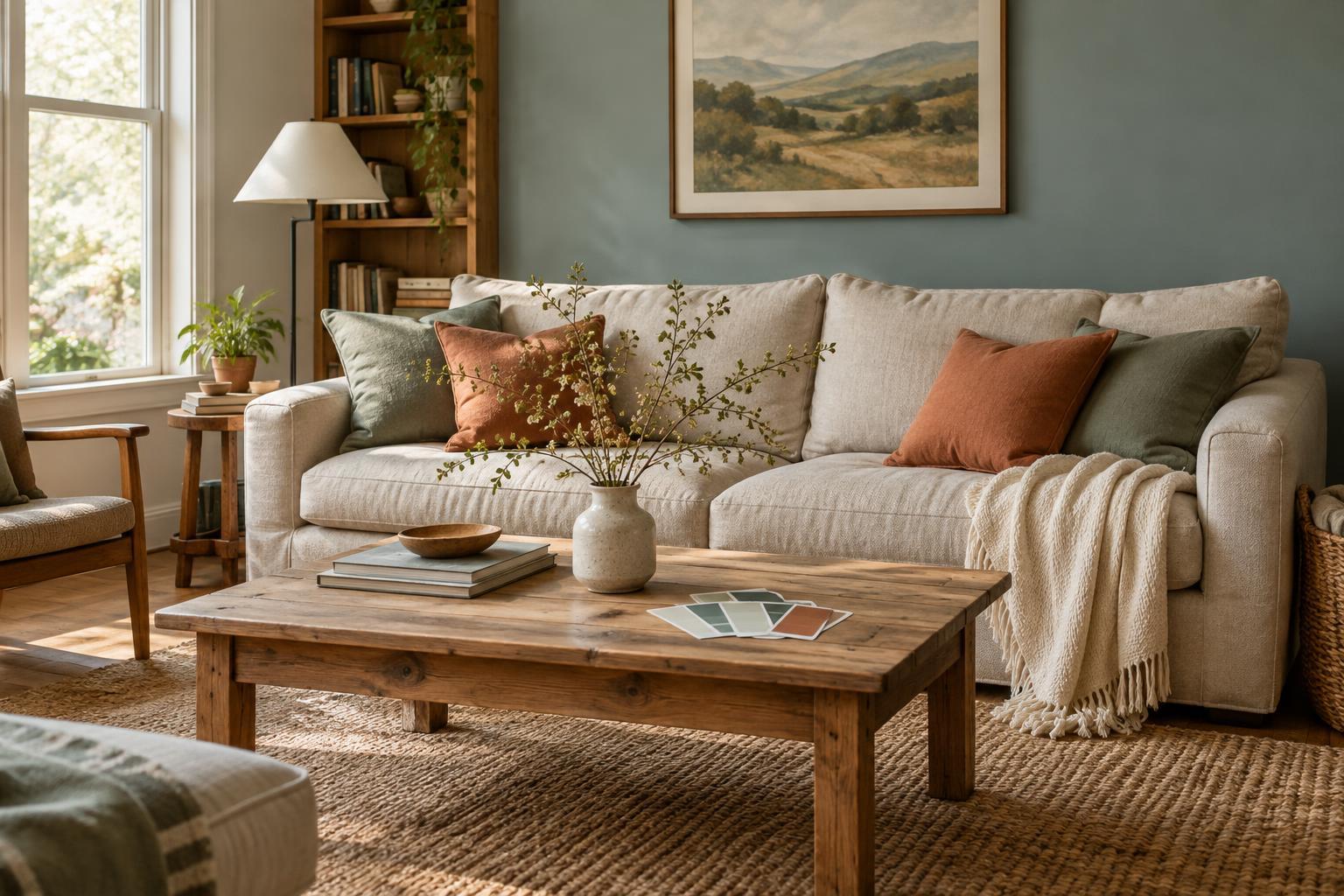
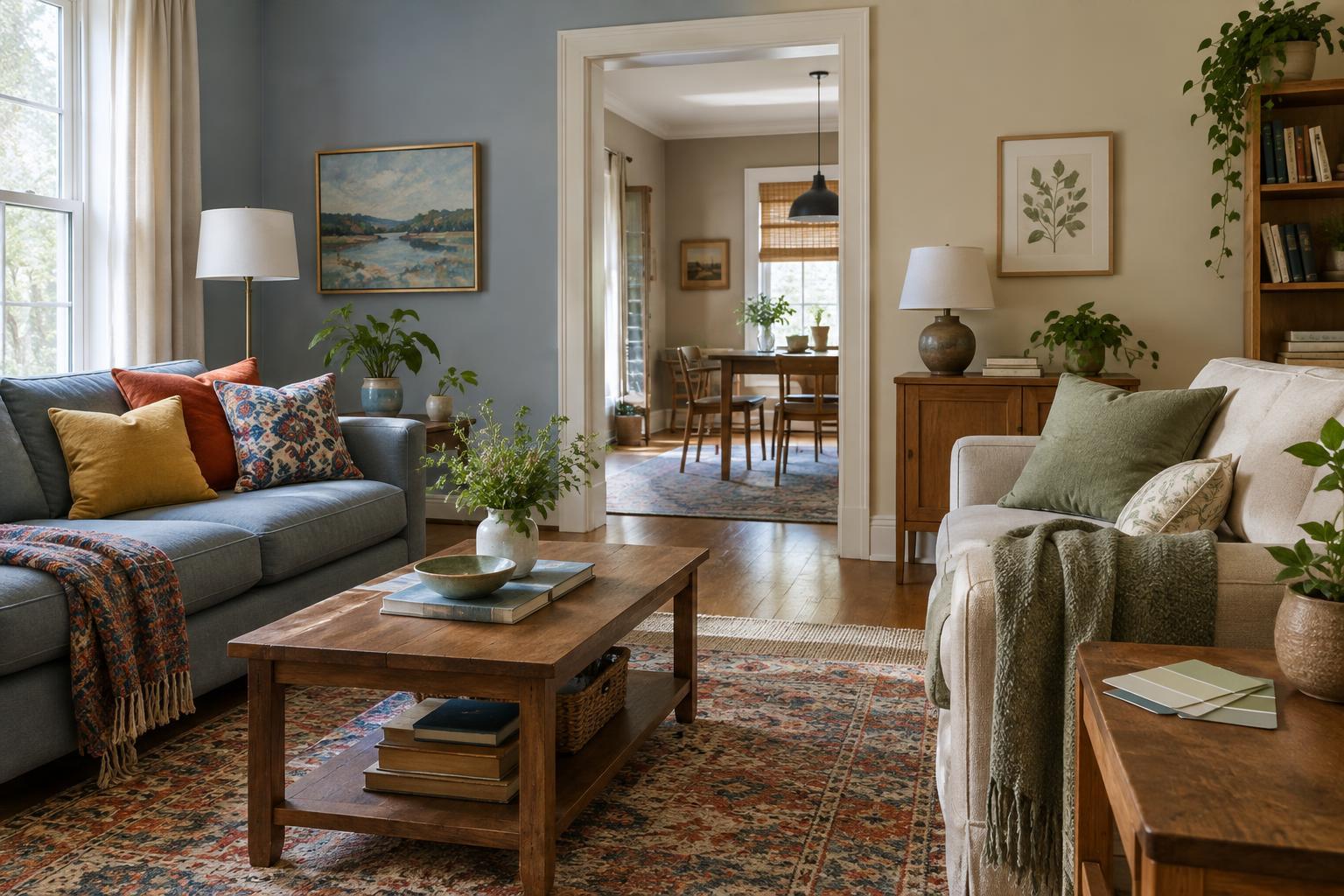
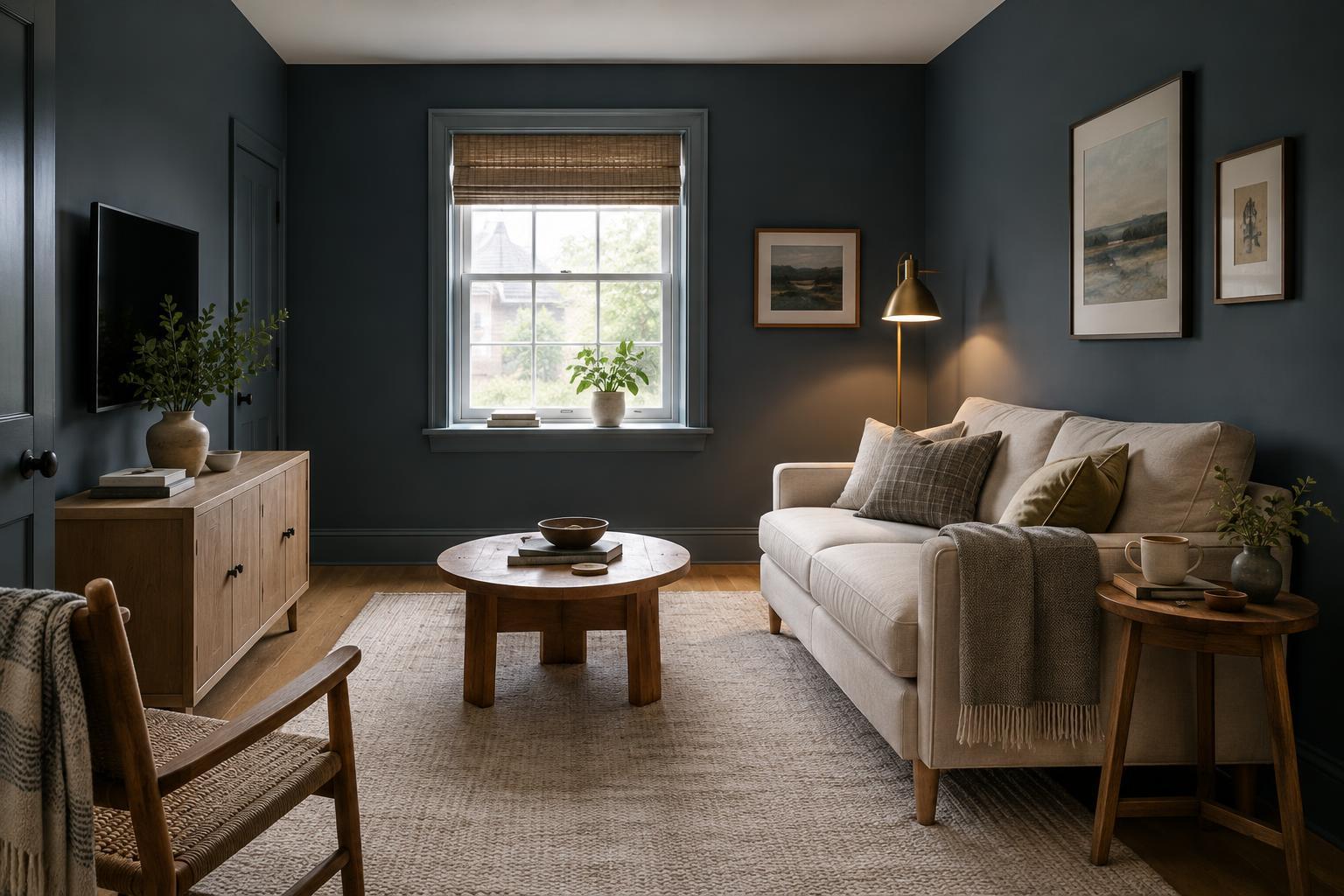
A rental’s wall color can be a useful backdrop rather than a problem to solve. Before buying anything, look at the colors already fixed in the room: flooring, cabinets, countertops and large pieces of furniture. Choose one main color you enjoy, a second color that works with it and a quieter shade to give your eye a place to rest. The plan need not be strict; it simply makes later choices easier.
Test the idea with items you already own. Set a cushion on the sofa, move a vase near a lamp or lay a favorite scarf over a chair for a day. Notice how the colors look in morning and evening light. A shade that feels cheerful in a shop may appear much brighter beside your flooring, while a muted color may be just what the room needs.
Let textiles cover more ground
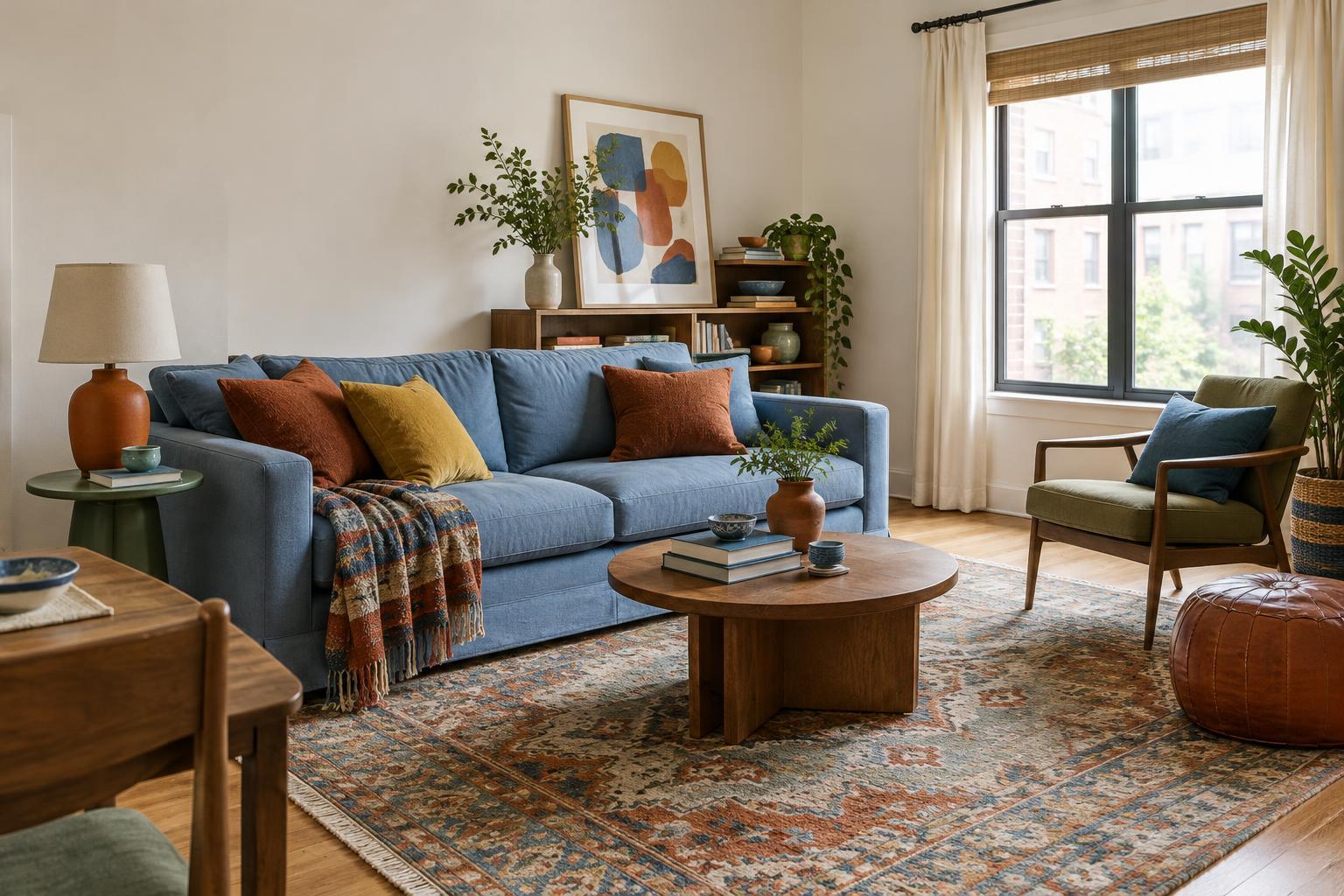
Textiles can change a room quickly because they occupy generous areas without changing the building. A rug brings color to the center of a living room and can visually connect furniture that does not match. Check the room’s measurements before shopping, and mark out a proposed rug size on the floor so you can see whether it reaches the furniture you want it to anchor. Consider how easy the material will be to clean in the place you intend to use it.
Curtains, bedding and removable cushion covers offer other ways to make a color noticeable. You can keep the larger textile relatively calm and use a stronger shade in smaller pieces, or choose one patterned textile and pull colors from it for the rest of the room. In a compact space, repeating a color across two or three areas often feels more intentional than concentrating every bright item in one corner.
If you are replacing window coverings, check how the existing hardware works and keep any original pieces together for move-out. A curtain panel can also hang from a freestanding clothing rack or room divider where drilling is not an option. Make sure any setup is stable and does not obstruct a doorway or heater.
Use furniture and lighting as color blocks
A colorful side table, storage cabinet or upholstered chair can have as much visual impact as a painted accent wall, with the advantage that it can move with you. Before choosing a large piece, think about its next possible home. Straightforward shapes and useful dimensions tend to be easier to place in a different room than furniture bought to fit one awkward corner.
Smaller objects can do the same work on a modest scale. Try a colored lampshade, a ceramic table lamp or a tray that gathers daily essentials. Lighting is especially helpful because it draws attention to the objects around it. Check bulb requirements and the amount of light you need for reading or cooking; color should not come at the expense of a lamp’s main job.
For a balanced look, give a strong-colored piece some breathing room. A blue cabinet may stand out best against a plain wall with just one nearby blue detail, such as a cushion or a print. You do not have to match shades exactly: related tones can make a room feel collected rather than assembled all at once.
Add art without assuming every wall needs a hole
Art can introduce a palette at eye level. Framed prints, photographs, textiles and children’s drawings all work; choose pieces you want to keep looking at rather than filling a wall for its own sake. A large frame leaned securely on a mantel or low shelf can make an impact without hanging anything. Smaller frames grouped on a bookcase create a similar effect.
If you want to hang art, check your lease and the wall surface first. Even products sold as removable may lift paint or leave marks, particularly on delicate or recently painted surfaces. Follow the product’s weight and removal directions, and try a discreet test before relying on an adhesive across the room. Where hanging is permitted, choose a layout you can live with so you do not create unnecessary holes.
Finish with useful color, then leave room to edit
Everyday objects can add color without becoming clutter. A bowl for fruit, a set of dish towels, a desk organizer or a plant pot contributes to the room while earning its place. Open shelves make these choices more visible, so group objects by use and leave some empty space between them. If a shelf starts to feel busy, remove a few items before buying a new storage solution.
Add color in stages rather than shopping for a complete room at once. Start with one larger element, such as a rug or bedding, then repeat a shade in a few portable pieces. Live with the result before adding more. This slower approach helps you spot what the room actually needs—and means that, when you eventually move, your favorite colors can come along without a repainting project.