Start with the result you want
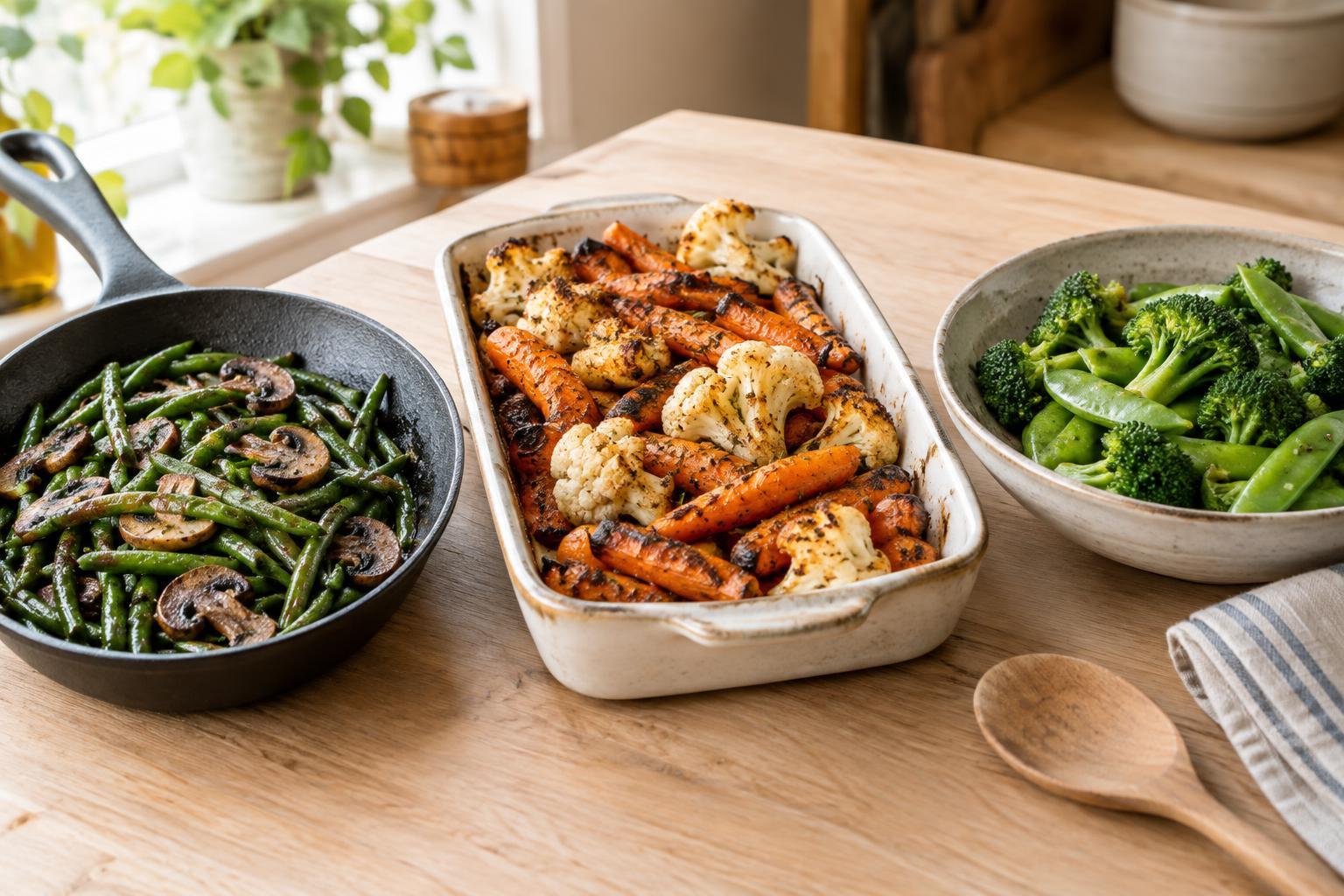
Before choosing a pan, picture the finished plate. Sautéing gives vegetables a quick-cooked texture with some browned edges. Roasting takes longer but can make edges deeply colored and the centers tender. Steaming cooks with moist heat, leaving vegetables soft or crisp-tender without browning. None is the best method for every vegetable; the right choice depends on whether you want a lively side dish, a more substantial roasted tray, or a gentle base for sauce and seasoning.
Time matters, too. A skillet is useful when dinner is almost ready and you want vegetables on the table alongside it. An oven is convenient when you can let a tray cook while you prepare something else. A steamer needs little attention once the water is simmering, but delicate vegetables can change from crisp to soft quickly, so keep them within sight.
Sauté for speed and browned edges
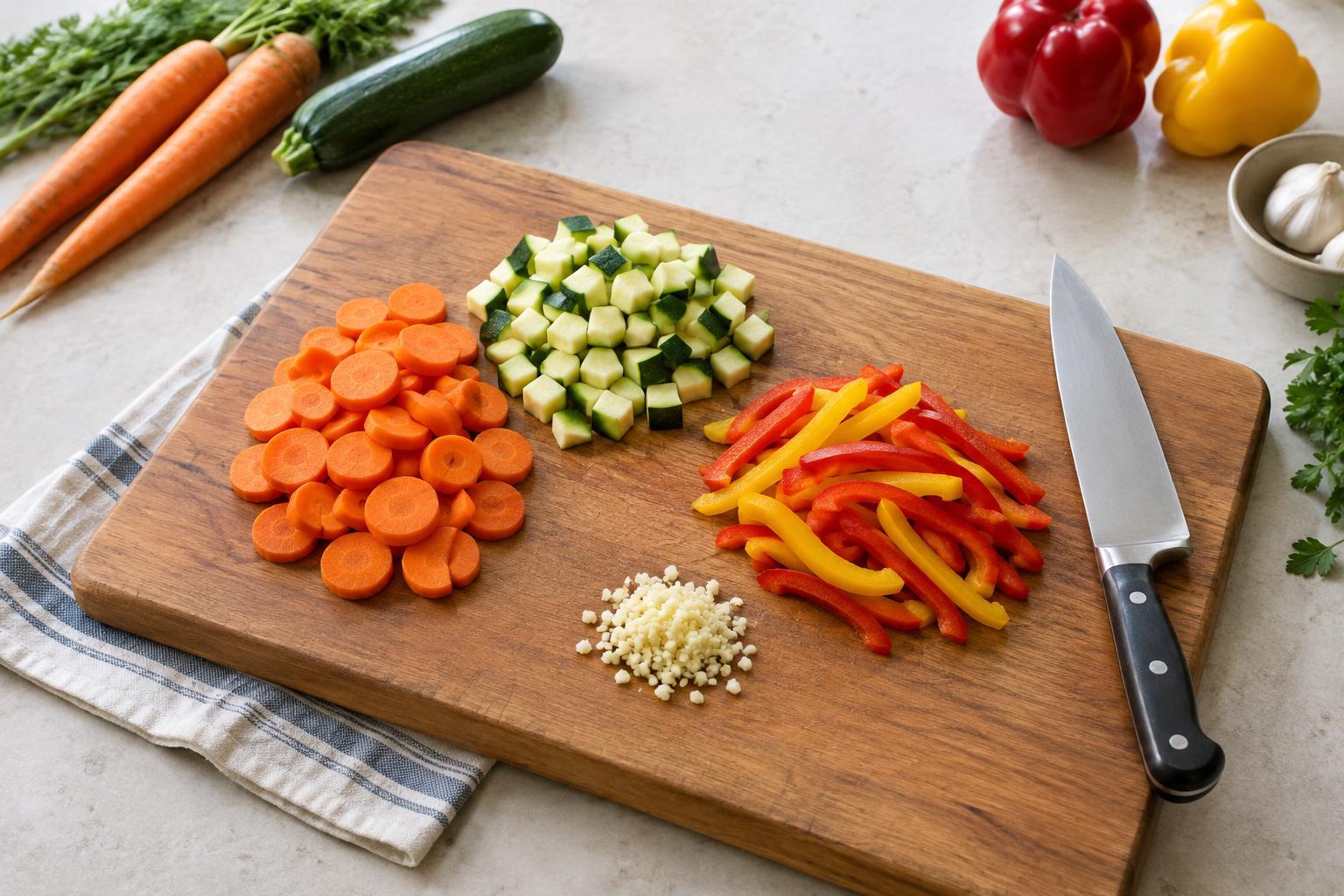
Sautéing suits vegetables cut into pieces that can cook through in a relatively short time: sliced mushrooms, zucchini, peppers, green beans, and thinly cut cabbage are good candidates. Heat a skillet, add enough oil to lightly coat the food, and spread the vegetables out. If the pan is crowded, moisture collects and they soften before they brown. Work in batches when needed, especially with mushrooms or zucchini.
Cutting affects the outcome as much as heat does. Small, even pieces cook quickly; thicker pieces may brown outside while staying firm inside. Stir occasionally rather than constantly so surfaces have time against the pan. If the vegetables are coloring too fast, lower the heat or add a small splash of water to help the centers finish cooking. Add garlic, tender herbs, or other ingredients that burn easily near the end. A squeeze of lemon or a spoonful of sauce can bring the dish together just before serving.
Roast when you want deeper flavor with less stirring
Roasting is a natural fit for carrots, cauliflower, broccoli, squash, onions, and potatoes. The dry heat encourages browning where the vegetables touch the hot tray or face the oven air. Cut pieces to a similar size, dry them if they are wet, and toss with a modest amount of oil and seasoning. Spread them in a single layer with space between pieces. A piled-up tray traps steam and makes browning harder.
Check the tray partway through cooking and turn the pieces if one side is coloring much faster. Dense vegetables generally need longer than tender ones, so use separate trays or add quicker-cooking pieces later. Test for doneness with a fork rather than relying only on color: browned broccoli stems may still be too firm for your taste, while pale squash may already be soft. Finish with something fresh or sharp, such as chopped parsley, yogurt, or a little vinegar, to balance the roasted flavor.
Steam for a gentle, adaptable base
Steaming is useful when you want a vegetable’s own flavor to stay prominent or plan to dress it after cooking. Broccoli, asparagus, snap peas, leafy greens, and sliced carrots all work well. Set a basket over simmering water, keeping the vegetables above the waterline, and cover the pot. Arrange pieces so steam can move around them; a very full basket may cook unevenly. Start checking early, since a few extra minutes can make a noticeable difference.
Steamed vegetables do not need to be plain. Drain them well so dressing will cling rather than slide off, then add olive oil and lemon, butter and herbs, or a spoonful of flavorful sauce. You can also steam firmer vegetables until nearly tender and finish them briefly in a hot skillet. That two-step approach is handy when a vegetable needs more time to cook through than you want to spend sautéing it.
Choose by texture, then adjust to the meal
For a quick decision, ask three questions: Do I want browned edges? How much time do I have? What texture will suit the rest of dinner? Sauté peppers for a fast addition to a grain bowl, roast cauliflower when you want it to anchor a plate, or steam green beans when a rich main dish calls for a simpler side. The same vegetable can work all three ways; the method changes its role on the plate.
If a batch disappoints, adjust one thing next time. Pale roasted vegetables may need more space on the tray. Watery sautéed vegetables may need a hotter pan, a smaller batch, or more time for surface moisture to evaporate. Overly soft steamed vegetables need an earlier check. These small changes are easier to remember than a strict rule for every vegetable, and they help you cook with what is already in your kitchen.