Choose an activity, not a collection of gear
It is easy to picture a new hobby through its objects: the beautiful notebook, the specialized pan, the neatly arranged box of tools. Those things can be appealing, but they are not the activity itself. Before shopping, ask what you want to spend an hour doing. Do you want to notice details outdoors, make something with your hands, learn a few recipes, or enjoy a quiet task at home? That answer gives you a better starting point than a list of supplies.
Make the first attempt narrow enough for one weekend. Instead of “learn to paint,” try making three small color studies of objects on your table. Instead of “get into baking,” make one familiar recipe and note what you would change next time. A modest project lets you experience the enjoyable and frustrating parts before you decide whether the hobby deserves space in your home or budget.
Design a first session around what you already own
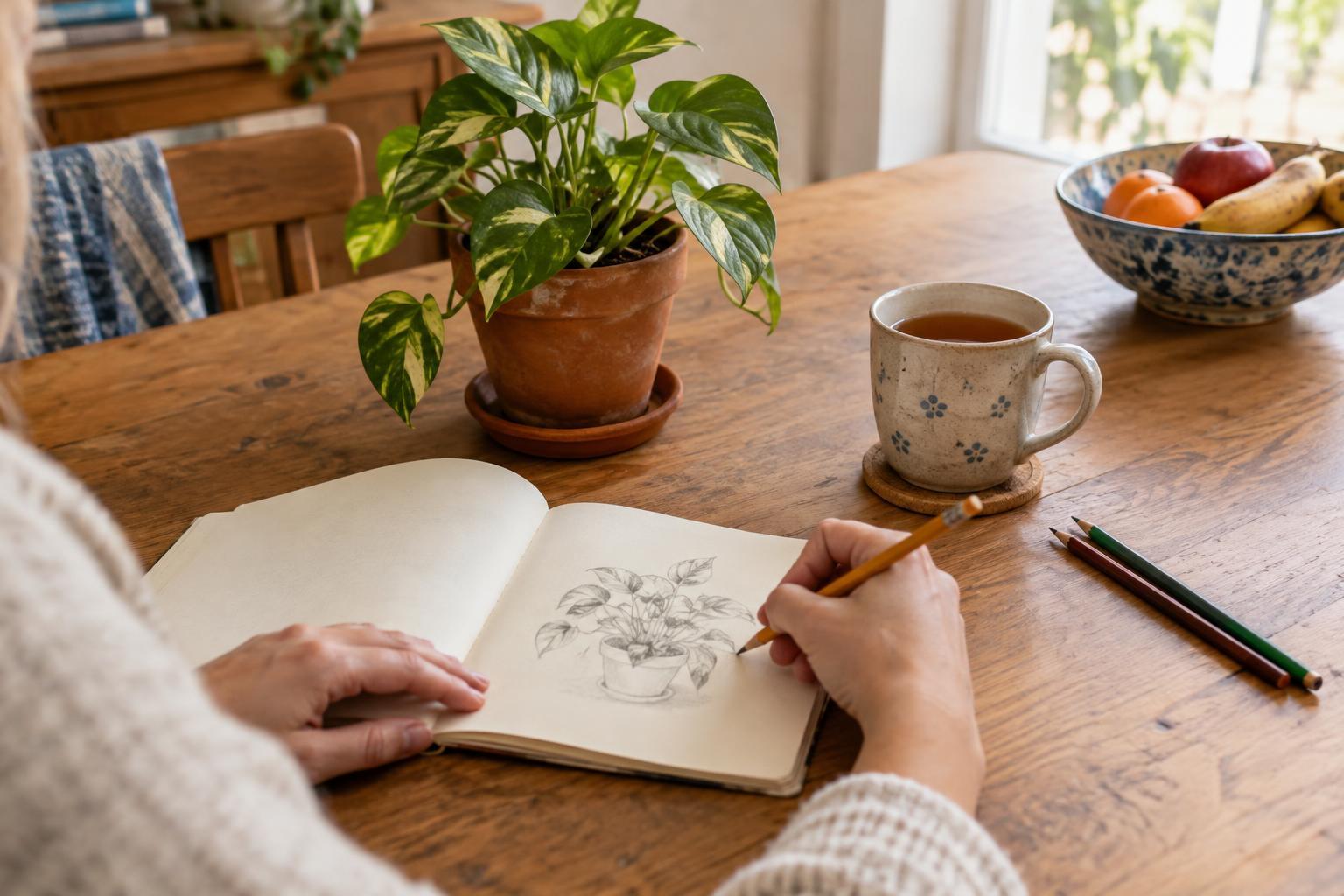
Set aside a short, unhurried block of time and look for an ordinary version of the materials you need. Plain paper works for sketching or keeping a birdwatching log. A phone can help you practice composing photographs. A mixing bowl and a spoon may be enough for a first cooking project. The point is not to prove you can do everything without proper equipment; it is to learn which equipment would actually improve your experience.
Keep preparation simple. Choose a surface where you can work comfortably, gather your few materials beforehand, and decide what “finished” will mean for this session. You might finish when you have made one small object, practiced for thirty minutes, or written down three things you noticed. A clear stopping point makes it easier to begin and leaves room for the rest of the weekend.
Borrow, share, or try before buying
Some hobbies genuinely call for tools you do not have. Before purchasing a full set, see whether you can borrow an item from someone who is happy to lend it, use materials at a class or shared workspace, or buy a small quantity for one project. Check that borrowed tools are in usable condition, and ask how to handle and return them properly. For activities involving sharp tools, heat, or other hazards, choose a beginner task you can do safely rather than improvising with unsuitable equipment.
If you do buy something, look for the smallest purchase that removes a real obstacle. One suitable brush is more useful for an initial painting session than a large assortment you cannot yet compare. A single packet of seeds may tell you whether you enjoy tending plants more clearly than a shelf of pots. Keep a note of what you wished you had during the activity; that is a more dependable shopping list than one made before you begin.
Give the hobby room to be imperfect
A hobby does not have to produce a display-worthy result to earn its place in your weekend. Early attempts are a way to find out whether you like the process: the rhythm of chopping ingredients, the patience of stitching, or the attention involved in drawing a familiar room. If you spend most of a session fixing mistakes, you may still have learned something useful about the activity or the size of project that suits you.
Try repeating the same simple task once or twice before moving on. Familiarity makes it easier to notice whether your interest is growing, and repetition may reveal which difficulties are part of learning and which ones take the pleasure out of it for you. If the hobby is not a fit, you can leave it there without treating the trial as a failed investment.
Let future purchases answer a specific need
After a few sessions, ask yourself three questions: Do I look forward to doing this again? What do I already have that works well? What limitation keeps coming up? If an awkward tool repeatedly interrupts an activity you enjoy, replacing it may be worthwhile. If you are still testing your interest, waiting is also a valid choice.
Give any new supplies a practical home before bringing them in. A small box, drawer, or shelf can make a hobby easy to pick up without letting it spread across your living space. The aim is not to own as little as possible. It is to build a weekend routine you enjoy, with objects chosen because they help you return to it.