Decide what the tray will do most often
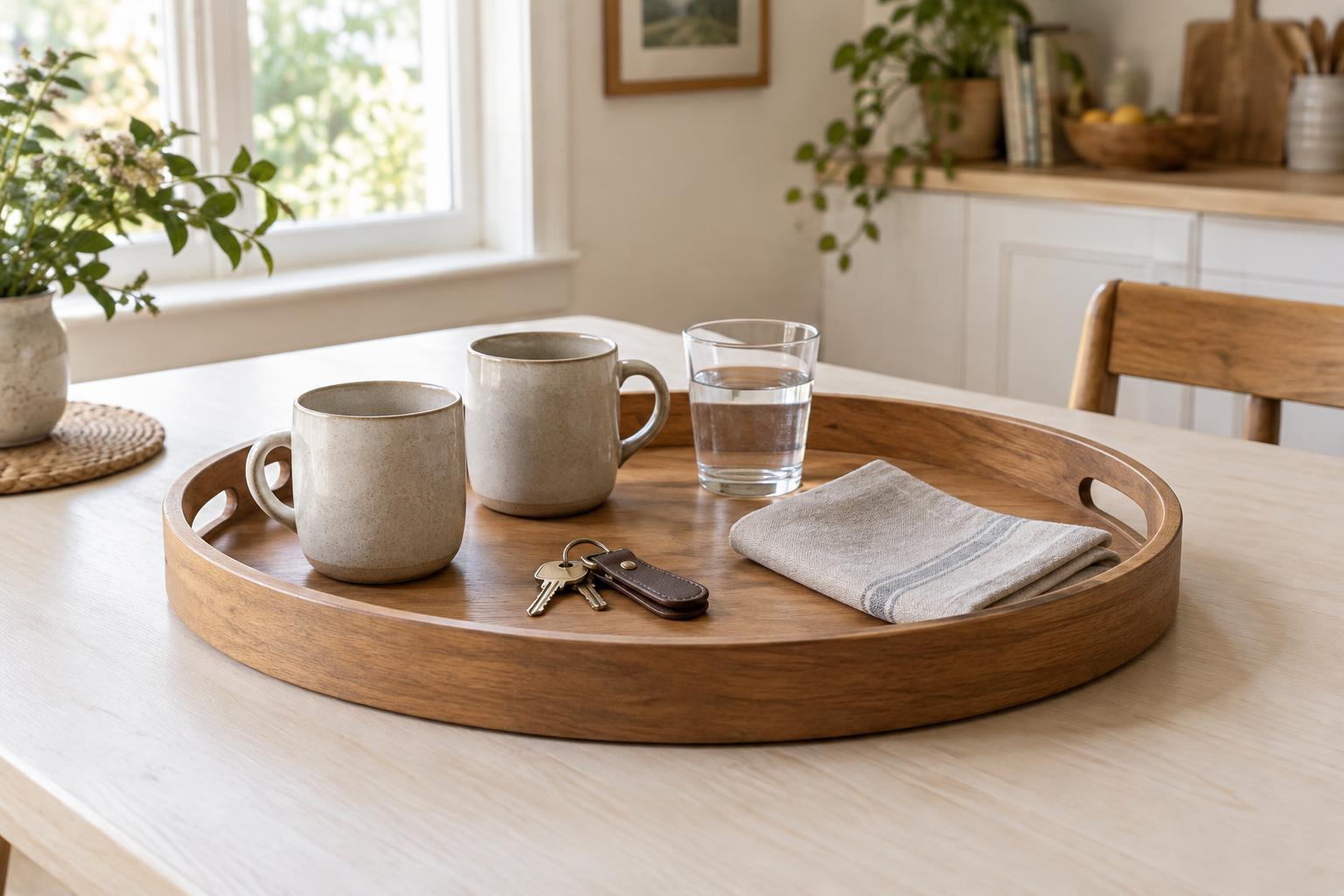
A tray that carries mugs from the kitchen has a different job from one that keeps keys and sunglasses together by the door. Before choosing a shape or finish, picture the items you expect to put on it and how often you will move it. A serving tray needs room for your hands and a stable path through the house. A tray that stays on a shelf or table can be smaller, heavier, or more decorative.
If you want one tray for both jobs, prioritize carrying. It is easy to set a sturdy serving tray on a coffee table, but an organizer with no comfortable place to grip may be awkward when loaded. Think, too, about where the tray will rest when it is not in use. A tray that cannot fit its usual shelf or cabinet is less convenient than its dimensions might suggest.
Size it for the load and the landing spot
Measure the surface where the tray will usually sit, leaving space around it for nearby objects. Then arrange the things you plan to carry on a table and measure their footprint. Allow a little extra room between cups or bowls so they do not bump together. A large tray can look appealing when empty, but it becomes harder to steer around furniture and doorways when full.
Pay attention to usable space, not just the outside dimensions. Wide rims, thick sides, and built-in handles can reduce the area available for objects. If the tray will live on a narrow console or bedside table, check that it leaves room to reach other essentials. For a tray that moves around the home, also consider whether its width lets you carry it comfortably in front of you.
Check how it feels to lift
Handles should give your fingers a secure, comfortable hold. Cutout handles save space but may feel cramped, especially when the tray is heavy. Raised handles can be easier to grasp, although they may prevent the tray from sliding into a shallow cabinet. If possible, test the grip with a few objects on the tray rather than judging it while empty.
The tray’s own weight matters. A heavy material may feel reassuring on a table but tiring to carry with dishes or books on top. Also look at how the base behaves when you lift one end: a rigid tray is generally easier to keep level than one that flexes noticeably. If you usually carry things with one hand, choose a modest size and keep the intended load light.
Match the surface to the objects
A raised edge helps contain small objects and can slow a spill from running onto the furniture beneath. A very tall edge, however, can make it harder to lift a low bowl or pick up coins. For drinks and dishes, look for a flat base that lets them sit evenly. A slightly textured surface or a removable liner may help objects stay in place, but deep grooves can take more effort to wipe clean.
Materials involve practical trade-offs. Sealed wood can bring warmth to a room, though its finish may need more care around standing water. Metal is often slim and rigid but may make a sound when hard objects are set down. Plastic or resin can be lightweight and easy to wipe, while woven trays may be better suited to dry objects if crumbs and spills are difficult to remove. Check the care guidance for the particular tray rather than assuming every version of a material can be cleaned the same way.
Give it a simple everyday role
Once you have a tray, assign it a clear job. In an entryway, it might hold the few items you need before leaving. On a coffee table, it can group a remote, coasters, and a small bowl while leaving the rest of the surface open. In a kitchen, a washable tray can make it easier to move condiments to the table and back.
Try the arrangement for a few days before adding more things. If the tray is always overflowing, it may be too small—or the collection may need sorting. If it is difficult to lift, remove objects you rarely use rather than replacing it immediately. The most useful tray is not necessarily the most striking one; it is the one that fits its spot, feels manageable in your hands, and makes a familiar task a little easier.