Start with the page, not the lamp
A good reading lamp makes the page easy to see without becoming the brightest thing in your field of view. Two kinds of glare can get in the way: light shining directly from an exposed bulb into your eyes, and light reflecting from a page or screen. Before moving furniture, sit where you normally read and hold your book at a natural angle. Then look for both problems as you adjust the lamp.
Switch off nearby lights briefly if you need to see what the reading lamp is doing on its own. Is the whole page lit, or is one corner in shadow? Can you see the bulb from your usual position? Does a bright patch appear when you tilt the book? These simple checks give you a better starting point than placing the lamp wherever it looks best beside the chair.
Place the lamp beside and slightly behind you
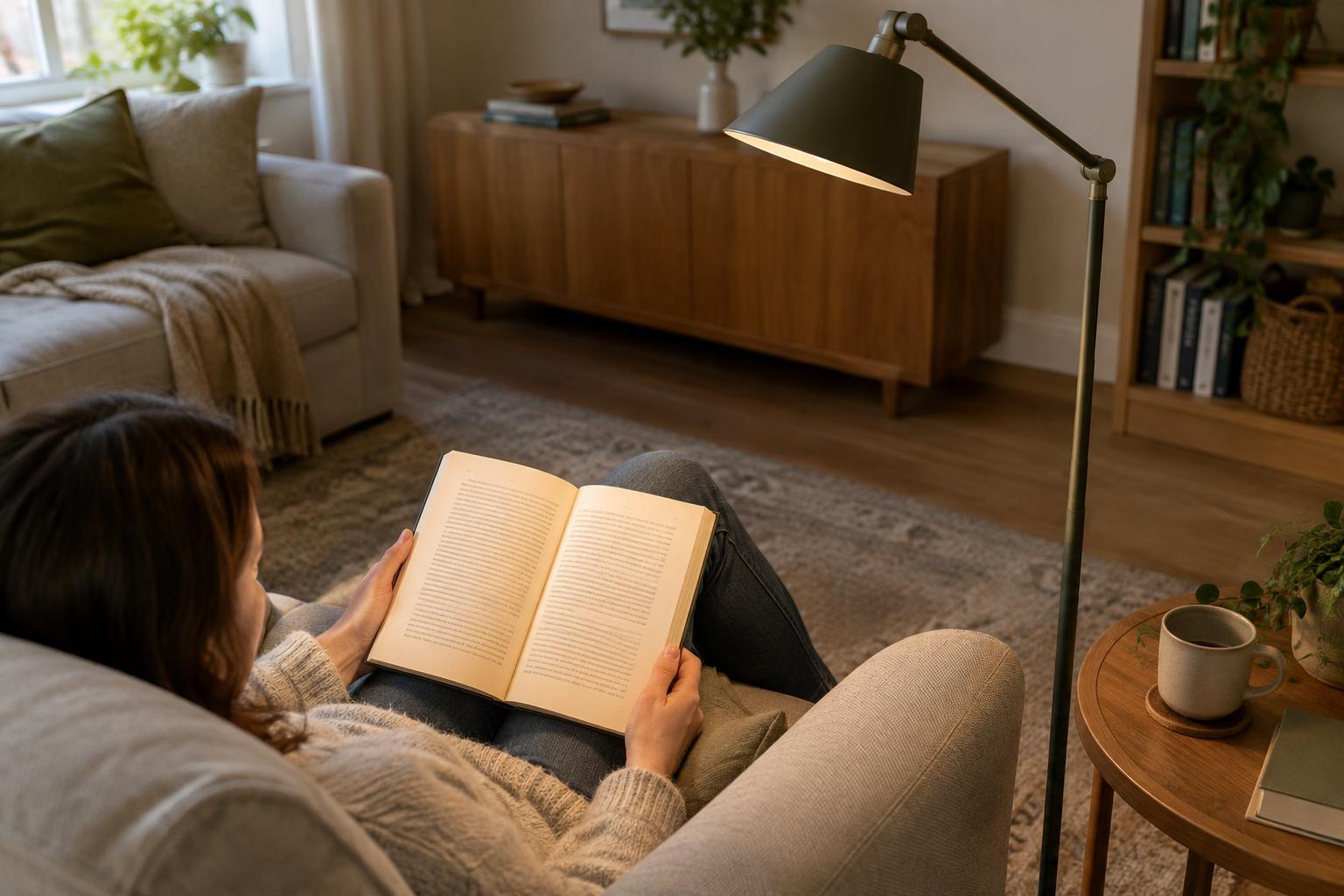
For an armchair, a useful starting position is beside the chair and a little behind your shoulder. Aim the shade down toward the book rather than across your face. This lets the light reach your hands and pages while the shade keeps the bulb out of your direct sightline. If your lamp has a movable arm, bring the shade over the area you read instead of pushing the lamp base into the walkway.
Which side works best depends on how you sit and hold a book. If you take notes, try putting the lamp on the side opposite your writing hand so your hand casts less shadow. If you usually read with the book resting on one arm of the chair, test both sides. The better position is the one that lights the open pages evenly without forcing you to hold the book at an awkward angle.
Adjust height and angle to hide the bright source
Lamp height matters as much as its position on the floor or table. A shade placed too low may leave half the book dim; one placed too high may reveal the bulb when you look up from the page. While seated, move the shade until the light falls across the open book and the bulb stays hidden behind the shade. Then check the setup again after leaning back, since a small change in posture can change what you see.
If the light strikes glossy pages and produces a bright reflection, change the angle before increasing brightness. Move the lamp farther to the side, lower or raise the shade, or tilt the book slightly. The goal is to send reflected light away from your eyes. Adjustable arms and directional shades make this easier, but even a fixed lamp can often be improved by shifting its table or rotating its shade.
Balance the reading light with the room
A page illuminated in an otherwise dark room can feel stark. A gentle background light, such as a shaded lamp elsewhere in the room, can soften the contrast between the book and its surroundings. It does not need to compete with the reading lamp: the page should remain clearly lit. If the reading spot is near a window, notice whether daylight creates a reflection at the time you usually read, and adjust your seat or book angle accordingly.
Brightness and bulb choice also affect how a lamp feels in use. Choose a bulb compatible with the fixture and try a brightness that lets you read comfortably without making the page look washed out. A shade that diffuses or shields the bulb is often more useful than an exposed bulb pointed toward the chair. If several people share the space, an adjustable lamp allows each reader to redirect the light.
Test the setup with your actual reading habits
A lamp can appear perfectly placed until you open a larger book, pick up a magazine, or shift to the other end of the sofa. Test it with the material you use most. Glossy magazines may need a different angle from matte paperbacks, and a book held in your lap needs light in a different place from one propped on a table. Make one adjustment at a time so you can tell which change helps.
Once the light works, check the practical details. Keep the cord clear of feet and chair legs, leave room for a drink or bookmark, and make sure the switch is easy to reach from your seat. The best placement is not a fixed measurement: it is a repeatable arrangement that lights your pages, keeps bright reflections out of your eyes, and lets you settle in without rearranging the room each time.