Start with the pan, not a recipe
A pan sauce makes use of what is already in the skillet after you cook a protein. The browned bits stuck to the bottom, often called fond, carry flavor into a small amount of liquid. Chicken, pork, steak, and well-browned tofu can all leave useful bits behind. The method is flexible enough for a weeknight dinner: remove the cooked protein, loosen the browned bits, reduce the liquid, then adjust the taste and texture.
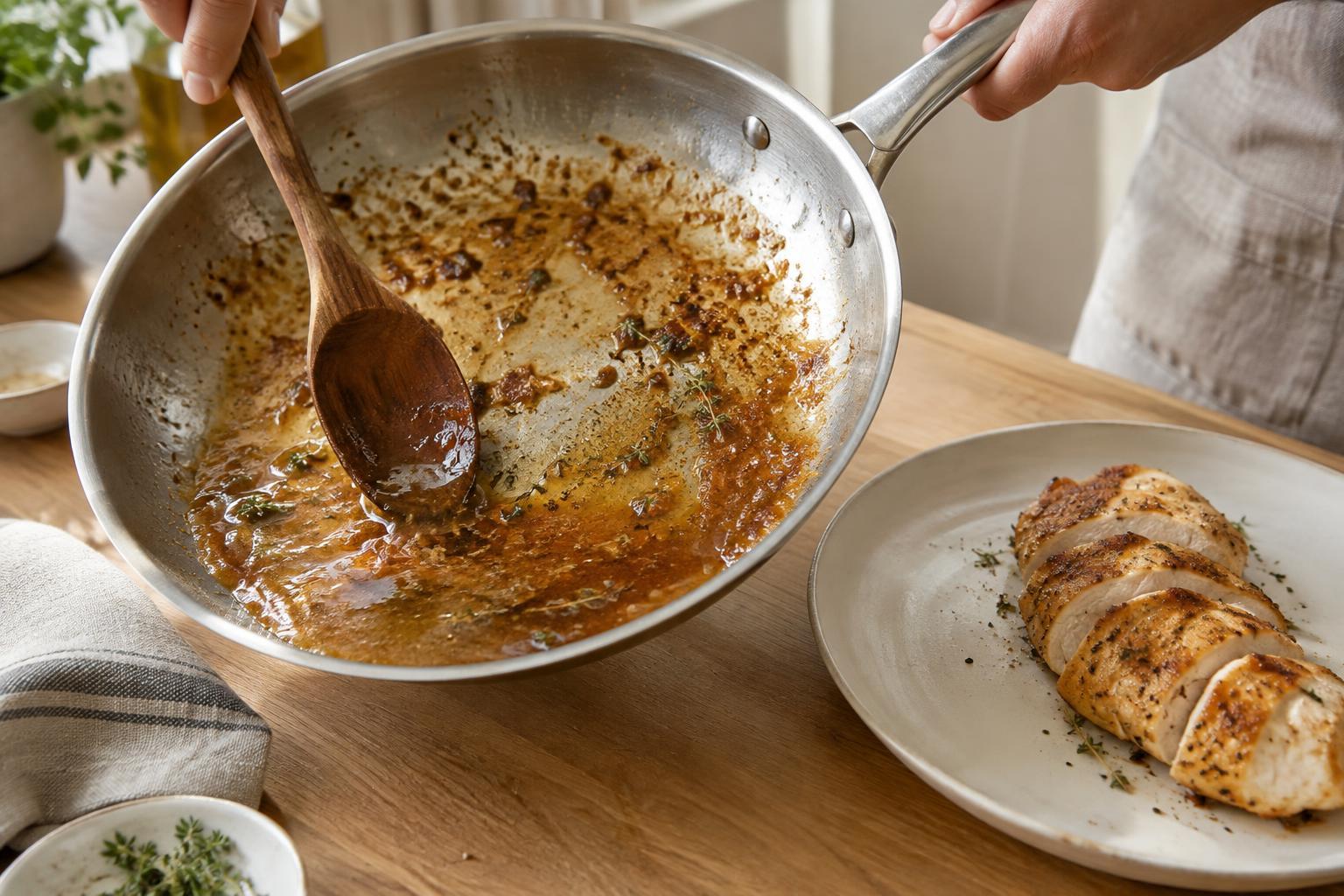
Set the protein on a plate to rest while you make the sauce. Look at the pan before adding anything. If there is a thick layer of fat, pour or spoon most of it off, leaving roughly a teaspoon or two. Keep the golden-brown bits; discard anything that smells burnt or has turned black, as it can make the sauce bitter. If your pan has almost no browned residue, you can still make a light sauce, but it will rely more on your added ingredients for flavor.
Choose a liquid that suits dinner
For about two servings, begin with roughly half a cup of liquid. Broth is an easy choice, while water works if the pan has plenty of flavor and you plan to add seasonings. A splash of wine can bring acidity; let it cook down before adding broth or water if you want a gentler result. Use a liquid you would enjoy tasting, since reducing it concentrates its flavor, including its saltiness.
Match the additions to what you cooked without feeling obliged to build a long ingredient list. Shallot or garlic can add depth, mustard can sharpen a chicken or pork sauce, and a little lemon juice can brighten a rich one. For tofu, try broth or water with ginger and a modest splash of soy sauce. If you use a salty ingredient such as soy sauce, choose unsalted liquid where possible and wait until the end to decide whether the sauce needs more salt.
Loosen, simmer, and watch the texture
Put the skillet over medium heat. If you want shallot or garlic, soften it briefly in the remaining fat, stirring so it does not scorch. Pour in the liquid and scrape the bottom with a wooden spoon or other pan-safe utensil. The browned bits should dissolve into the simmering liquid. With a nonstick pan, use a utensil that will not damage the coating.
Let the sauce simmer until it tastes fuller and lightly coats a spoon. This may take only a few minutes, depending on the width of your pan and how much liquid you added. Stir and taste as it reduces rather than relying on a strict time. If it is still thin but tastes strong enough, stop reducing and use a small finishing ingredient for body instead. If it reduces too far, stir in a spoonful or two of water and warm it through.
Finish for balance, then serve
Turn the heat to low or off before stirring in a small knob of cold butter for a smooth, glossy finish. For a different texture, a spoonful of cream can soften a sharp sauce, while a little olive oil is useful when you do not want dairy. These additions are optional: a well-reduced, flavorful liquid can be a good sauce on its own.
Taste once more before serving. A flat sauce may need a few drops of lemon juice or vinegar; a sauce that seems too sharp may benefit from a little butter or more water. Add salt only after reducing, then finish with pepper or chopped herbs if they suit the dish. Spoon the sauce over the protein just before eating, or return the protein to the pan briefly to coat it.
Keep the method adaptable
A useful pan sauce does not need to be thick like gravy. Its job is to bring moisture and concentrated flavor to the plate. Once you know the basic sequence, you can vary one or two ingredients at a time: broth and mustard for chicken, water and lemon for fish cooked in a skillet, or a soy-based liquid for tofu. Use a clean pan if the cooking residue is burnt, and remember that the sauce cannot replace properly cooking the protein itself.
The simplest way to practice is to keep broth or another suitable liquid nearby before you start cooking. When the protein comes out of the pan, you can make the sauce while it rests. That small bit of planning turns an ordinary skillet dinner into a more complete meal without requiring a separate pot or an elaborate recipe.