Start with the part that touches your skin
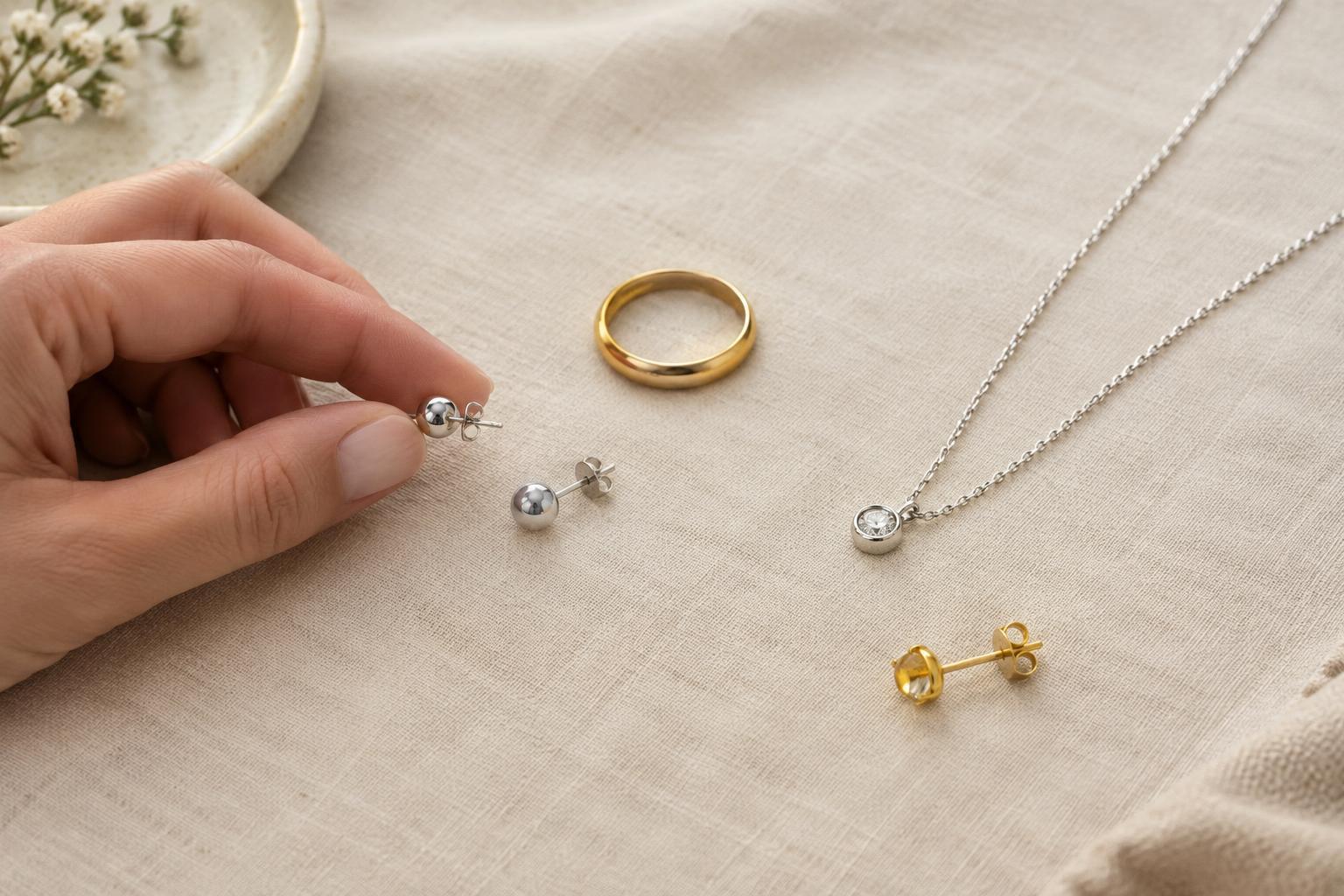
A necklace may look like one piece, but its chain, clasp, pendant, and connecting rings can all be made from different metals. The same is true of earrings: the decorative front may be plated while the post and backing are something else. If jewelry bothers your skin, look beyond the main material named on the tag and ask what each skin-contact component contains.
Discomfort does not always mean an allergy. A tight ring can trap soap and moisture, a heavy earring can pull on an earlobe, and a rough edge can rub as you move. Noticing where and when irritation appears can help you choose a better design as well as a better material. If a reaction is severe, keeps returning, or does not settle after you stop wearing the item, seek advice from a qualified healthcare professional.
Know what common material labels do—and do not—tell you
Nickel is a common concern for people who react to jewelry. It can be present in alloys or in parts that are easy to overlook, such as clasps. A label that says “metal alloy” tells you very little about the ingredients. “Nickel-free” is more specific, but it is still worth checking whether the claim applies to the entire piece, including posts, backs, and fasteners.
Sterling silver is an alloy, usually described as 92.5% silver with other metals making up the remainder. Its composition is not identical across every product, so ask about the remaining metals if you know you are sensitive to one. Solid gold is also alloyed for durability: a karat mark indicates its gold content, not a complete list of the other metals. White gold, in particular, can vary in composition. A higher price or a familiar metal name is not a guarantee that a piece will suit everyone.
Titanium and niobium are often considered by shoppers looking for simpler metal choices, especially for earring posts, but product quality and accurate labeling still matter. “Stainless steel” covers a range of alloys rather than one fixed recipe. If steel has bothered you before, a vague stainless-steel description may not give you enough information to make a confident choice.
Understand plating, vermeil, and coatings
Gold-plated jewelry has a layer of gold over another material. The surface may feel fine at first, but wear can expose the base metal, particularly on rings, clasps, and the backs of pendants. Gold vermeil is a type of gold plating over sterling silver; it tells you more about the base than a generic “gold-plated” label, but it is still a layered piece. Gold-filled jewelry has a bonded outer layer of gold and is different from solid gold. For any layered option, both the outer material and the base deserve attention.
Clear coatings can create a temporary barrier between skin and metal, but they may wear away. Rather than relying on a coating to make an irritating piece wearable indefinitely, consider a material you can comfortably wear without one. When shopping online, look for a clear description of the base metal and the material of the posts or clasps. If those details are missing, asking the seller may be more useful than trusting a broad phrase such as “hypoallergenic.”
Build a small, comfortable everyday collection
Begin with the items you wear longest. If you rarely notice a necklace but earrings become uncomfortable by midday, prioritize well-described posts and backs before replacing every accessory you own. Try one new material or design at a time so it is easier to tell what works for you. For newly pierced or healing ears, follow the care guidance you receive from a qualified piercer rather than experimenting with fashion jewelry.
Design matters alongside material. Lightweight earrings, smooth finishes, adjustable chains, and ring shapes that do not trap water can make everyday wear more pleasant. Remove jewelry before activities that leave soap, sweat, or moisture against your skin, and let pieces dry before storing them. Wipe them according to their care instructions; aggressive cleaning can damage plating or finishes.
A useful shopping checklist is short: identify every part that touches skin, check whether the piece is solid or layered, ask for the base-metal details, and consider weight and fit. Keep track of pieces you already wear comfortably, including their specific materials when known. Your own experience is a better starting point than a promise that one label will work for everyone.