Start with what arrives at your door
Before choosing a pattern or color, notice what shoes bring in. At a sheltered city entrance, the main problem may be fine dust and occasional damp soles. A door beside a garden path may see mud, leaves, and grit. In a snowy area, shoes may carry slush and de-icing residue. The right mat depends less on the season printed on its label than on what reaches that particular doorway.
Foot traffic matters too. A household that comes and goes frequently, welcomes visitors, or has a dog returning from walks needs a mat that is easy to shake out and clean. For a lightly used door, comfort and appearance may carry more weight. If people tend to step straight over a small mat, choose one wide enough to invite a natural step onto it.
Match the surface to the weather
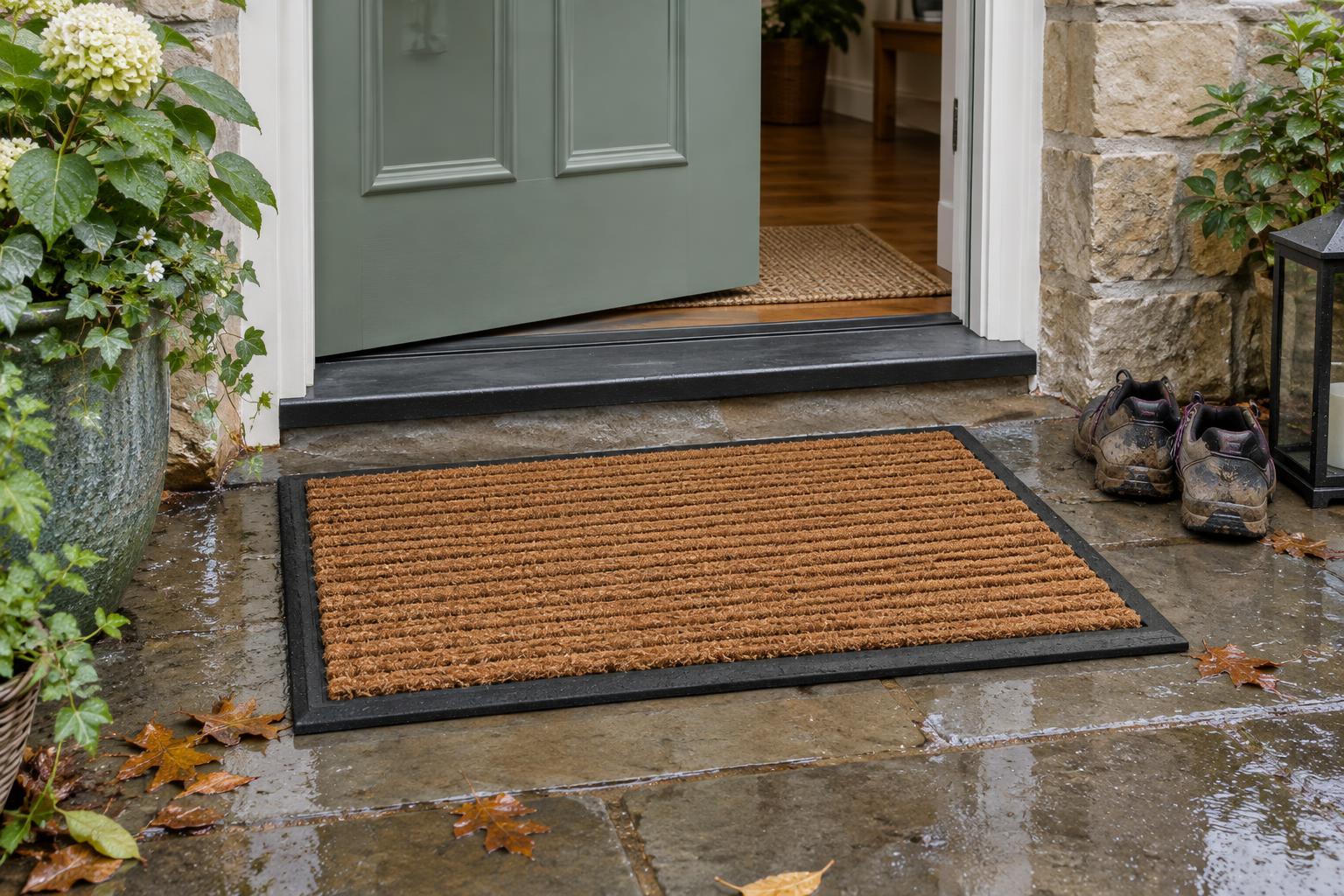
For a mostly dry, sheltered entry, a firm coir mat can be useful for brushing dust and light dirt from soles. Coir has a textured, traditional look, but it can shed fibers, especially when new. If the mat will regularly sit in rain, check whether its construction is intended for that exposure; a mat that stays wet may dry slowly and become unpleasant to use.
At an exposed entrance, look for a surface that tolerates repeated wetting and lets water escape. Open-grid rubber and some synthetic scraper mats allow mud and grit to fall through rather than remain on top. Check where that debris will collect: an open mat over paving is easier to lift and rinse than one placed where dirt has nowhere to go. For snow or persistent rain, a second, absorbent mat just inside the door can catch moisture that outdoor scraping leaves behind.
Check fit, clearance, and footing
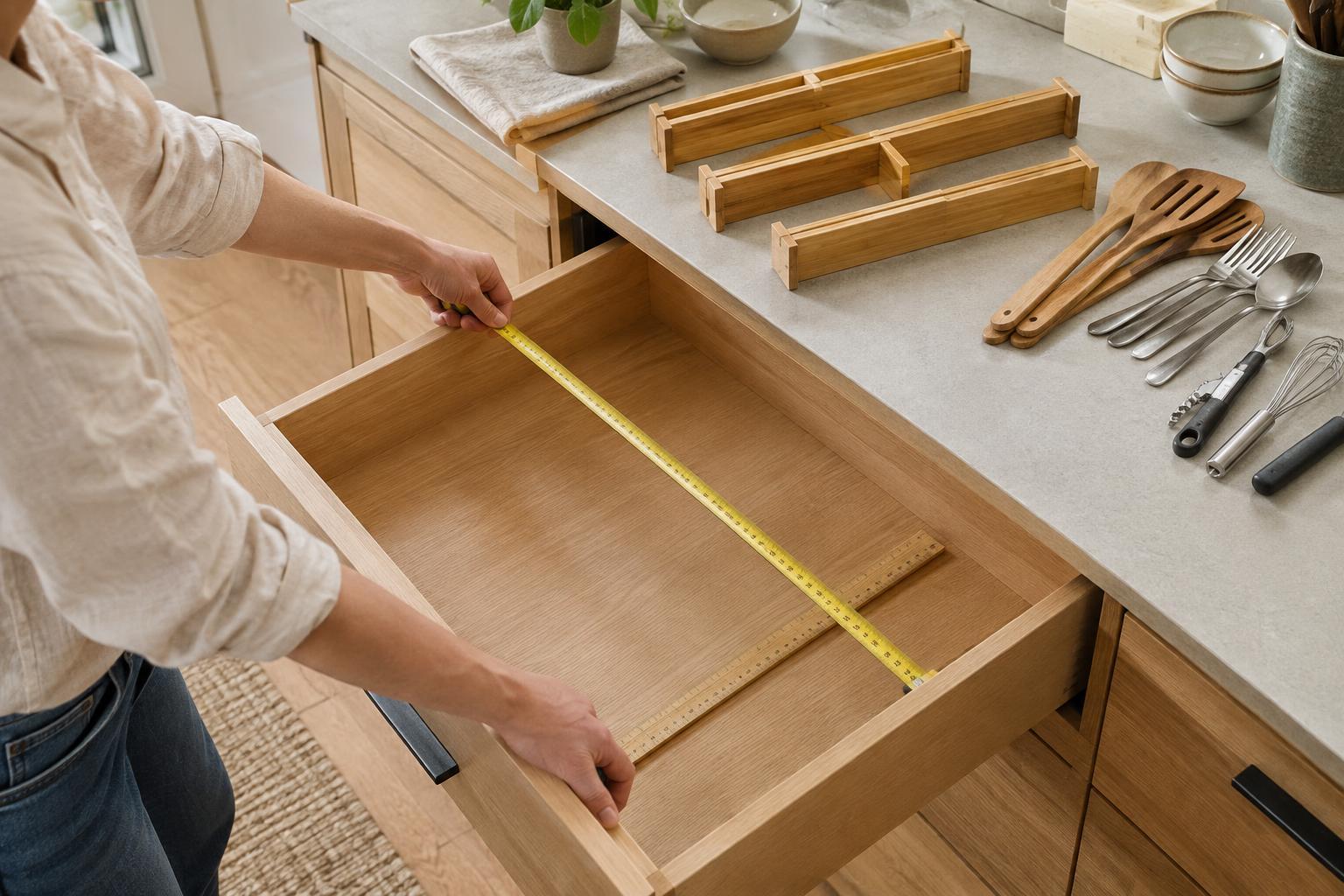
Measure the usable space, not just the width of the doorway. A mat should leave room for the door to open freely and for someone to stand without balancing on an edge. If you can, open the door over a sample or measure the gap beneath it before buying. Thick mats can catch on low-swinging doors, while a mat that curls at the corners can create an awkward step.
Pay attention to what is underneath. On smooth tile or sealed flooring, an indoor mat needs a backing or underlay that helps keep it in place. Check that the backing is suitable for your floor finish, since some materials can leave marks or trap moisture. Outside, consider whether the mat stays put on your paving when shoes scrape across it. A heavy mat is not automatically secure if it rocks on uneven ground.
Choose a mat you can maintain
A doormat works best when its surface is not packed with old dirt. Before buying, check the care instructions and picture how you will clean it. Can you lift it easily, shake it out, brush it, or rinse it? A deep texture may be good at catching grit but frustrating to clean without a brush. A washable indoor mat can be convenient, provided its size fits your washing machine and it can dry thoroughly.
Consider where the mat will dry after wet weather or cleaning. A shaded, poorly ventilated doorstep may keep a dense mat damp longer than expected. If that sounds like your entry, a quick-draining outdoor mat paired with an indoor absorbent one may be easier to manage than one thick mat trying to do both jobs. Lift outdoor mats occasionally to clear trapped debris and let the surface beneath them dry.
Build a simple entryway setup
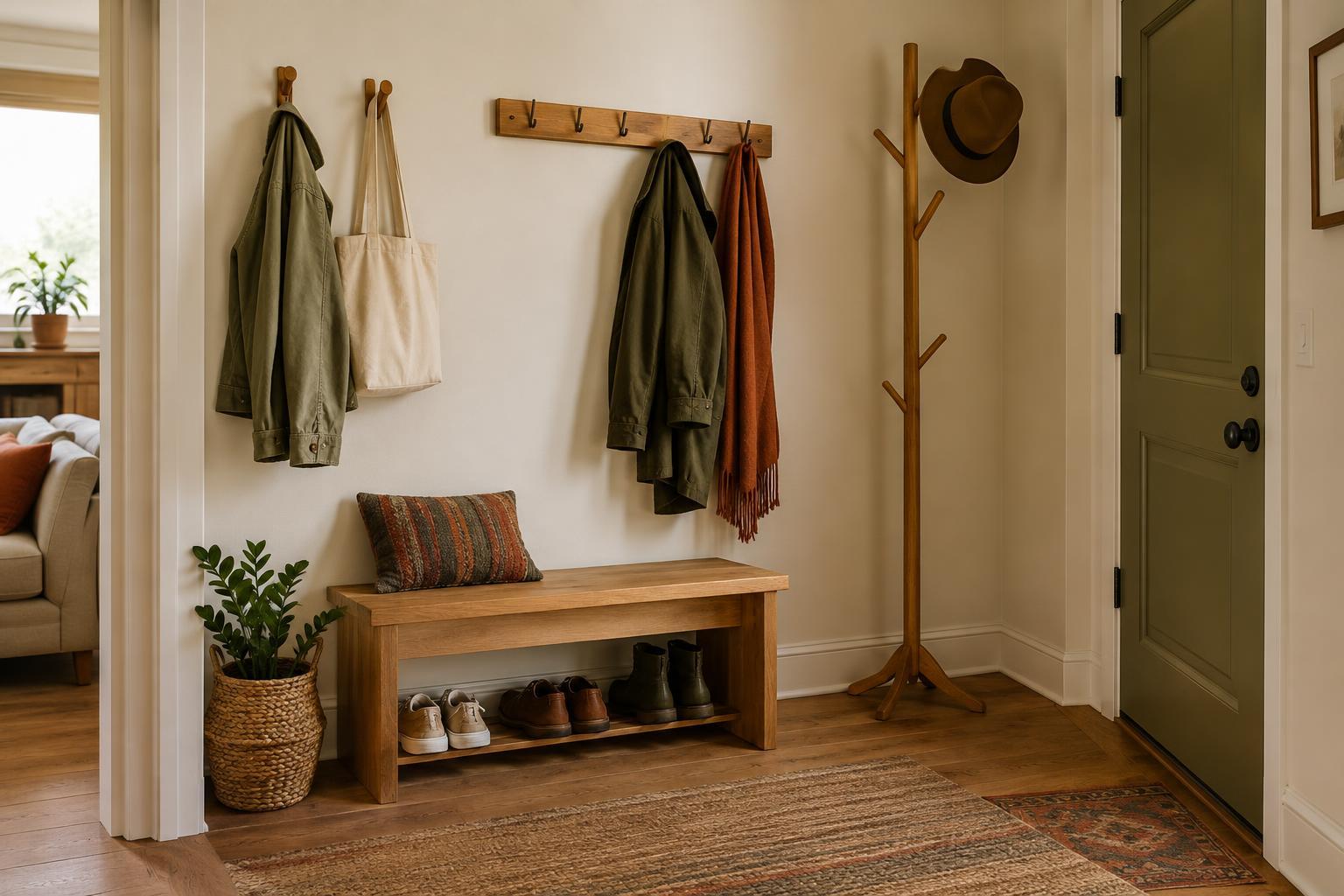
For many homes, two modest mats are more practical than one all-purpose choice: a coarse mat outside to remove loose dirt and a softer mat inside to catch lingering moisture. If there is room, a small place for wet shoes keeps the indoor mat from becoming a permanent shoe rack. At a covered, low-traffic door, one well-sized scraper mat may be enough.
Make the final choice by ranking your needs: scraping, absorbing, easy cleaning, a low profile, or a particular look. Color and pattern can then complement the entry without deciding the purchase on their own. A good doormat is the one people actually step on, that stays steady underfoot, and that you can maintain through your usual weather.