Start with the feeling you want
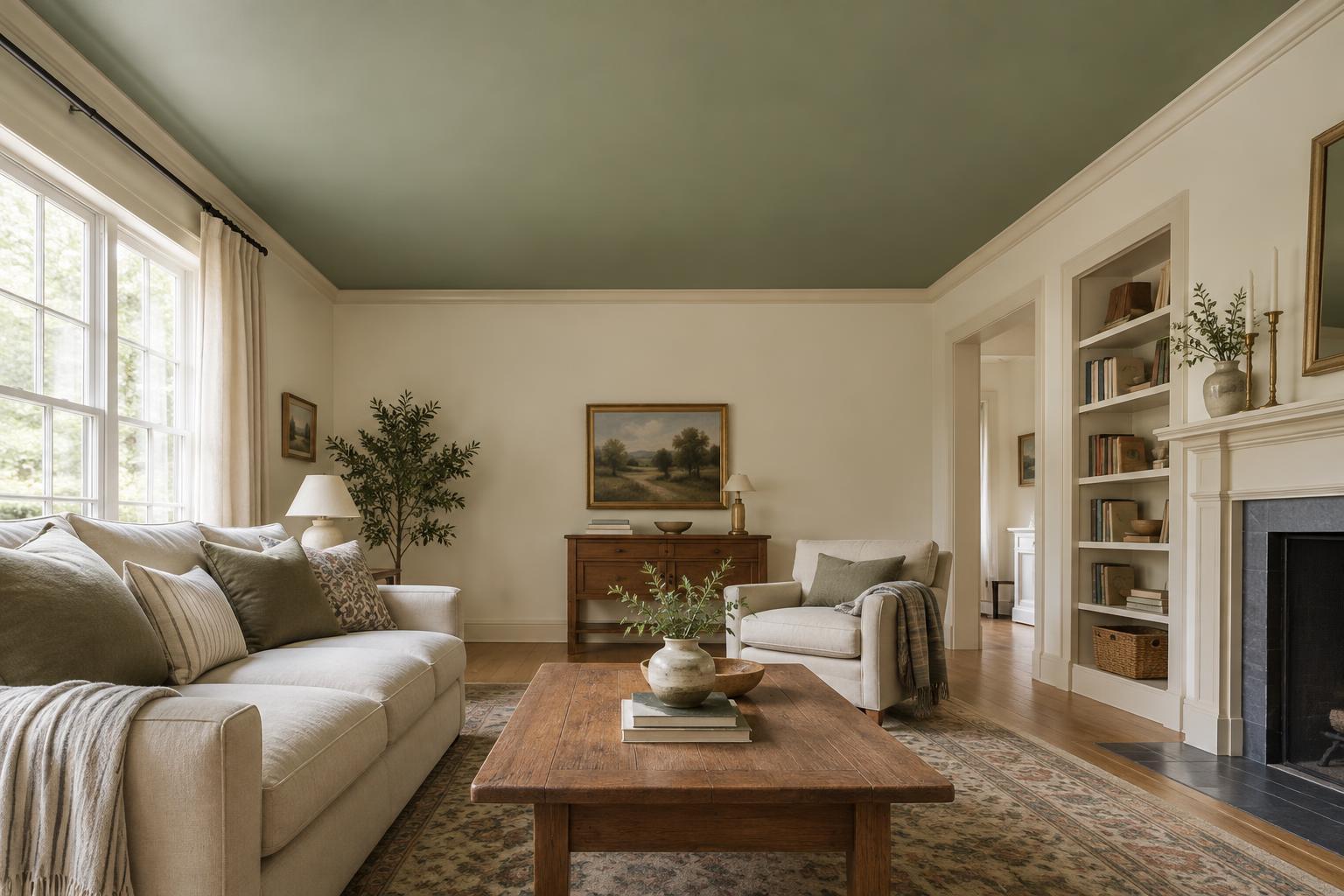
White is a dependable ceiling color, but it is not the only way to make a room feel open and comfortable. Painting a ceiling a different color can soften the contrast between the walls and the space above them, draw attention to an interesting shape, or make a room feel more enclosed and restful. The useful question is not whether colored ceilings are in style. It is what you want the room to feel like when you spend time in it.
A pale tint can make a ceiling feel like a quiet continuation of the room. A deep color can create a more sheltered effect, particularly in a bedroom, dining room, or other space where you want to linger. If the room already feels pleasantly balanced, there is no need to change the ceiling simply because it is white.
Look at the room’s proportions and light
A colored ceiling is especially worth considering when the ceiling is already noticeable: perhaps it is unusually high, sloped, beamed, or visible from an adjoining room. Color can help a tall room feel less distant or make an angled ceiling look intentional rather than awkward. In a small room, carrying a wall color overhead can reduce the number of sharp visual boundaries. That can feel cohesive rather than cramped, depending on the shade and lighting.
Check the ceiling at several times of day before choosing a color. Light from windows may reach it unevenly, and lamps can change how it looks after dark. A shade that seems soft on a wall may appear darker overhead because the ceiling receives less direct light. If the room has little daylight and you rely on it for detailed tasks, a very dark ceiling may not deliver the brightness you want. That does not rule out color; it gives you a reason to try a lighter or more muted version first.
Choose a relationship between walls and ceiling
The simplest approach is to use the wall color on the ceiling as well. It removes the white dividing line and can be particularly effective in rooms with sloped ceilings or many corners. For a gentler change, choose a lighter or less saturated version of the wall color. The ceiling will still belong to the room without attracting much attention.
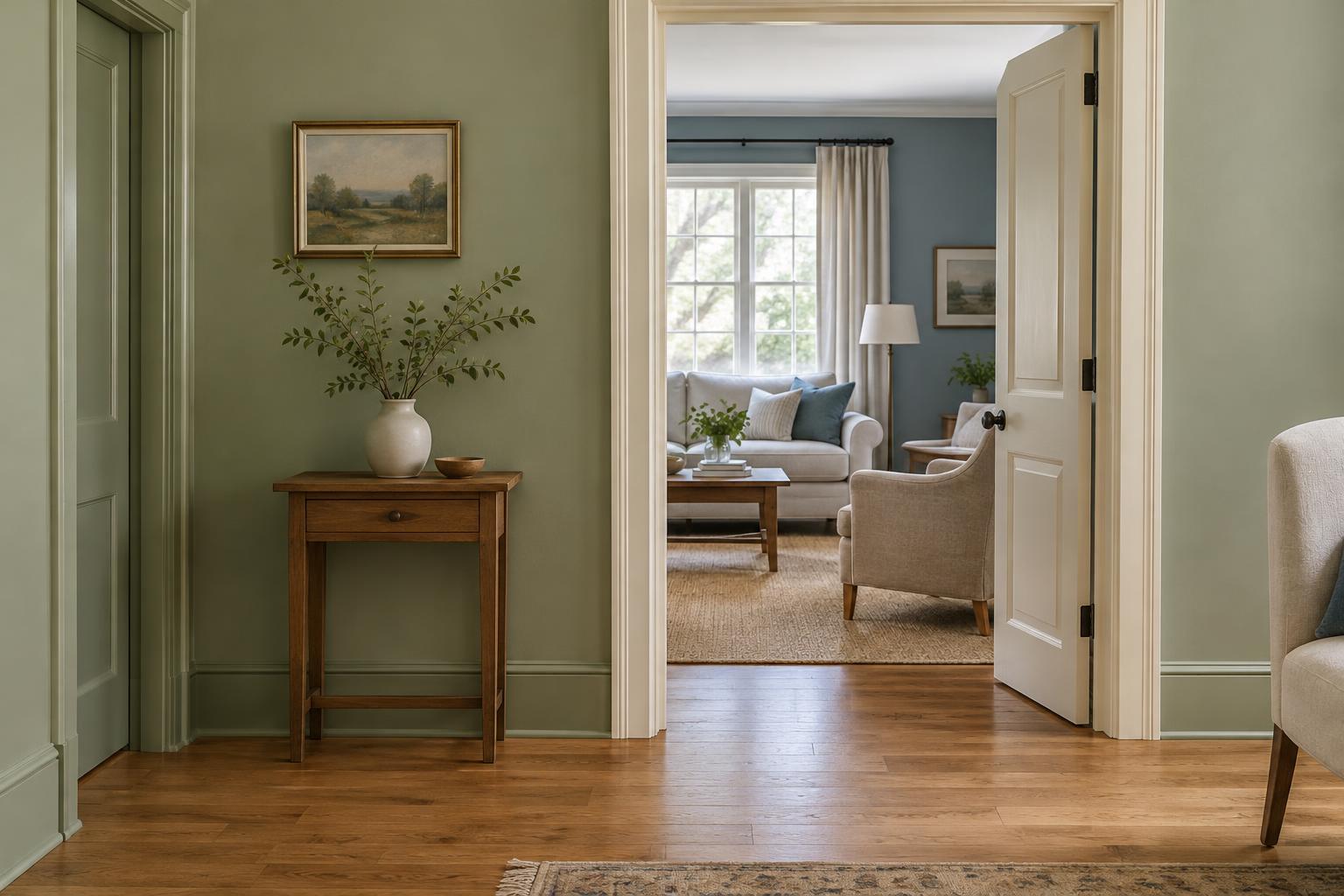
Contrast is another option. A muted blue ceiling above warm neutral walls, for example, creates a different effect from a ceiling that matches those walls. Rather than picking a shade in isolation, compare it with the floor, large furniture, curtains, and trim. Notice which colors are already repeated in the room. Using one of them overhead can make the choice feel connected to the space.
Decide where the color should stop before buying paint. Will the crown molding remain the trim color, match the walls, or match the ceiling? In a room without molding, will the edge between wall and ceiling be crisp? There is no single correct treatment, but a deliberate boundary usually looks better than one decided halfway through the job.
Test the color where it will live
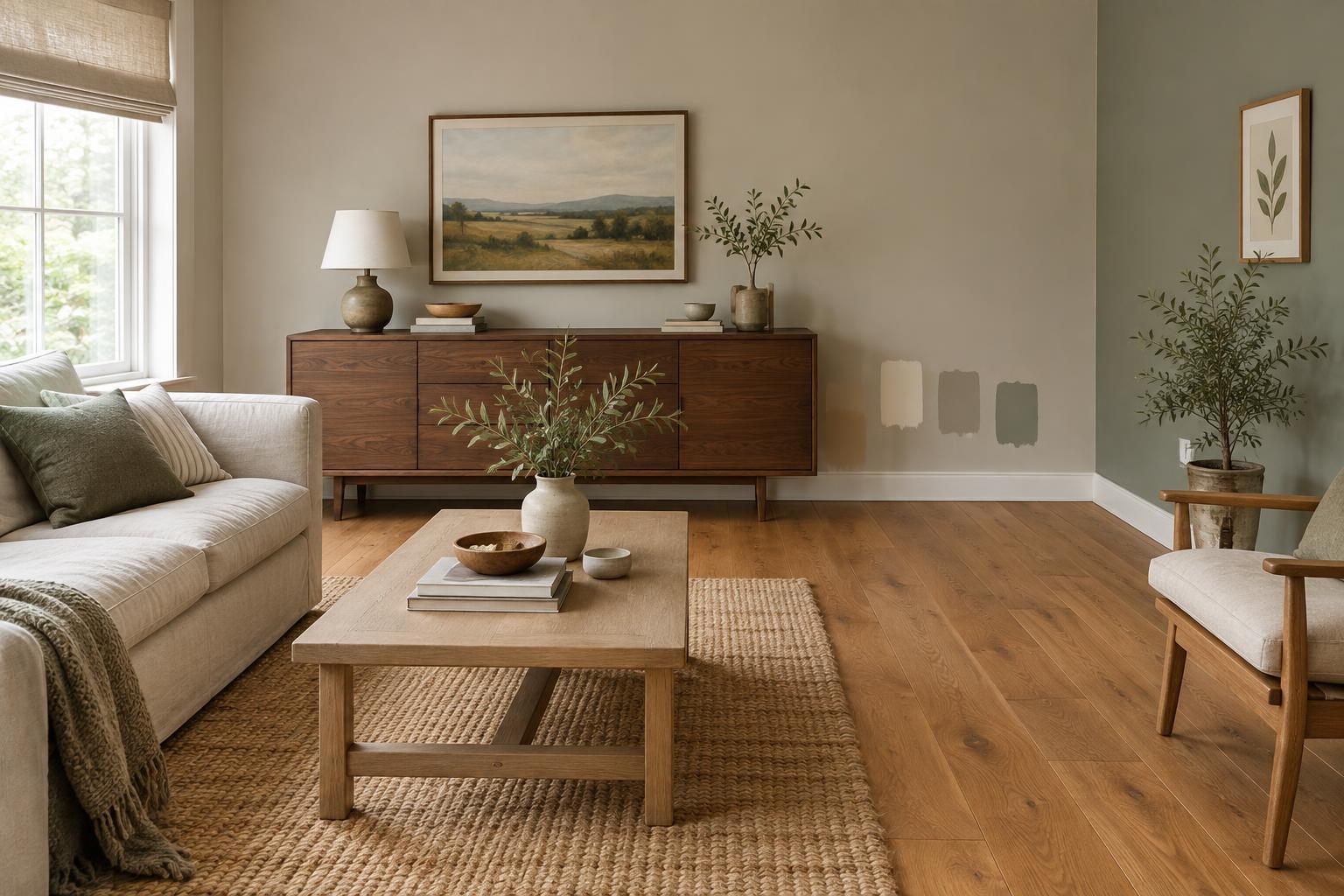
Do not rely on a small paint chip held at eye level. Paint sample boards, or sample a patch on the ceiling if you are comfortable covering it later. Look at the color from the doorway, from a seated position, and under the lights you normally use. Give yourself time to see whether the effect feels welcoming throughout the day, not just when the sun is at its best.
Finish matters too. A flat or matte finish is often a forgiving choice for ceilings because it draws less attention to minor surface irregularities. A higher-sheen finish can emphasize texture and application marks, especially across a broad surface. If you want a reflective look, test it carefully and consider how smooth the ceiling is. Check that the paint and finish you choose are suitable for the surface.
Know when to keep it simple
A colored ceiling is a less useful project if you are hoping paint alone will fix poor lighting or a room that does not function well. It may also be worth pausing if water stains, peeling paint, or uneven repairs need attention first. Addressing the surface will do more for the finished result than finding the perfect shade.
If you are unsure, start with a room where a change feels manageable, such as a bedroom or small sitting room, rather than a ceiling that runs through several connected spaces. White remains a good choice when you want a quiet backdrop. Choose color when it gives the room a clearer sense of comfort or connection—not because every surface needs to make a statement.