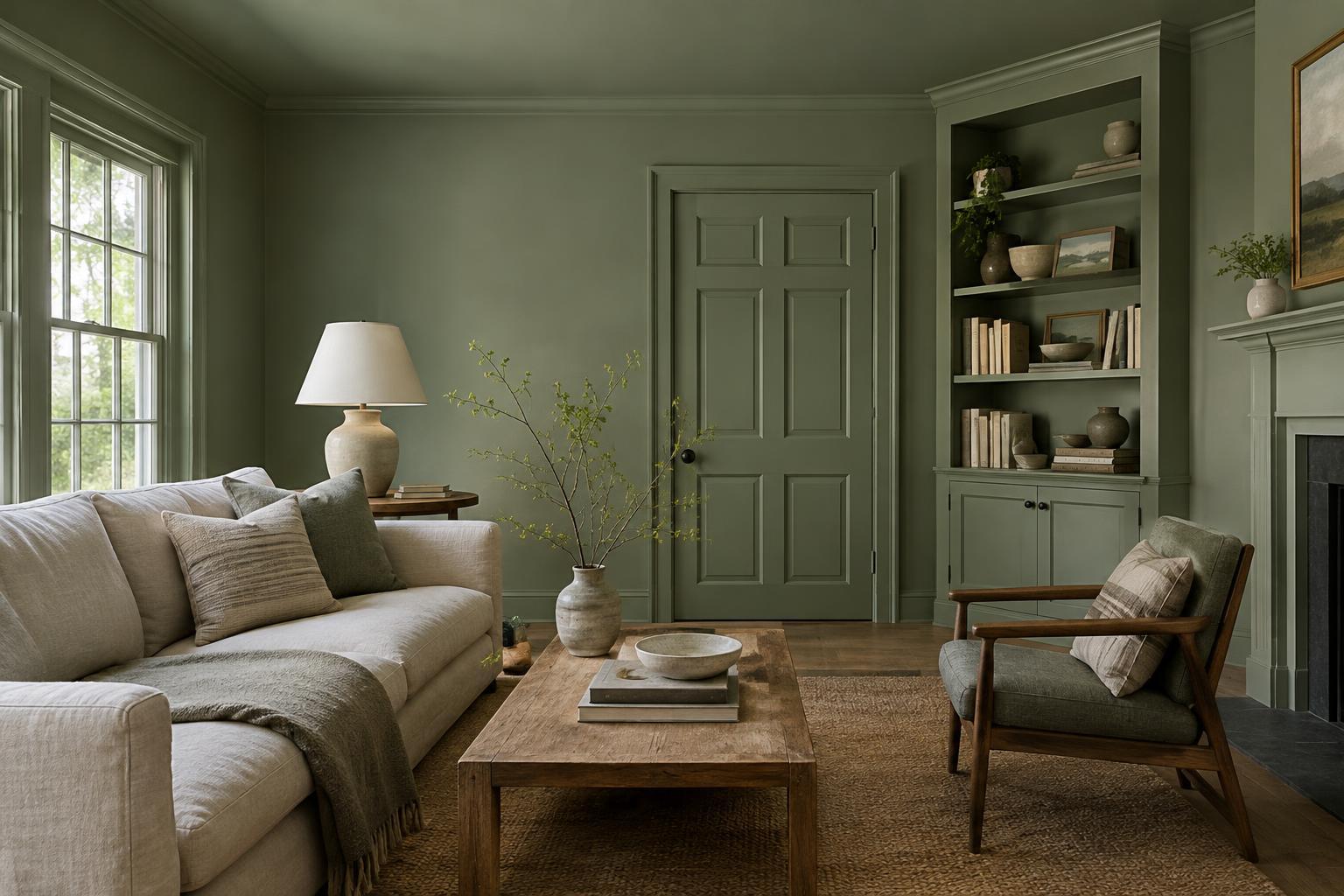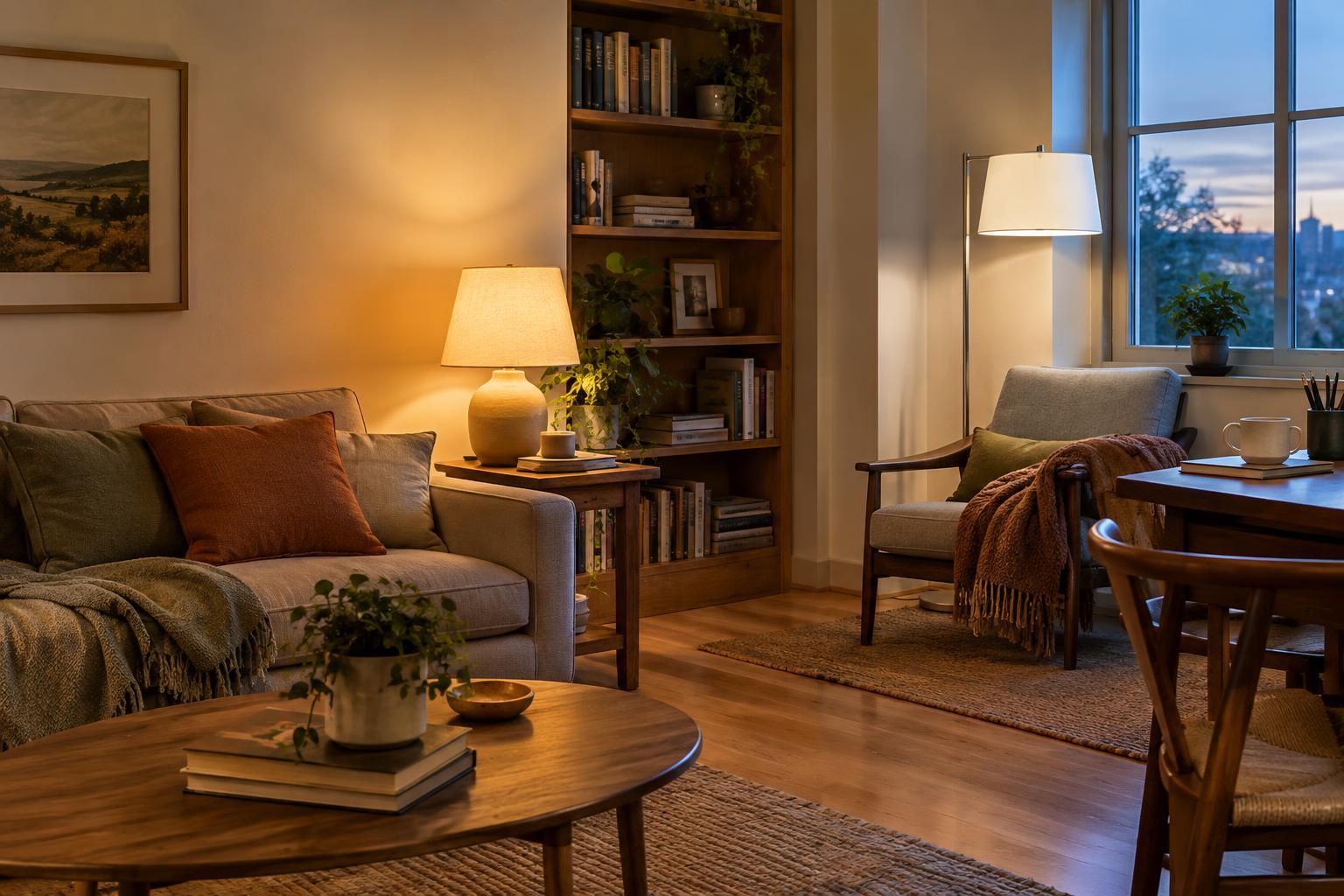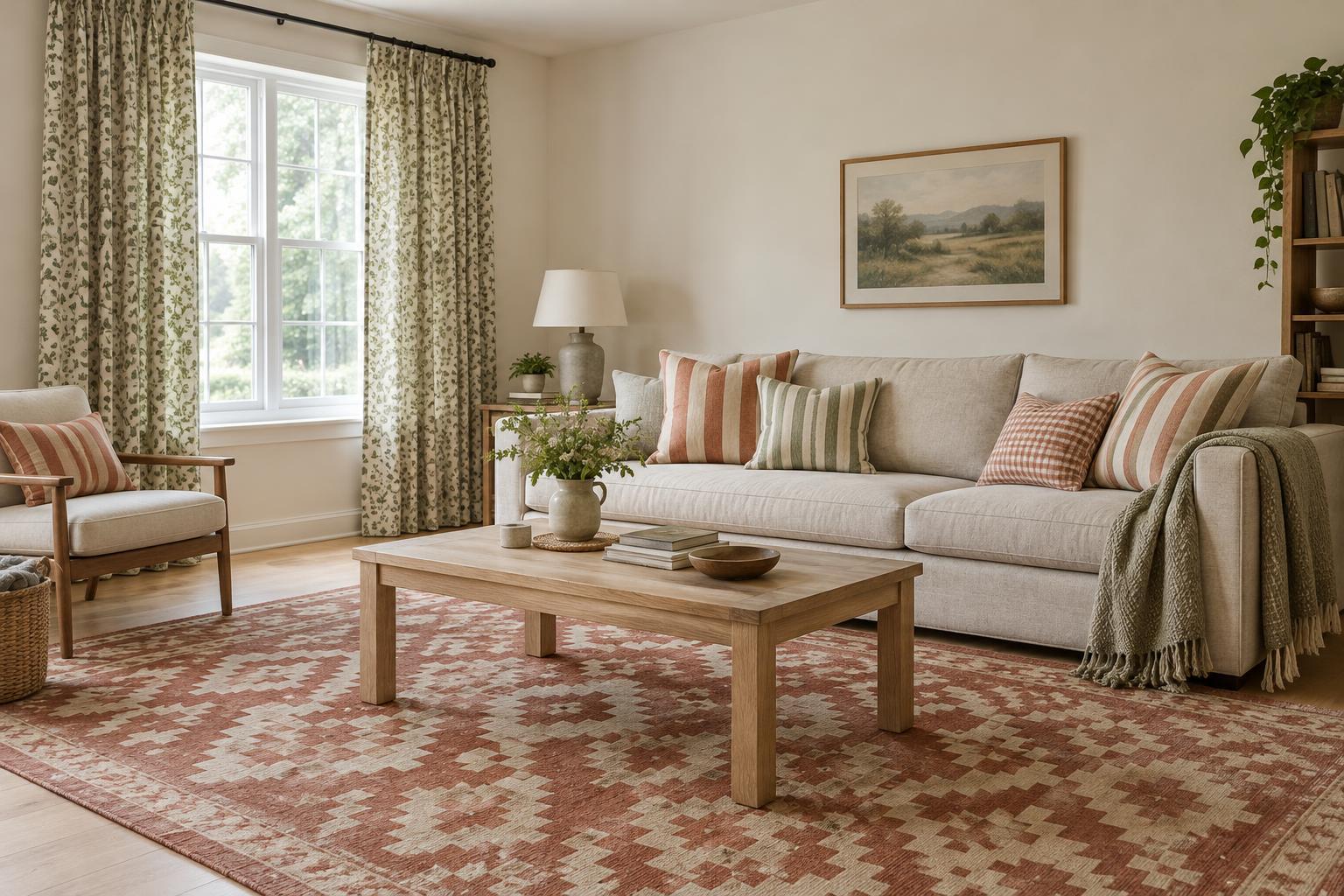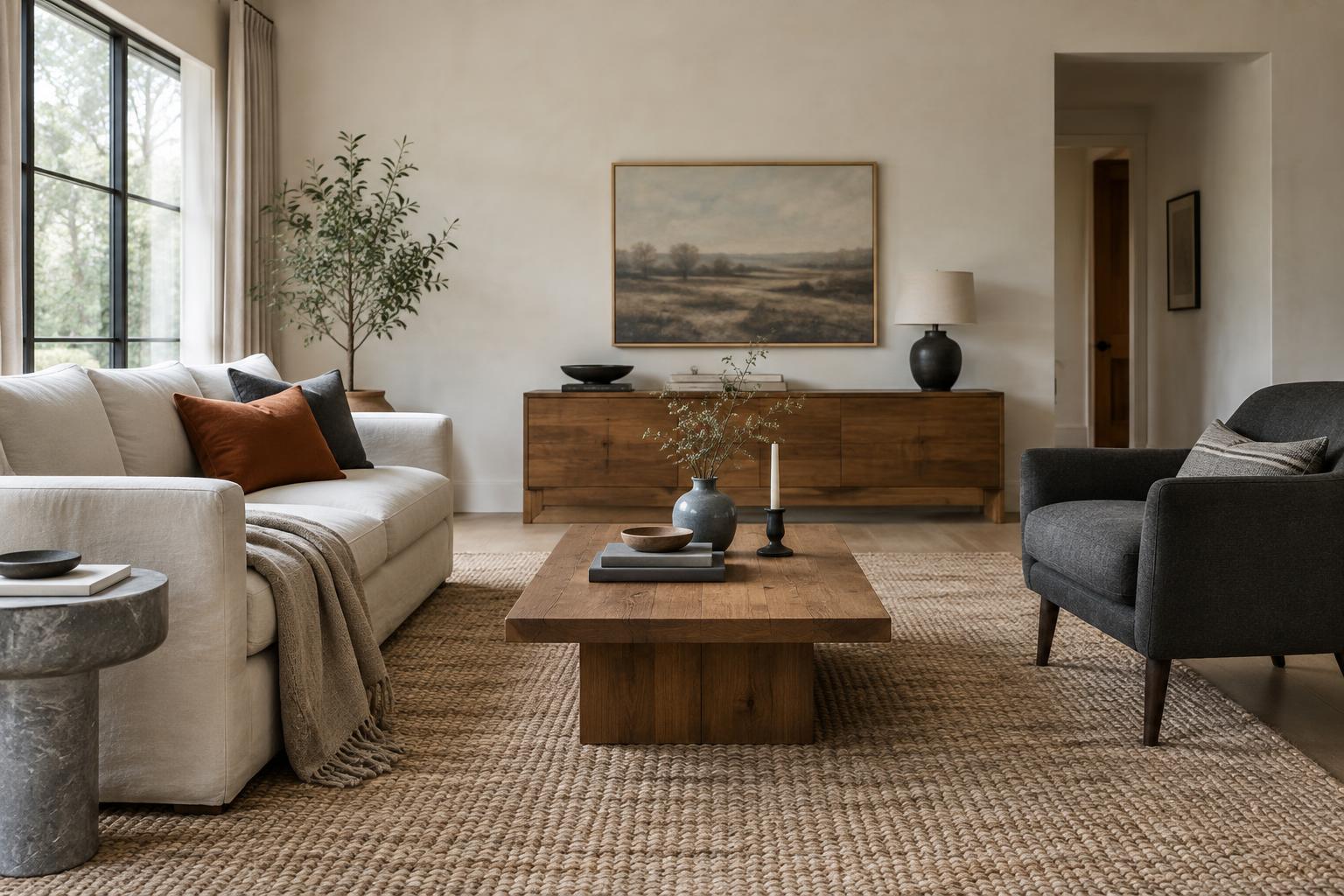
Start with what the room already does
Contrast is the difference between things you notice together: a dark chair against a pale wall, a smooth table beside a woven basket, or a small lamp next to a broad sofa. Without enough difference, a room can feel flat. With too many competing differences, it can feel restless. The goal is not to make every item stand out. It is to give the eye a few clear places to land and enough quieter space between them.
Before changing anything, look at the room from the doorway and name its strongest contrast. It might be a dark floor, a bright window, a patterned rug, or a large piece of furniture. Treat that feature as a starting point rather than adding a new statement piece immediately. Notice, too, where the room feels visually heavy. A tall dark bookcase and a dark sofa on the same side may make that side seem fuller, even when the furniture fits comfortably.
Balance light and dark across the space
Light-dark contrast is often the easiest kind to adjust. In a mostly pale room, a few darker objects can define its edges and keep furniture from seeming to disappear into the background. Try a dark frame, a side table, or a cushion before considering a large purchase. In a room with dark walls or upholstery, lighter lampshades, textiles, or artwork can provide breathing room.
You do not need equal amounts of light and dark. Instead, distribute them with intention. If one dark sofa is the room’s anchor, a smaller dark detail elsewhere can help it feel connected to the space. That detail could be a picture frame across the room or a tray on a table. Step back after each change: if your eye jumps repeatedly between strong dark spots, reduce one of them or let a softer midtone bridge the gap.
Use color contrast without making everything compete
Color contrast can come from different hues, but it can also come from using quieter and stronger versions of the same color. A muted blue wall and a deeper blue cushion create definition without introducing a new color family. If you prefer several colors, let one play a supporting role. For example, a warm rust cushion may feel more settled when the rest of the room uses restrained neutrals and one or two smaller warm details.
Pay attention to warmth as well as color names. A crisp white surface beside honey-toned wood may look more striking than expected, while a softer off-white can make the transition gentler. There is no universal pairing that works in every room: daylight, lamps, and neighboring finishes all affect how colors appear. Move a sample or object to the place where it will actually live, then look at it at the times you normally use the room.
Add quieter contrast through texture and shape
A balanced room does not have to rely on bold color. Texture creates subtle differences that are especially useful when you like a limited palette. A matte ceramic lamp can break up the shine of a polished table; a plain linen cushion can calm a busy sofa fabric. Keep the practical side in mind, too. A richly textured throw is less useful if it feels unpleasant against your skin or is difficult to care for.
Shape offers another way to soften a room. If most of the furniture has straight edges, a round mirror, curved lamp, or oval tray can provide relief. The reverse works as well: a simple rectangular frame can bring order to a collection of softer forms. One or two deliberate changes are usually easier to read than a new shape on every surface.
Edit, repeat, and leave room to rest
When a room feels off-balance, try rearranging before shopping. Move a lamp, swap cushions between rooms, or clear a crowded shelf. Then repeat one element from the room’s strongest feature in a smaller way: a touch of its color, a similar finish, or a related shape. Repetition makes contrasts feel connected, while open space around a distinctive object lets it do its job.
Finally, check the room in ordinary use, not only when it is perfectly tidied. Sit where you usually sit. Is the contrast pleasant from that view? Can you find what you need, and does the room still feel comfortable at night? If so, you may have enough. Balance is less about following a fixed formula than choosing which differences deserve attention—and letting the rest of the room support them.