Give the pasta room, but do not wait for a perfect pot
An overcrowded pot makes pasta harder to stir and can cause the water to foam over. Use a pot large enough to hold the pasta and let you stir it comfortably. You do not need an enormous pot for a small portion, but the pasta should be able to move freely once it softens. If you are using a smaller pot, stir more attentively and watch the water level as it cooks.
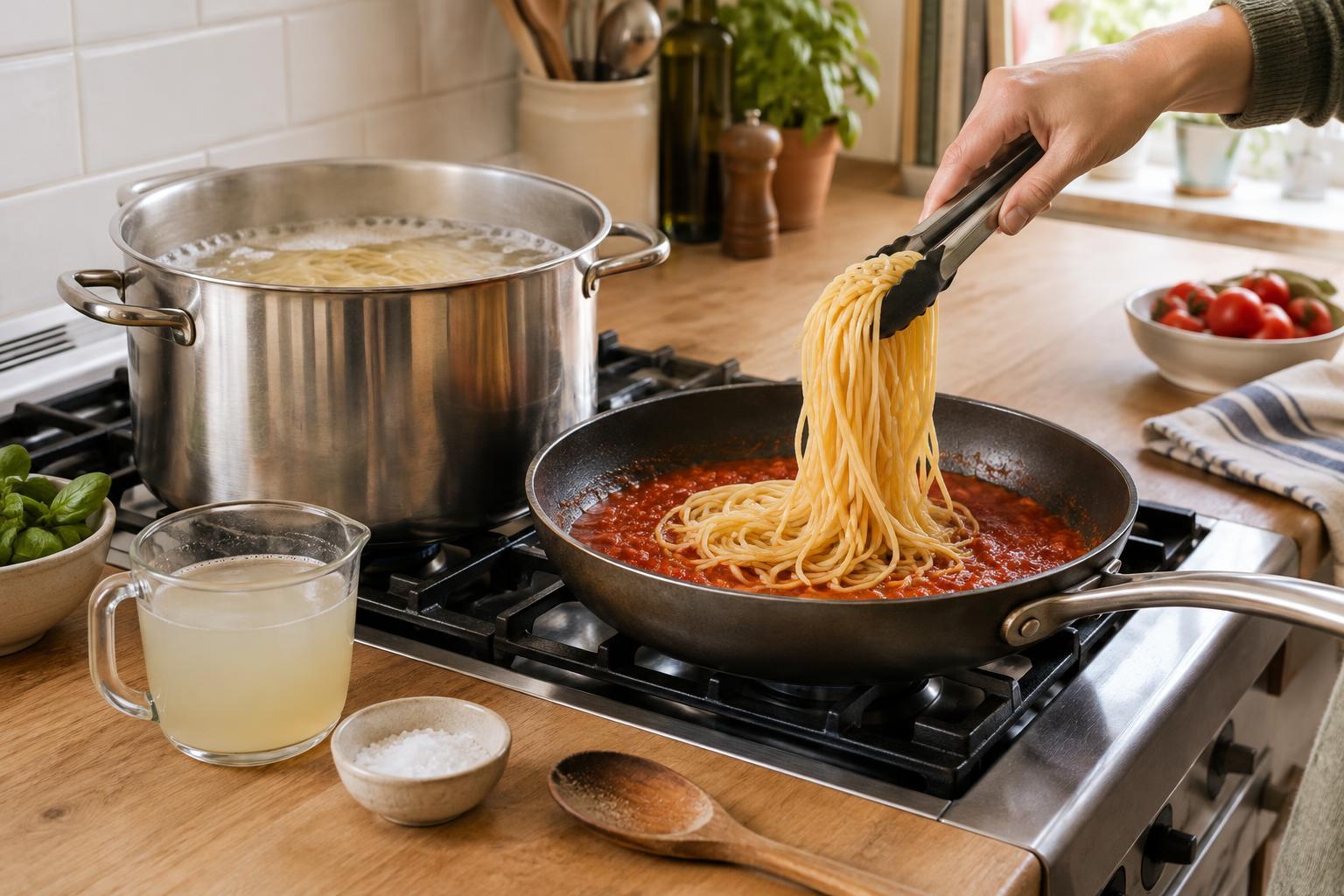
Add pasta when the water is boiling steadily. A lively boil helps the pieces separate as you stir them in. Once the pasta is added, the water may briefly stop boiling; that is normal. Adjust the heat to bring it back to a steady boil without letting it spill over. A lid can help water heat faster, but removing it after adding the pasta makes the pot easier to monitor.
Season the water instead of relying on the sauce
A flavorful sauce cannot always make up for pasta that tastes flat on its own. Salt the cooking water before adding the pasta, then taste a spoonful of the water if you are unsure how much you used. It should taste pleasantly seasoned, not harshly salty. If your sauce contains salty ingredients such as olives, cured meat, or a generous amount of cheese, season the water more cautiously. You can always adjust the finished dish.
Skip the oil in the boiling water. It does little to prevent sticking, which is better addressed by stirring, and oil left on the cooked pasta can make some sauces cling less readily. Stir well when the pasta first goes in, then stir occasionally while it cooks. Pay particular attention to long strands as they soften and settle below the water.
Treat the package time as a reminder to taste
Cooking pasta only by the printed time is an easy way to end up with a texture you did not want. The time is a useful starting point, but the result can vary with the pasta shape, the strength of the boil, and your preference. Set a timer for a little before the suggested time, then taste a piece. It should have the bite you like, without a hard, chalky center.
Think about what happens after draining, too. Pasta tossed for a minute or two in a warm sauce will continue to soften, so drain it when it is slightly firmer than you want on the plate. For a cold pasta salad, cook it to a texture you enjoy before cooling it, since it will not finish cooking in sauce. Testing a piece takes only a moment and is more reliable than guessing from its appearance.
Save some cooking water before you drain
Pouring every drop of pasta water down the sink removes one of the simplest tools for adjusting a sauce. Before draining, scoop a mugful of the cloudy cooking water into a heat-safe cup. Add a small splash while tossing the pasta with sauce. It can loosen a thick sauce and help it coat the pasta more evenly. Add a little at a time; you may not need the whole mug.
Avoid leaving drained pasta in a colander while you finish making dinner. It can cool and stick together, and a sauce added later may sit on top rather than coating each piece. Have the sauce ready before the pasta is done, then transfer the drained pasta to the sauce pan or a warm serving bowl promptly. Toss, taste, and adjust with cooking water, seasoning, or a little olive oil as needed.
Finish the pasta for the dish you are making
Rinsing hot pasta is usually a mistake when you plan to serve it with sauce. Rinsing cools the pasta and washes away the starchy surface that helps sauce adhere. Drain it instead, leaving a little moisture behind, and toss it directly with the sauce. A rinse can be useful when you deliberately want to stop the cooking and cool pasta for a salad; match the step to the dish rather than following a rule automatically.
Finally, consider the shape and amount of sauce. Ridged or hollow shapes can hold chunky sauces, while long strands are pleasant with smoother ones, though there is plenty of room for preference. Start with enough sauce to coat the pasta, not bury it. Toss before adding more. The goal is a finished dish in which the pasta tastes seasoned, has the texture you intended, and carries some sauce in every bite.