Start with what the rug is doing
A rug pad is useful when a rug slides, wrinkles, or feels too thin for the space. It creates a layer between the rug and the floor that can add grip or softness, depending on its construction. A pad may also make it easier to lift a rug for cleaning. But not every rug needs one: a heavy rug that stays flat on a suitable surface may be comfortable as it is.
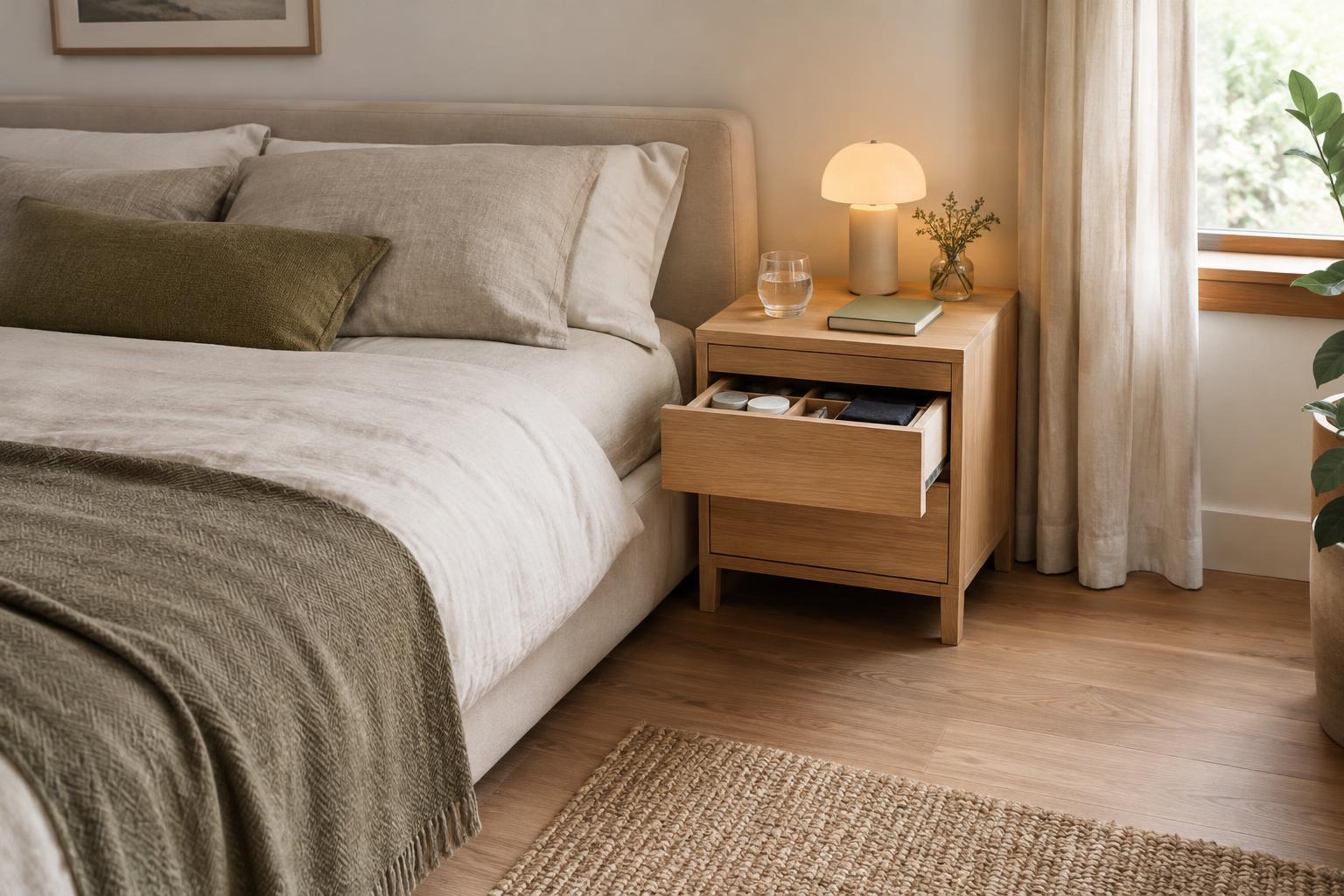
Watch the rug during ordinary use. Does a corner curl when someone walks past? Does the rug creep away from a sofa, or bunch beneath a chair? In a walkway or beside a bed, movement is a good reason to consider a grippy pad. In a sitting area, where the rug stays put but feels hard underfoot, cushioning may matter more.
Choose grip, cushioning, or a little of both
Thin non-slip pads are designed chiefly to hold a rug in place. They suit low-clearance areas, such as near a door, and rugs that already feel substantial enough. A cushioned pad adds more softness, which can make a living-room rug more pleasant for sitting or walking barefoot. Some pads combine a cushioned layer with a grippy surface, though the extra thickness may not work everywhere.
Match the pad to the rug’s behavior rather than buying the thickest option. A lightweight flatweave may need reliable grip to prevent ripples; a dense rug anchored by furniture may benefit more from modest cushioning. If dining chairs must slide across the rug, a thick, springy pad can make them harder to move. Check door clearance, furniture stability, and whether the rug’s edges will become an awkward step before choosing a height.
Check compatibility with the floor
Floor finish matters as much as rug type. Some rubber-backed or adhesive products may mark, discolor, or cling to certain finishes over time. Before buying, read both the pad maker’s floor-compatibility guidance and any care instructions for your flooring. This is especially worthwhile for vinyl, finished wood, and floors with radiant heating, where material or heat restrictions may apply. If the guidance is unclear, avoid guessing based on a label that simply says “safe for floors.”
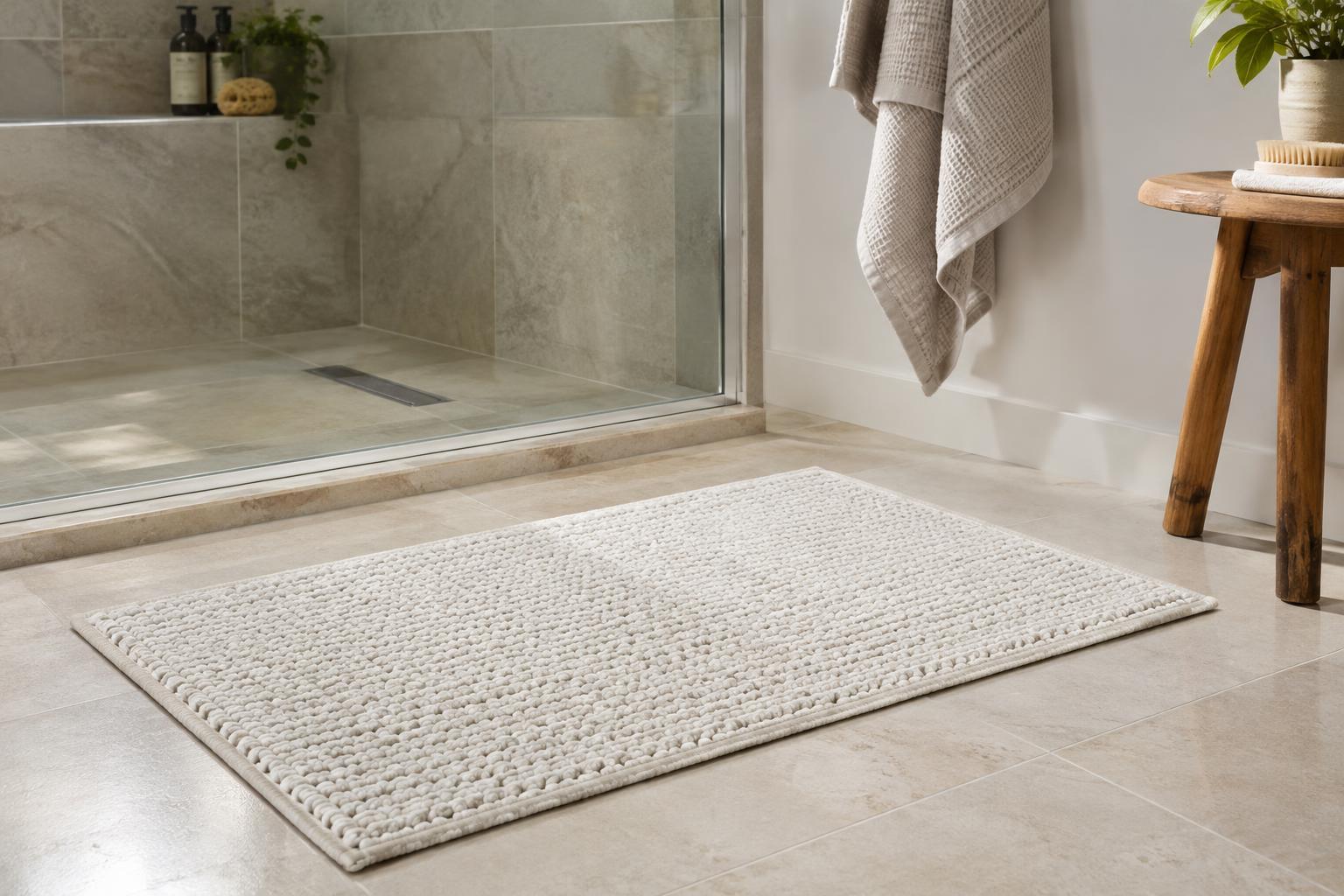
On a smooth, hard floor such as tile, grip is often the priority. On wall-to-wall carpet, a pad intended for hard flooring may not help; look for a product specifically designed to keep an area rug steady over carpet. A small test in an inconspicuous spot can help you check for unwanted residue, but it does not replace the flooring manufacturer’s recommendations.
Get the fit and placement right
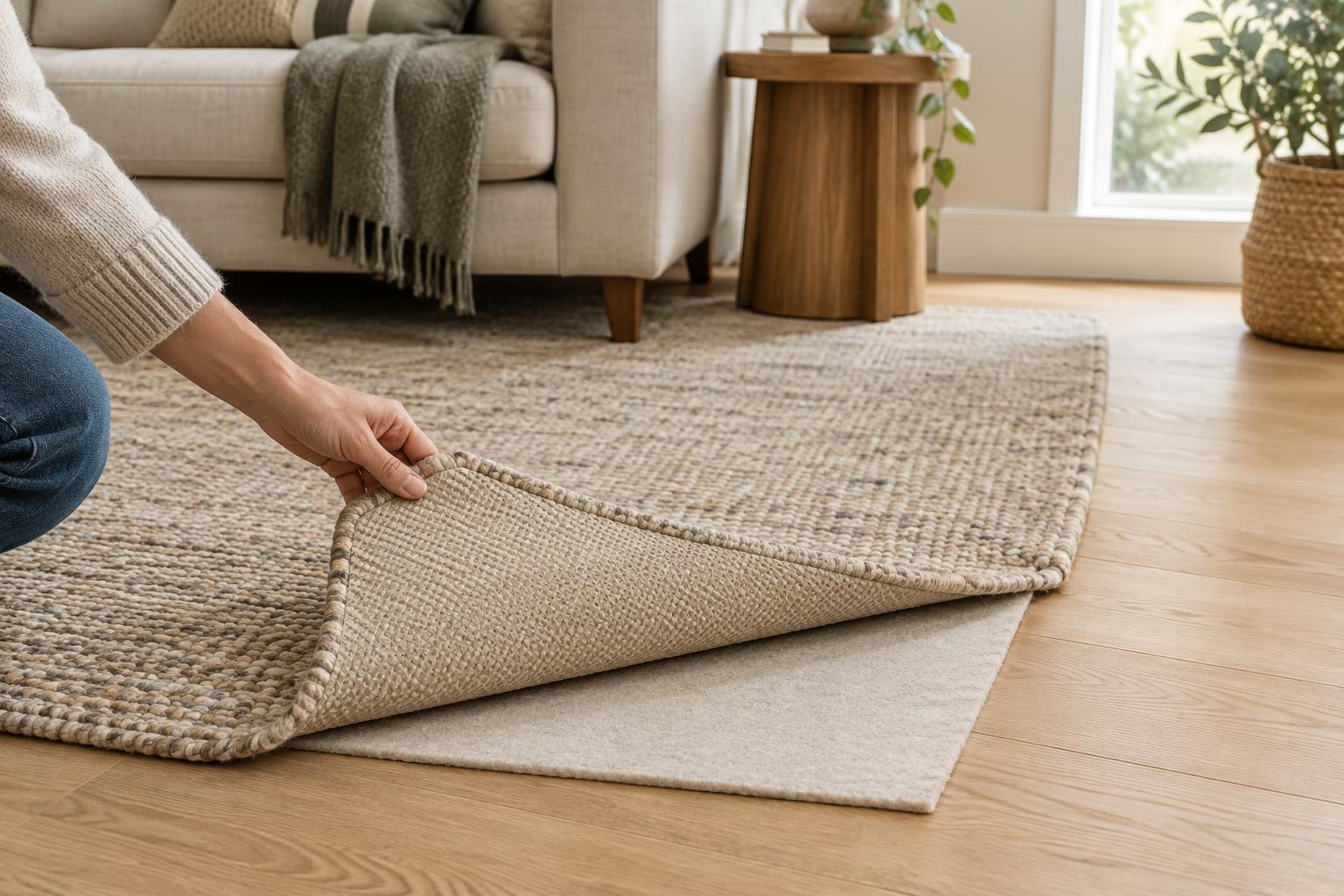
A pad should generally sit just inside the rug’s edges so it stays hidden and does not create a raised border. Measure the rug itself rather than relying only on its listed size, since finished dimensions can vary. If the pad can be trimmed, follow its cutting instructions and take off a little at a time. Lay it flat and centered, then lower the rug over it without stretching either layer.
Walk across the rug and check all four sides. The rug should lie flat, without a visible ridge where the pad ends. If it still shifts, first confirm that the pad suits the floor and that both surfaces are clean and dry. Extra thickness will not necessarily solve a grip problem, and a pad that is too small may leave unsupported edges.
Keep the setup easy to maintain
Dust and grit can collect beneath rugs, so lift the rug and pad periodically and clean the floor according to its care instructions. Let the floor dry fully before putting them back. Check the pad for worn patches, residue, or a change in texture, particularly in busy areas. If a pad has started to crumble or no longer holds the rug steady, replace it rather than layering a new solution over the old one.
The best choice is the one that addresses a specific annoyance without creating another. Choose grip for a wandering rug, cushioning for a firm one, and a low-profile combination when you need both. Then confirm that the material suits your floor and the finished rug lies flat in the room.