What “holds up” really means
The best everyday belt is not necessarily the stiffest one on the rack. It needs to keep its shape, hold a comfortable fit, and survive the small strains of being buckled, bent, and pulled through belt loops again and again. How you wear it matters too. A belt worn at a desk faces different demands from one worn on long walks or with work trousers.
Material is a useful starting point, but construction often decides how long a belt stays enjoyable to use. Look at the holes or adjustment mechanism, the way the buckle attaches, and whether the edges are finished cleanly. A well-made canvas belt may outlast a poorly assembled leather one. If you are choosing just one belt, start with the clothes and activities it needs to serve, then compare materials.
Leather: structured and easy to dress up
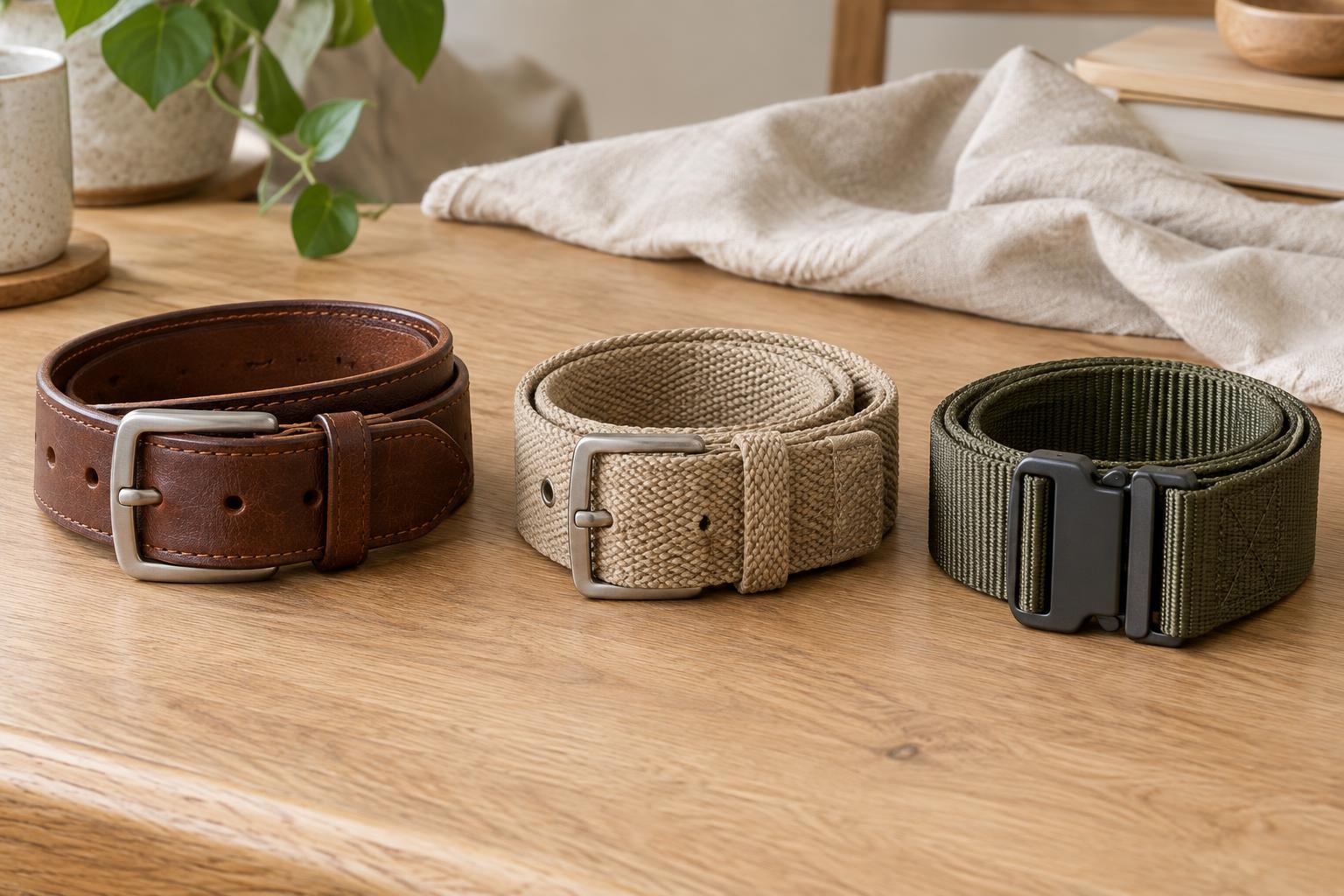
Leather is a strong choice when you want a belt that looks at home with jeans and smarter trousers. A substantial single piece of leather can soften with wear while retaining enough structure to sit neatly at the waist. Expect some creasing around the hole you use most; that is different from cracking, peeling, or layers separating.
Check the belt rather than relying on a label alone. A belt made from bonded layers may look tidy at first but can separate where it flexes. Inspect the edges for loose coating and tug gently near the buckle to see whether the attachment feels secure. Clear, evenly spaced holes are preferable to ragged ones. A replaceable buckle or screw fastening can make a favorite belt easier to keep in service.
Leather is less carefree around prolonged dampness. Let a wet belt dry away from direct heat, and store it loosely rather than leaving it tightly folded. If a leather belt is comfortable but develops dry-looking edges, a suitable leather conditioner may help; try any product in an inconspicuous spot first. For someone who wants a polished, versatile belt and does not mind occasional care, leather is often the most satisfying option.
Canvas: casual character with a few weak points
Canvas belts suit relaxed outfits and often feel less formal than leather. The fabric can bend readily around the body, making it comfortable for sitting and moving. Dense, firmly woven canvas generally feels more supportive than thin fabric that folds over inside belt loops. If you prefer a softer belt, some flexibility may be a benefit rather than a flaw.
Pay particular attention to the belt’s ends and holes. Cut fabric can fray if it is not bound, folded, stitched, or otherwise finished securely. Grommets can protect holes, but they should sit flat and feel firmly attached; a loose grommet can catch on clothing. On a buckle that grips the fabric instead of using holes, test whether the belt slips when you pull gently on the free end.
Canvas is a practical pick for casual daily wear, especially if you like texture and color. It can pick up stains, though, and repeated washing may affect its shape or finish. Follow the care guidance that comes with the belt, and let it dry fully before storing it. If the fabric stays flat, the edges stay contained, and the buckle holds reliably, a canvas belt can be an easy everyday companion.
Webbing: adjustable and ready for active days
Webbing belts are typically made from woven synthetic fibers and are popular when easy adjustment matters. Many use a clamp, slide, or quick-release buckle, so you are not limited to preset holes. That makes them convenient when switching between trousers with slightly different waist fits or adjusting comfort throughout the day. They also tend to dry more readily than leather after getting damp.
The biggest durability question is often the buckle, not the strap. Try the adjustment with the belt under light tension: it should hold without slipping and release without a struggle. Check that the webbing is woven evenly and that its cut end is sealed or neatly finished. Rough buckle edges can abrade the strap over time, while an overly rigid or bulky buckle may be uncomfortable when sitting.
Webbing is an appealing choice for active weekends and casual wardrobes, but its sporty look may not suit every outfit. Some straps can develop fuzzy edges or worn spots where the buckle repeatedly grips them. A simple buckle and a replaceable strap, when available, can make this style especially practical.
Choose for the wear you actually give it
For a neat belt you can wear with many outfits, start with sturdy leather and sound buckle construction. For a softer, casual look, consider dense canvas with protected edges. For frequent adjustment, damp conditions, or active days, webbing is hard to beat for convenience. None is automatically the longest-lasting: the right belt is the one whose weak points match the demands you place on it.
Before buying, thread the belt through your usual trouser loops if you can, check that its width fits, and fasten it at a comfortable setting with room to adjust either way. Bend the strap gently, inspect the high-wear areas, and make sure the buckle is pleasant to handle. Those quick checks tell you more about its prospects for everyday wear than material alone.