Start with a real-day inventory
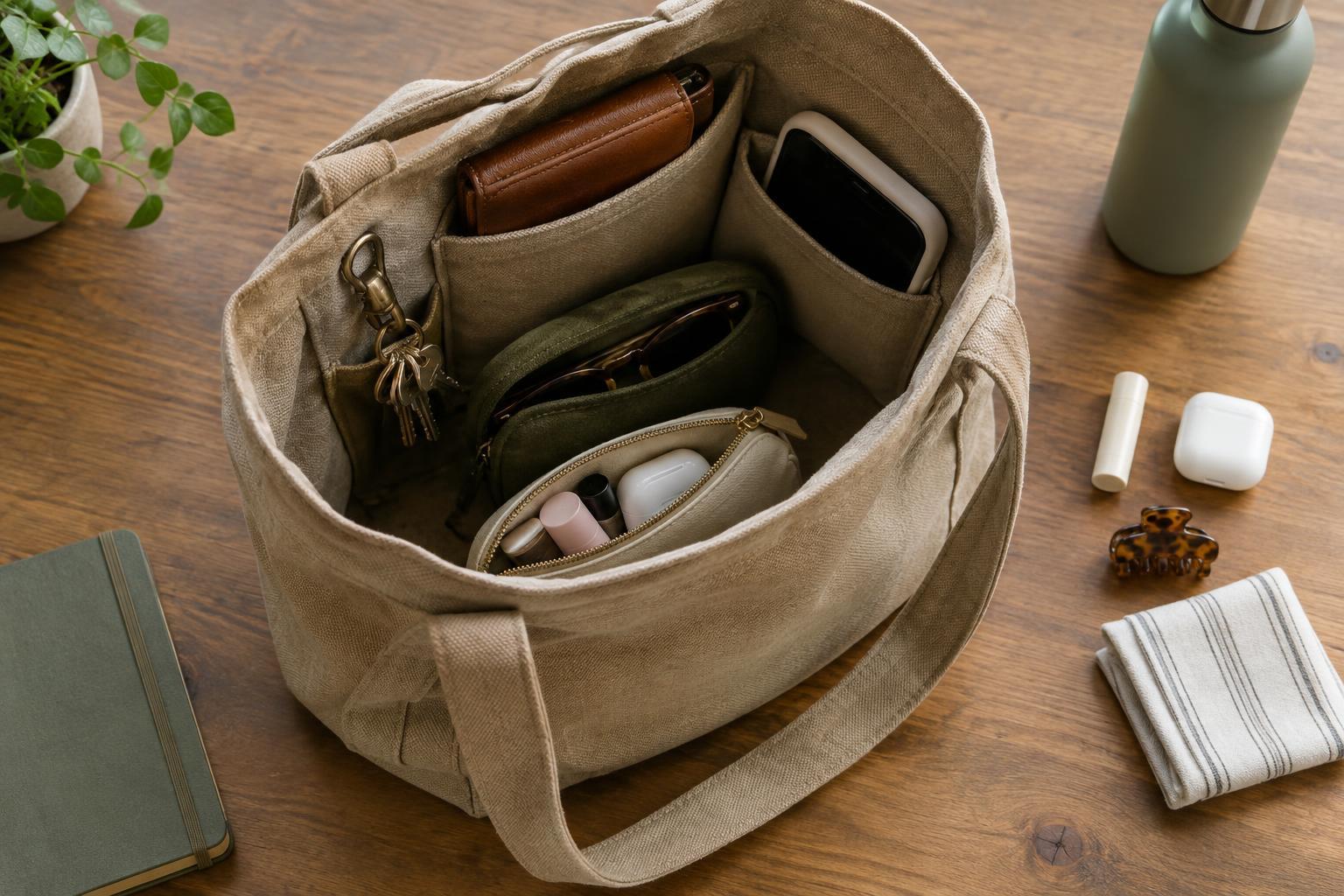
Before looking at bag dimensions, empty the bag you use most often. Put everything on a table and separate it into three groups: items you reach for daily, items you need only on certain days, and things that have stayed in the bag by accident. This gives you a more useful starting point than a generic list of essentials. Your everyday load might be a phone, keys, wallet and glasses, or it might also include a water bottle, notebook and small lunch container.
Think about your most typical trip, not the busiest day you can imagine. If you occasionally carry a book or gym clothes, decide whether your everyday bag must accommodate them or whether a separate tote would work better. Buying for the rare maximum load can leave you carrying an oversized, half-empty bag most of the week. On the other hand, a bag that fits only your bare minimum may become frustrating as soon as you pick up a small purchase.
Arrange your items before choosing dimensions
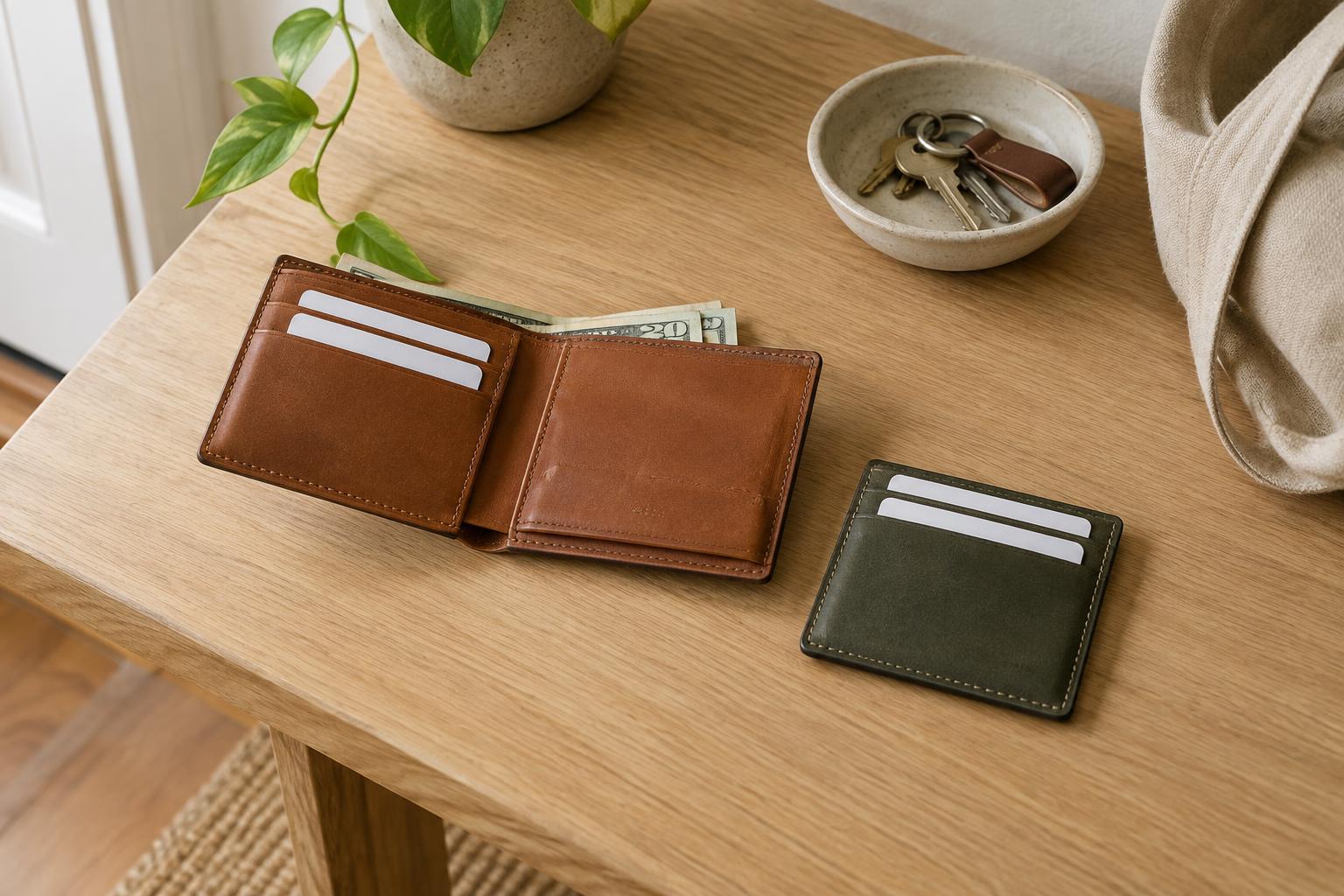
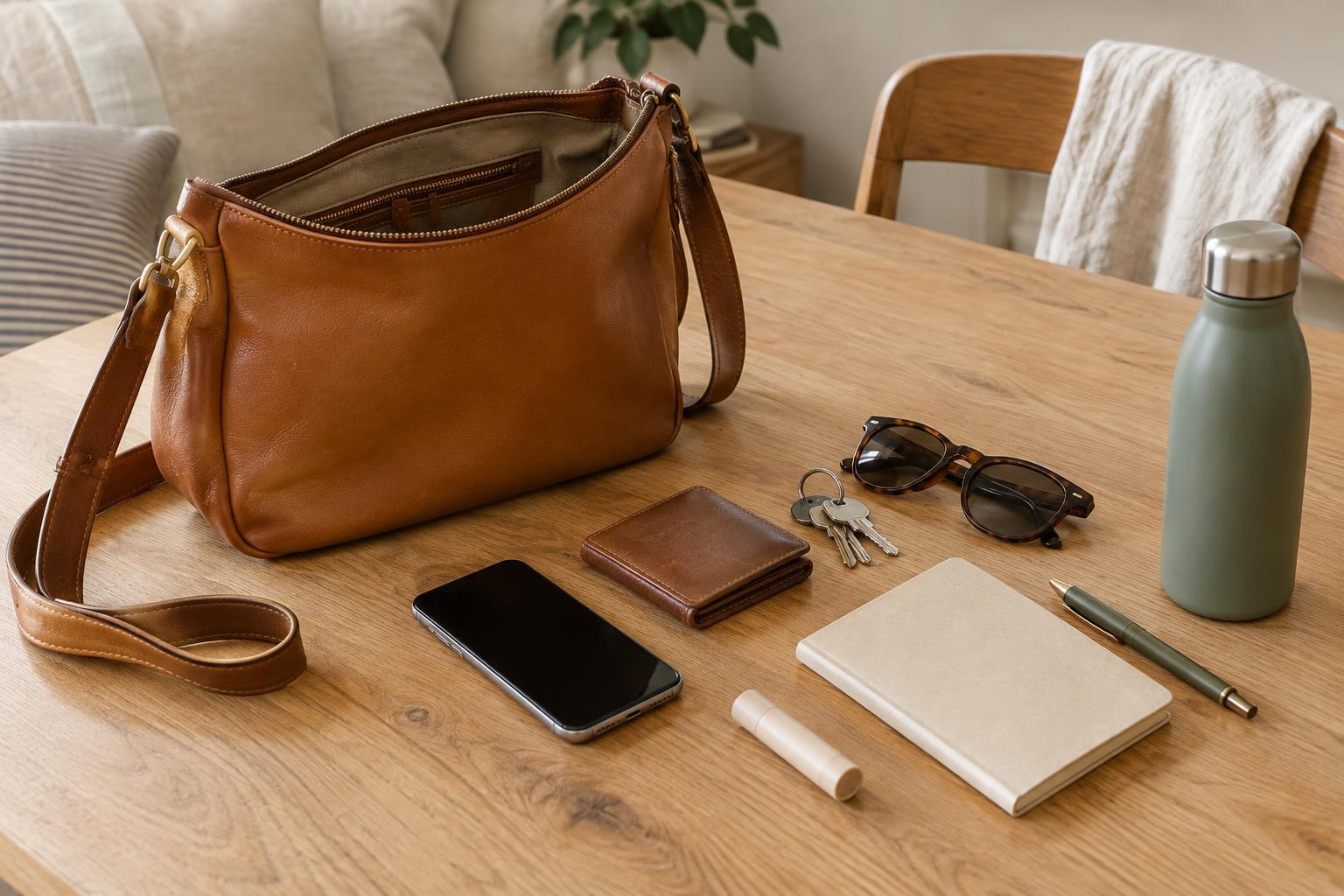
Make a compact layout of your daily items on a table. Keep together anything you would normally place in a pouch, and note the length and thickness of rigid objects such as a glasses case, notebook or bottle. These are often what determine whether a bag works. A soft scarf can bend into an available corner; a notebook cannot. If you want your items to sit side by side rather than in a stack, allow enough width for that arrangement.
Published bag measurements are a starting point, not a promise of usable space. A bag may be wide at the base but narrow at the opening, or its curved corners may reduce the room for rectangular items. Internal dividers, thick lining and a structured shape also affect what fits. When shopping in person, bring a few of your usual belongings and try loading the bag. When shopping online, look closely at the opening, base and interior as well as the listed height, width and depth.
Leave room to use the bag
A bag can technically hold everything and still feel too small. If you have to remove three items to find your keys, or press down on the contents to close a zip, you may need a little more room or a different layout. Aim for enough spare space to put items away without carefully repacking each time. That does not mean leaving a large empty cavity: it means allowing your hand to move and keeping frequently used items accessible.
Consider how the opening works in ordinary moments. A narrow zip may be secure but awkward for a wide wallet or bottle. A deep open tote may hold plenty but make small items hard to find unless it has a pocket or pouch. Check whether pockets fit the objects you would actually put in them. An internal pocket that is too shallow for your phone does not add much practical capacity, no matter how tidy it looks in a product photo.
Check the fit on your body
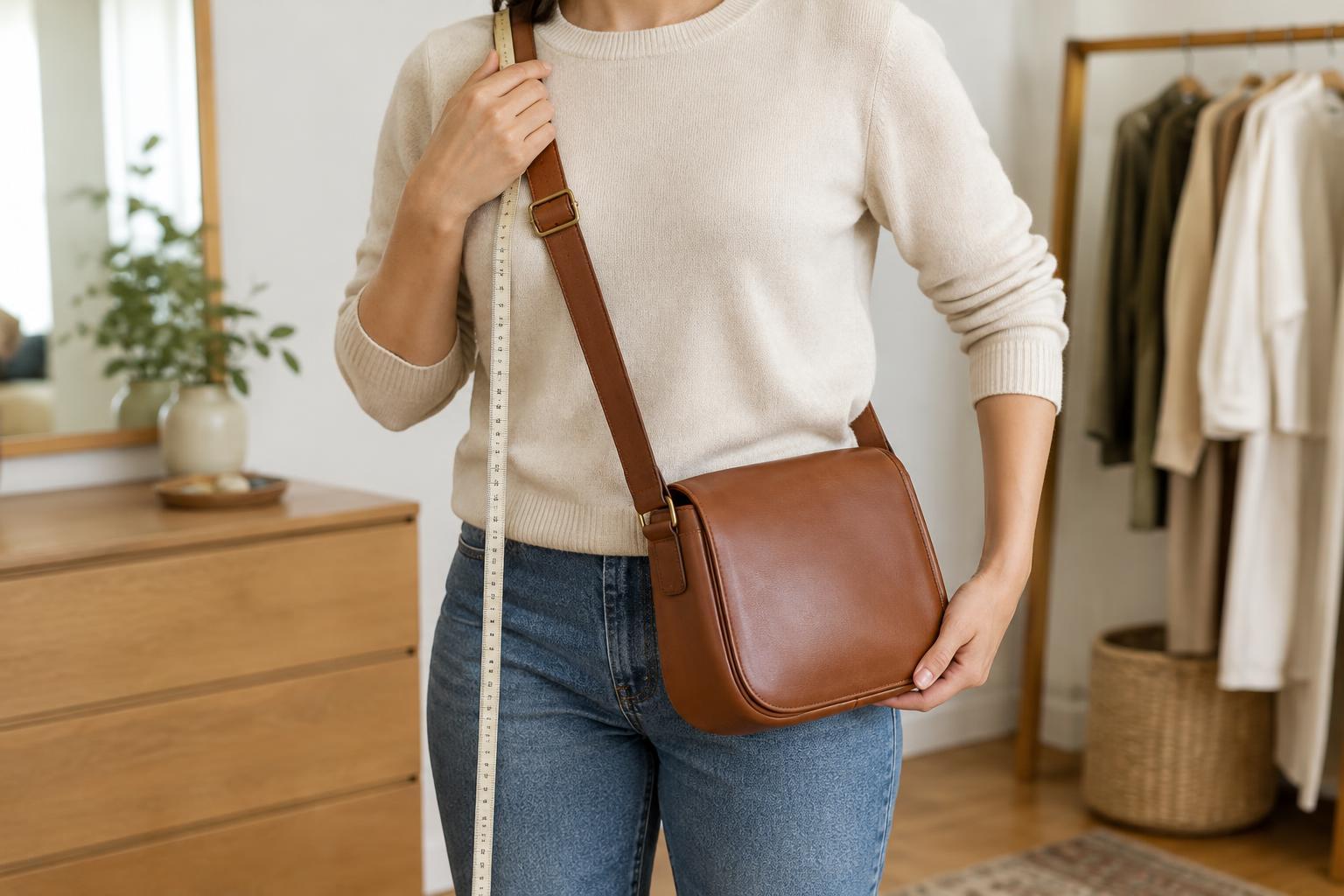
Capacity is only half the decision. Try the bag with your normal contents inside, since an empty bag can feel quite different. Walk around, sit down and take out your phone or keys. Notice whether the bag bumps against your hip, slips from your shoulder or feels bulky under your arm. A strap that can be adjusted may help you find a comfortable position, especially if you wear coats of different thicknesses through the year.
Also look at how the bag behaves when it is not full. A large, soft bag may fold neatly against your body, while a rigid one keeps its full shape. Neither is automatically better: the useful choice depends on whether you value a tidy silhouette, flexible capacity or quick access. If you regularly carry heavier objects, pay attention to strap width and how the weight sits, rather than judging the bag by its dimensions alone.
Choose for your routine, with a plan for exceptions
Match the final size to the routine you repeat most often. A compact bag may suit short errands if it holds your essentials without crowding them. A medium bag can be useful when you add a bottle, notebook or a few personal items. If your day routinely involves larger objects, choose a bag with an opening and base that can accommodate them easily. Style labels such as mini, medium and oversized are less helpful than seeing how your own items fit.
Before buying, run through one last test: Can you close the bag without strain? Can you reach the things you use most? Is it comfortable when loaded, and do you like how it looks at that size? For occasional extra cargo, a foldable tote or separate carry bag may be simpler than making your everyday bag do every job. The best size is the one that makes an ordinary day easier, not the one that holds the most.