Prep for the next decision, not the whole week
The most helpful ingredient prep removes a small point of friction: washing greens before you need a salad, cooking a pot of grains before a busy evening, or mixing a sauce that makes plain vegetables appealing. You do not need to decide every meal in advance. Start by looking at the next few days and identifying two or three moments when cooking is likely to feel difficult. Prep something that will make those particular meals easier.
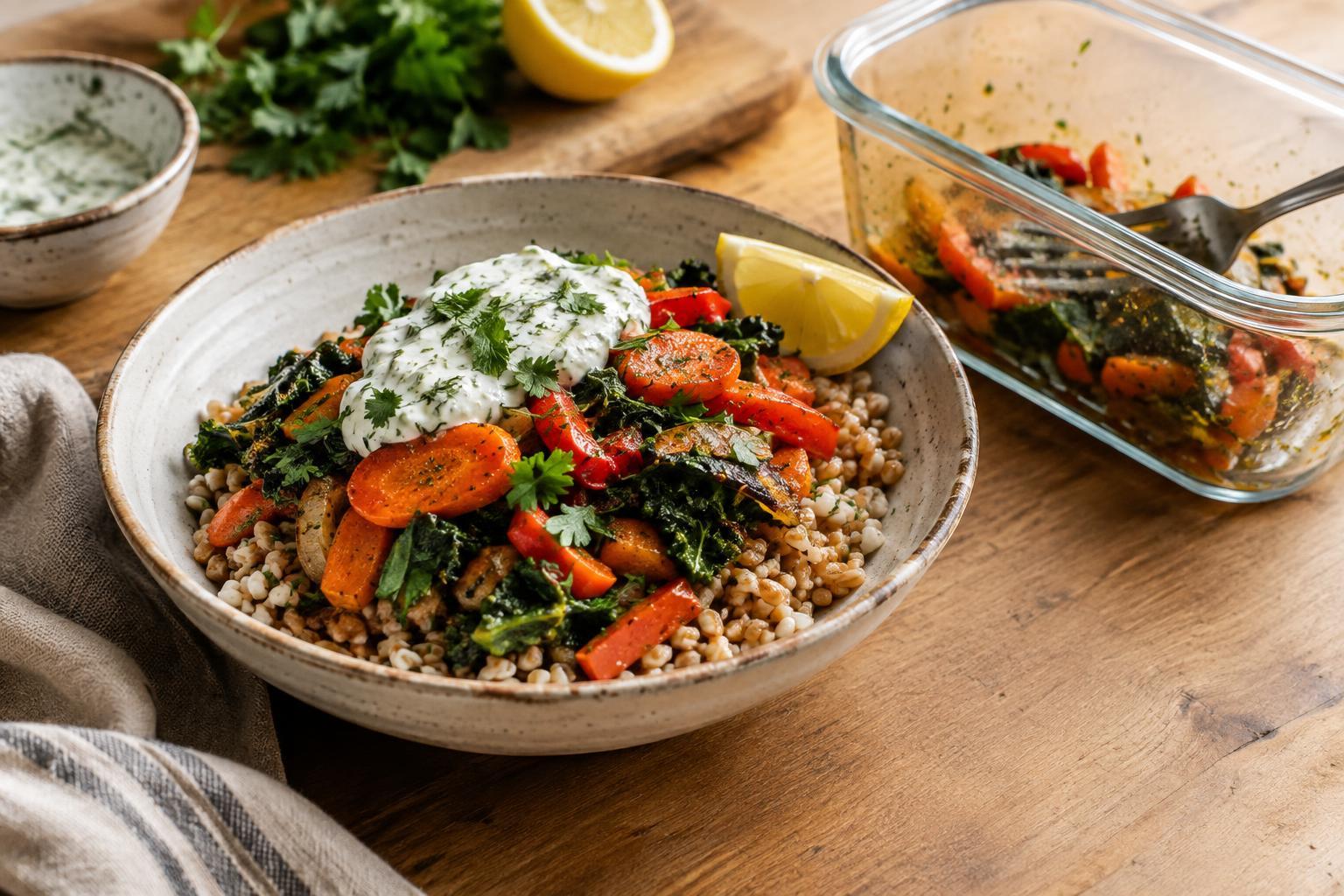
Think in components rather than finished dishes. A container of cooked rice, a tray of roasted vegetables, and a lemony dressing can become a warm bowl, a side dish, or the filling for a wrap. Keeping components separate gives you more options and helps preserve their texture. It also makes the plan less fragile: if your appetite changes, the ingredients can take a different route.
Choose work that pays off twice
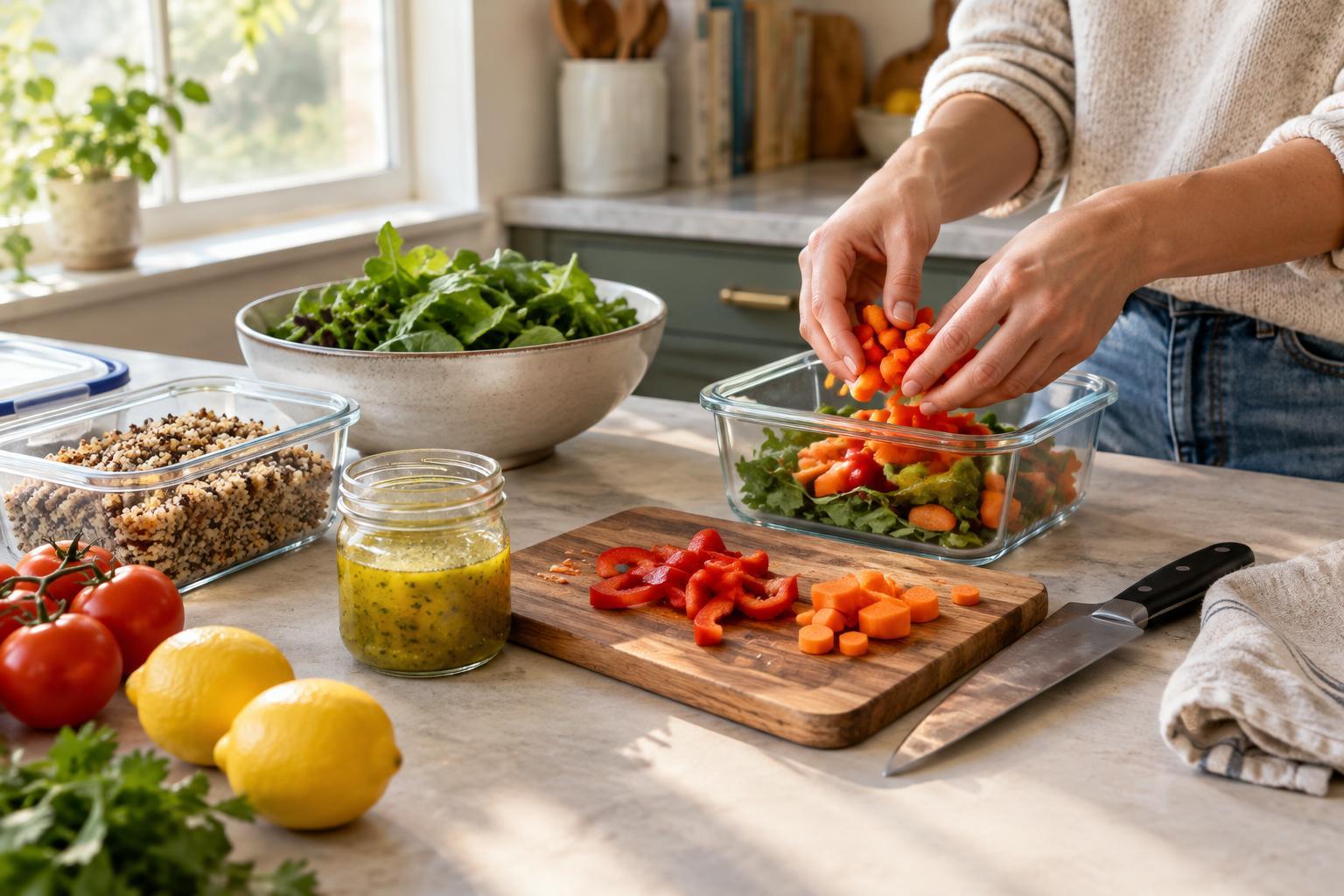
Good candidates for advance prep are tasks that create a mess or take longer than the final meal: washing and drying sturdy greens, chopping onions, cooking beans or grains, roasting vegetables, or making a versatile sauce. Pick only a few. If you are already chopping an onion for dinner, chop a little extra for tomorrow. If the oven is on, roast another tray of vegetables. This approach attaches prep to cooking you were going to do anyway.
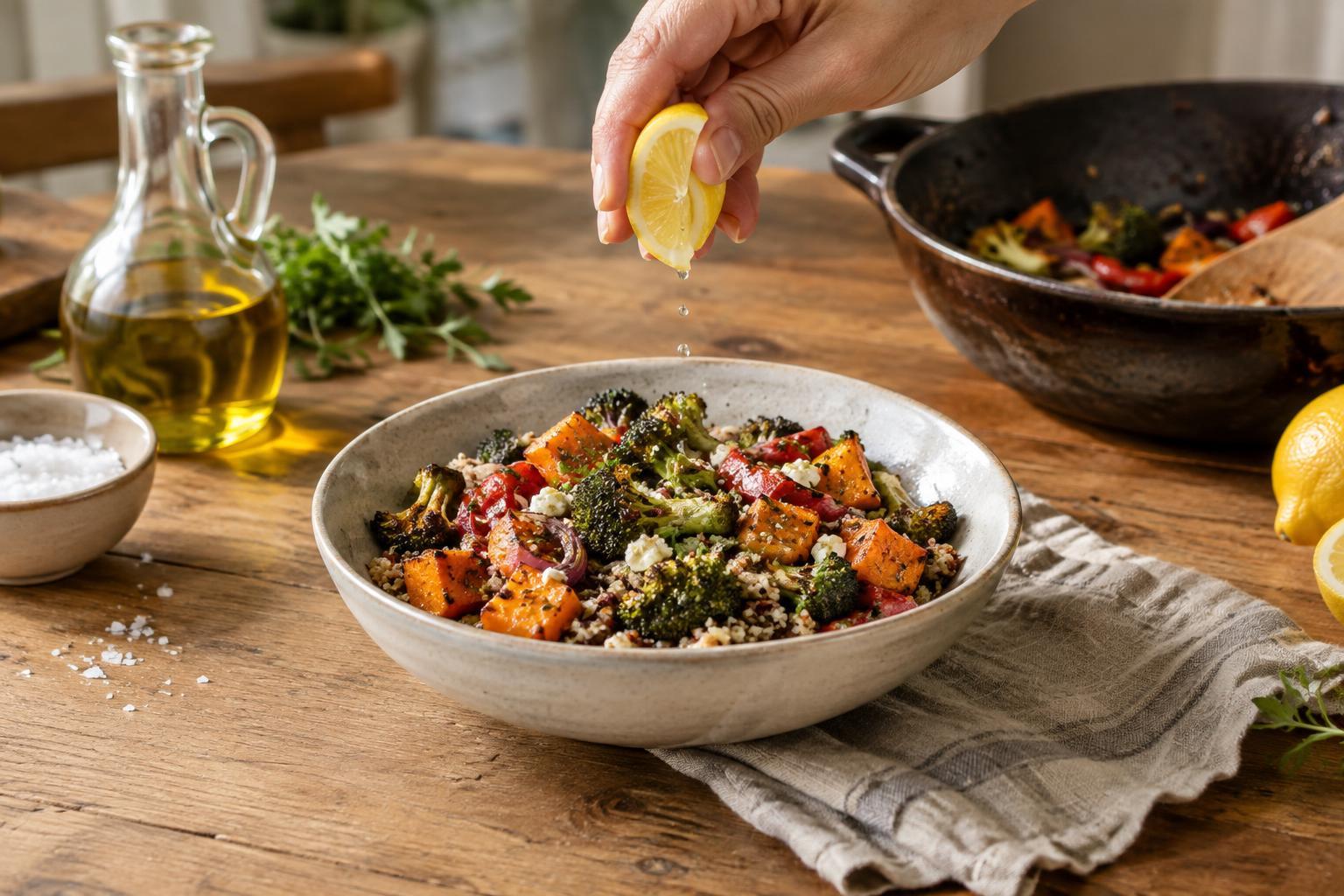
Balance ready-to-use ingredients with foods that are better handled at the last minute. Tender herbs, sliced avocado, and crisp toppings often taste better when prepared just before eating. Some cut produce also loses texture in storage. Leave yourself an easy finishing step, such as adding fresh herbs, toasting bread, or squeezing on citrus. A quick finish can make a partly prepared meal feel freshly made.
Make storage part of the plan
Before you begin, clear space in the fridge and set out containers that close well. Store washed produce as dry as practical, and keep dressings apart from greens or crisp vegetables until serving. Shallow containers can help cooked food cool more promptly; refrigerate perishable food without leaving it sitting out for an extended period. Keep raw meat and its juices separate from foods that are ready to eat, and use clean utensils and surfaces as you switch tasks.
Label containers with what they hold and when you prepared them, especially if several look alike. Put ingredients you intend to use soon where you can see them. If your plans change, freeze suitable cooked components while they are still in good condition rather than waiting until they are forgotten. Advance prep is only useful when the food stays appealing and you can find it.
Build a small menu of possibilities
Instead of planning five exact dinners, choose a few meal shapes: a bowl, a sandwich or wrap, and a quick pan meal. Then prepare ingredients that fit more than one shape. Cooked grains might anchor a bowl and later become a side. Roasted peppers can go into a wrap or be stirred into eggs. A yogurt-based sauce might dress vegetables at lunch and accompany a simple dinner, provided it has been stored appropriately.
Keep one or two low-effort staples alongside your prepared ingredients. Eggs, canned beans, noodles, or frozen vegetables can turn a component into a meal when you have little time. You can also leave a brief note on the fridge: “rice plus beans and greens” or “roasted vegetables with noodles.” The note is not a schedule. It is a reminder of choices you have already made easier.
Use short prep windows when they appear
A prep session can be as small as ten minutes after putting groceries away. Wash one vegetable, mix a dressing, or portion a snack you will actually reach for. Another useful window is the waiting time during dinner: while water boils, rinse greens; while food roasts, make tomorrow’s sauce. Stop when the current task is done. Turning every free moment into kitchen work defeats the point.
After a week or two, notice what you consistently use and what lingers. If chopped vegetables are eaten but cooked grains are not, prep more vegetables and skip the grains. If a sauce makes several simple meals enjoyable, keep that habit. The best routine is not the most ambitious one. It is a small amount of work, done at a convenient time, that gives your future self an easier place to start.