Start with the grain and the result you want
There is no single water ratio or cooking time that works for every grain. White rice, brown rice and farro differ in how much water they absorb and how long they take to soften. Even two bags of the same grain can cook a little differently. Treat package directions as a starting point, then use the same pot and measuring method each time so you can make useful adjustments.
Decide on texture before you begin. For separate grains to serve beside a saucy meal, use a measured-water method and resist stirring while the pot cooks. For grains destined for a salad, a slightly firm result often holds up better after dressing. If you want tender grains but do not need them to absorb a precise amount of liquid, boiling in plenty of water can be the easier choice.
Set up a repeatable stovetop method
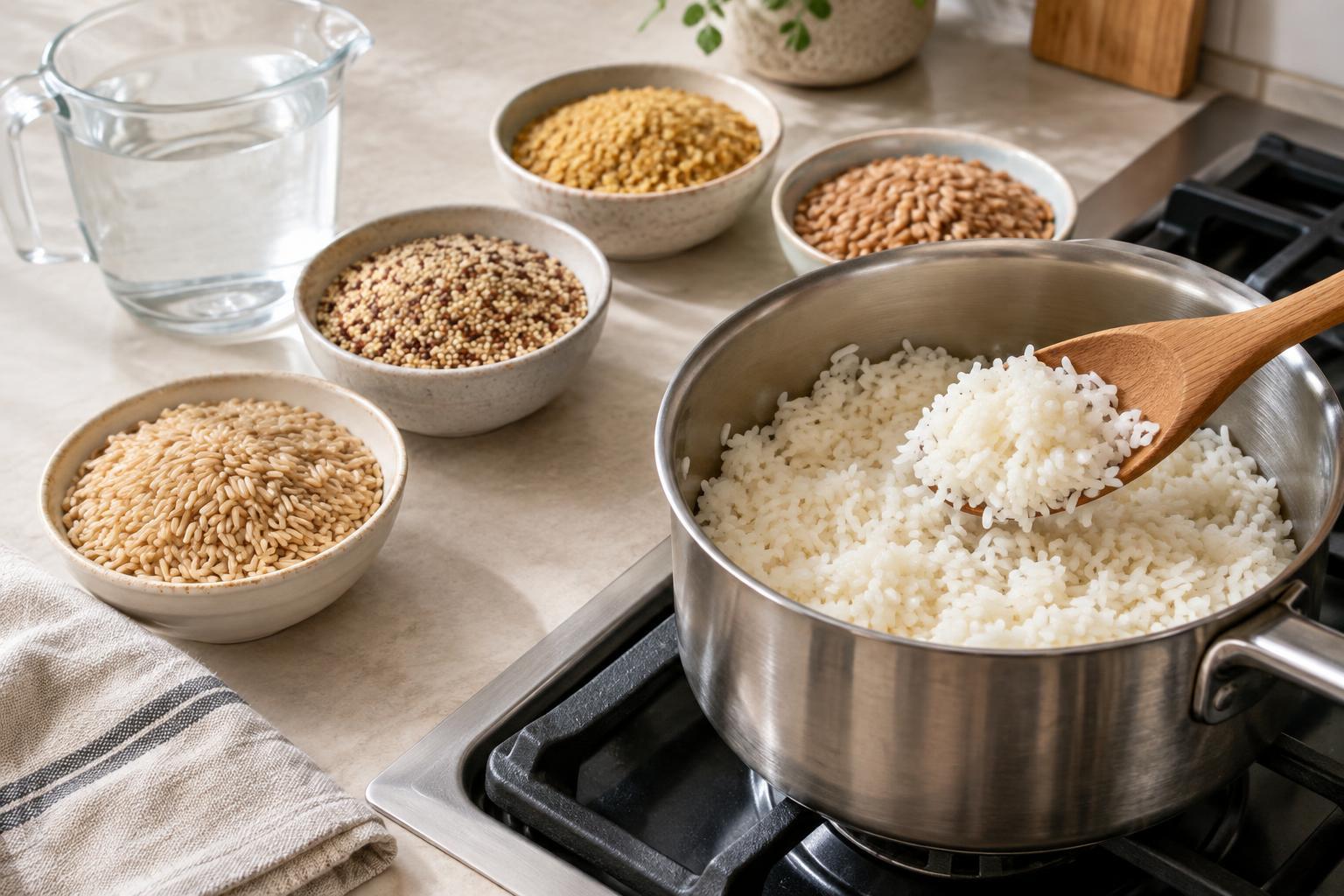
For the absorption method, measure the dry grain and water with the same cup. Rinse rice or quinoa in a fine-mesh strainer if the package calls for it, then drain well; water left clinging to the grains can affect a small batch. Add the grain, water and a pinch of salt to a pot with a well-fitting lid. Bring it to a boil, cover, turn the heat down to a gentle simmer and leave the lid in place.
Begin checking near the end of the package’s suggested cooking range. When the water has been absorbed, remove the pot from the heat and let it stand, covered, for about ten minutes. This rest helps moisture settle through the pot. Fluff with a fork rather than stirring vigorously. If your stove runs hot or your lid lets out steam, you may need a little more water next time; a heavy pot and low heat can help prevent a scorched bottom.
Use water guidelines, not rigid rules
For ordinary long-grain white rice, about 1½ to 2 cups of water per cup of dry rice is a workable starting range on the stovetop. Brown rice generally needs more time and often about 2 to 2½ cups of water per cup of rice. The right amount depends on the variety, whether you rinsed it and how tightly the pot holds steam. Follow any specific instructions on the bag first, especially for quick-cooking or specialty rice.
Quinoa commonly starts at about 2 cups of water per cup of dry quinoa, though a little less can give a firmer result. Medium or coarse bulgur is often prepared with roughly 2 cups of hot water per cup; fine bulgur may need only a soak, so check its label. For farro, particularly when you are unsure whether it is pearled, semi-pearled or whole, skip the ratio: simmer it in a generous pot of water until pleasantly chewy, then drain it like pasta.
The generous-water method also works for brown rice when you would rather test a few grains than monitor a covered pot. It is less suited to dishes where every bit of seasoned cooking liquid should end up in the finished grain.
Check doneness and make small corrections
Taste a few grains from different parts of the pot. A firm, chalky center means they need more cooking; a pleasant bite means they are ready, even if the clock suggests otherwise. If an absorption-method pot is dry but the grains are still hard, add a small splash of hot water, cover and continue over low heat. Repeat only if needed. Adding a large amount at once makes it easy to overshoot.
If the grains are tender but water remains, briefly uncover the pot over low heat to let some moisture escape. If they are already too soft, more heat will not restore their texture. Spread them out to cool and use them where a softer grain will be welcome, such as in a warm bowl or soup. Note the adjustment for next time: slightly less water, a shorter cook or an earlier doneness check.
Make a batch useful beyond one meal
Plain grains are adaptable, but a little planning makes them easier to use. Cook them in water with salt for a neutral base, or use a suitable broth when you know the meal it will accompany. After cooking, add ingredients that benefit from staying fresh or crisp, such as chopped herbs, lemon juice or toasted nuts. For a grain salad, let the grains cool before adding delicate greens.
If you cook ahead, divide the batch into shallow containers so it cools promptly, then refrigerate it. Keep cooked rice and other grains chilled rather than leaving them on the counter for a long stretch. Reheat a portion until thoroughly hot, adding a splash of water if it has dried out. Once you have a result you like, jot down the grain, water amount, pot and cooking time. That small kitchen note is more useful than guessing all over again.