Think in parts, not precise amounts
Soup is a forgiving place to start cooking without a recipe because you can taste and adjust it as you go. Instead of planning exact measurements, think about a few parts: something aromatic, a main ingredient, enough liquid to cook it, and a finishing touch. Onion, leek, garlic, celery or ginger can provide the first layer of flavor. Vegetables, beans, lentils, grains, pasta or leftover cooked meat can make up the body of the soup. Water or broth brings everything together.
Choose one main direction before you begin. A potato and leek soup might be mild and creamy; a tomato and white bean soup might be bright and hearty. You do not need many ingredients. In fact, a short list makes it easier to notice what each one contributes. If you are using leftovers, ask what still needs cooking and what only needs warming through. That question will help you decide when each ingredient goes into the pot.
Build a flavorful base
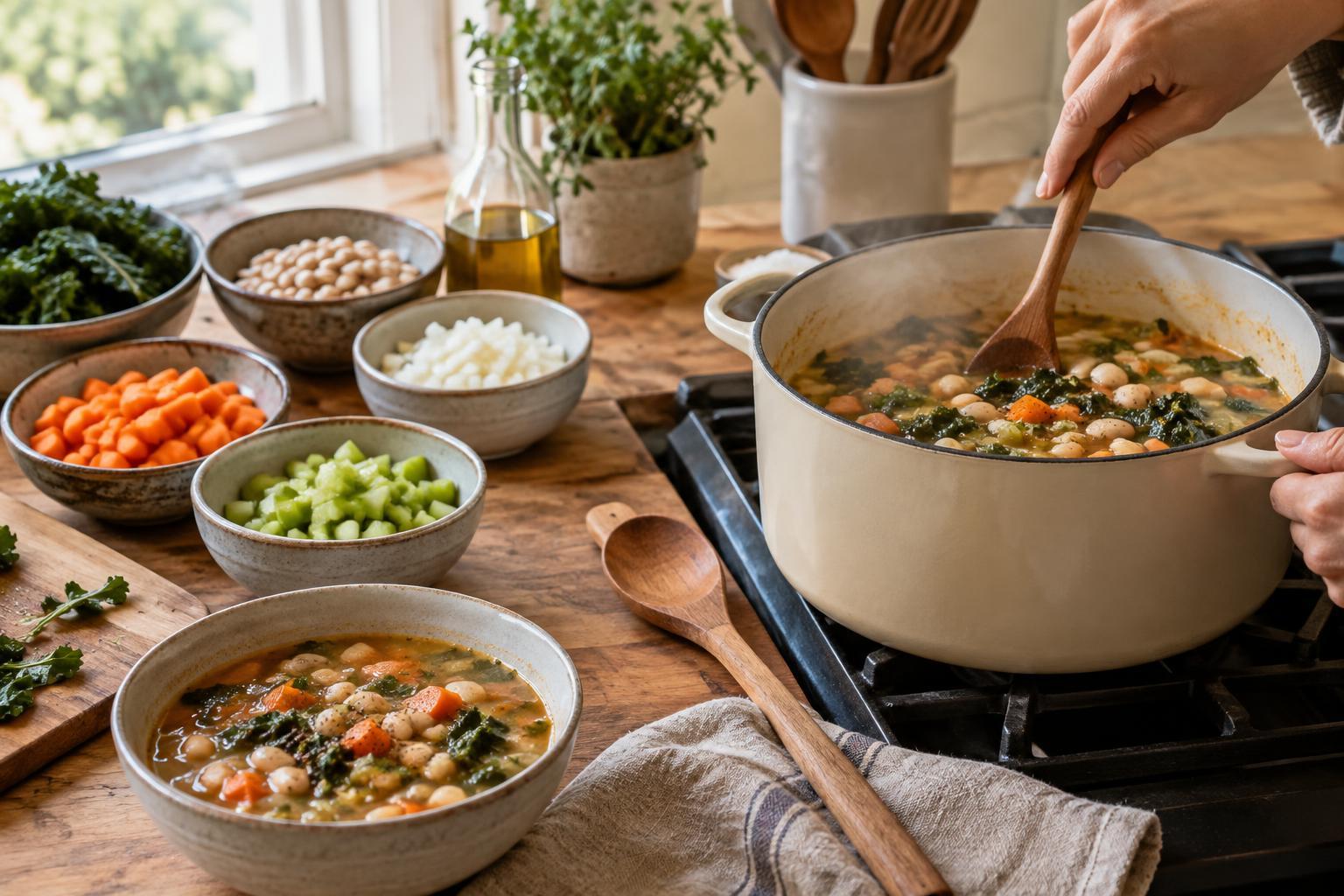
Set a pot over medium heat, add a little oil or butter, and cook your chopped aromatics with a pinch of salt. Stir occasionally and give them time to soften. If they begin to brown faster than you want, lower the heat. For a deeper flavor, let onion or similar vegetables take on a little color before adding liquid. Garlic and delicate spices can go in later, since they need less time in the hot pot.
Next, add firm raw ingredients such as carrots, squash or potatoes. Stir them with the aromatics for a minute or two so they pick up some of the seasoned fat. If you are using tomato paste or dry spices, this is also a useful moment to stir them in briefly. Then pour in enough liquid to cover the ingredients, adding more if you prefer a thinner soup. Bring the pot to a gentle simmer rather than a hard boil, and cook until the firmest ingredients are tender.
Add ingredients in the order they need
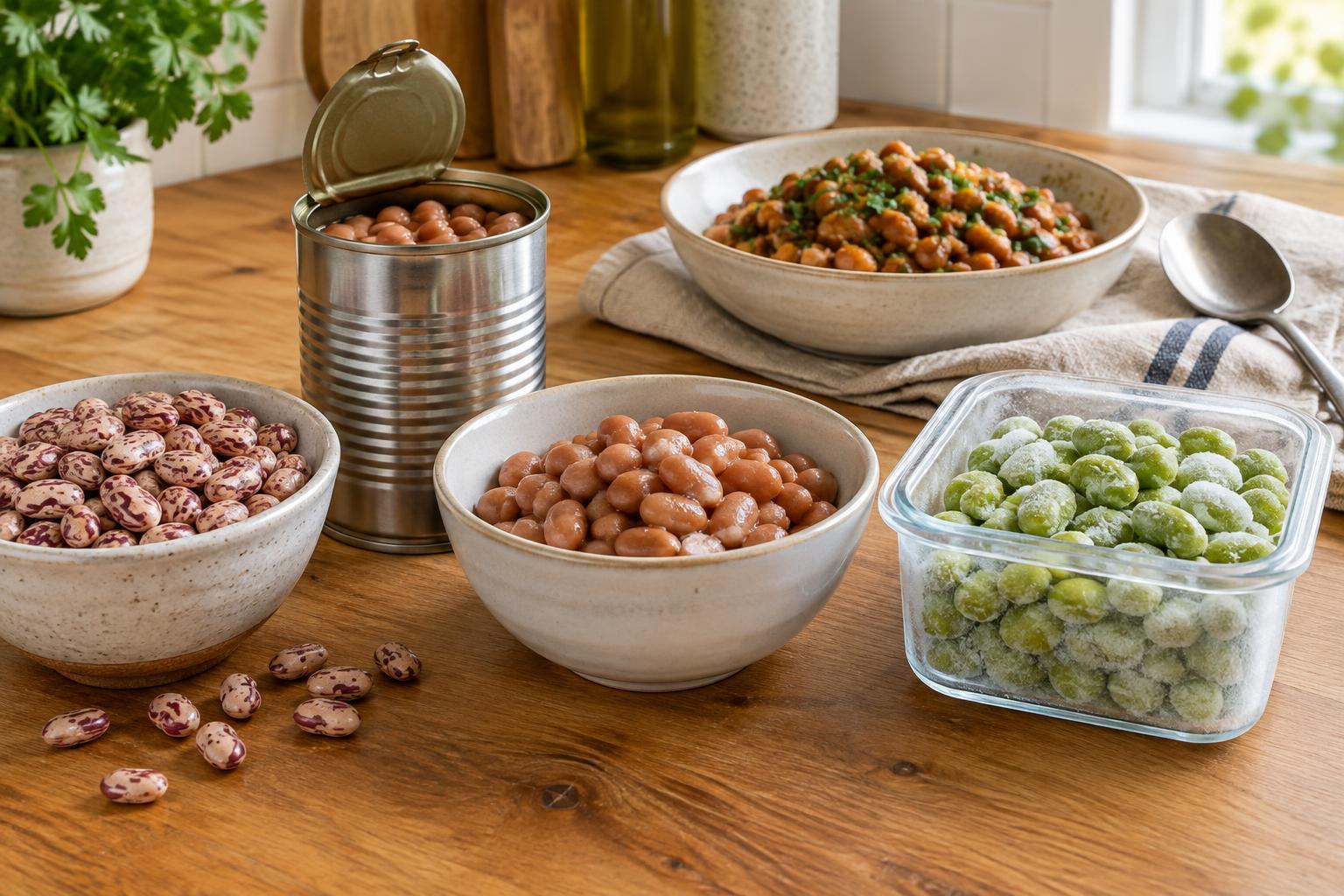
A soup can contain several ingredients without having to cook them all for the same length of time. Dried lentils and firm vegetables generally need a head start. Canned beans are already cooked, so they can join later and simmer long enough to absorb some flavor. Small pasta or quick-cooking grains can go in near the end; check and stir them as they cook, since they may soak up liquid. Add more water or broth whenever the soup becomes thicker than you intended.
Save tender greens, peas and fresh herbs for the final stretch so they keep some color and character. Leftover cooked meat should be heated thoroughly before serving. If you use raw meat, cook it fully and follow appropriate food-safety guidance for that ingredient. When you are unsure whether the pot is ready, taste a piece of the slowest-cooking vegetable or grain. Its texture is a more useful guide than the clock.
Adjust flavor and texture by tasting
Taste the soup once its main ingredients are cooked. If it seems flat, add a little salt, stir and taste again. If it is rich but dull, a small splash of lemon juice or vinegar may make it feel livelier. If it tastes too sharp, try a little more liquid or a spoonful of something mellow, such as cooked beans. Make one adjustment at a time so you can tell what helped.
Texture is flexible, too. Leave the soup chunky for a bowl with distinct ingredients, or mash some beans or potatoes against the side of the pot to give the broth more body. For a smooth soup, blend it carefully in batches or use an immersion blender, following the blender’s instructions for hot liquids. A spoonful of yogurt, a drizzle of oil, chopped herbs or crunchy toast can add contrast at the table without changing the whole pot.
Make your next pot easier
For a first attempt, try a simple combination: soften onion in oil, add chopped carrots and potatoes, cover with broth or water, and simmer until tender. Stir in a handful of cooked beans, then finish with salt and a squeeze of lemon. The next time, swap the potatoes for squash, add greens at the end, or use a different herb. Repeating a basic method with small changes builds confidence faster than trying to remember a complicated formula.
Write down anything you particularly liked: the ingredients you used, whether you preferred a thicker or thinner broth, and what made the flavor come together. Let leftovers cool, refrigerate them promptly in covered containers, and reheat them thoroughly before eating. Some soups thicken as they sit, especially those with pasta, grains or beans. A splash of water while reheating can bring them back to the consistency you want.