Start with a thermometer, not a visual guess
Browning, firmness, and clear-looking juices can help you judge texture, but they do not reliably show whether the center of chicken, fish, or meat has reached a safe temperature. A quick-read food thermometer takes much of the guesswork out of dinner. It is especially useful for thick cuts, bone-in pieces, and foods that brown quickly on the outside.
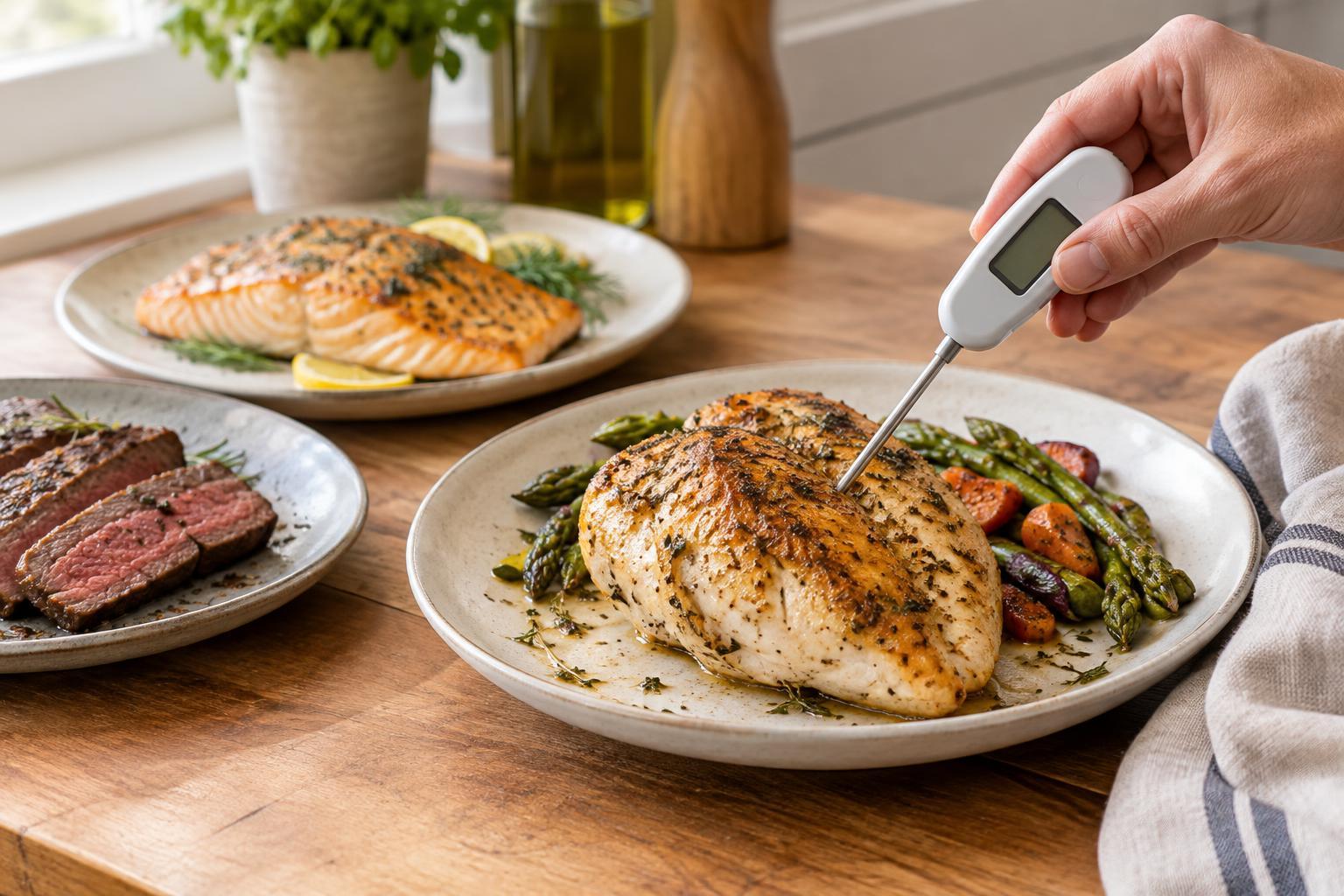
Insert the tip into the thickest part of the food, away from bone, gristle, or a pocket of fat. For a thin piece, slide the probe in from the side so the sensing tip reaches the center. Check more than one spot in a large or uneven piece. If the reading is below the target, keep cooking and check again; wash the probe after it touches undercooked food. The temperatures below are common U.S. home-cooking benchmarks. If you follow local food-safety guidance, use its recommendations.
Chicken: check the thickest part
Cook chicken and other poultry to 165°F (74°C), whether you are making breasts, thighs, wings, or ground poultry. For a whole bird, check both the thickest part of the breast and the innermost part of the thigh, without touching bone. If you cook stuffing inside the bird, its center should also reach 165°F (74°C).
Chicken can look white before it is fully cooked, while dark meat or meat near a bone may retain a pink tint after reaching a safe temperature. Neither appearance is a dependable substitute for a reading. To help the center cook without drying out the outside, use moderate heat for thicker pieces or finish them in the oven after browning. Let the cooked chicken rest briefly before slicing for juicier pieces, but do not count on resting time to make up for a reading below 165°F (74°C).
Fish: measure gently, especially in thin fillets
For finfish, a useful target is 145°F (63°C) at the thickest part. A fully cooked fillet will generally become opaque and separate easily with a fork, but those signs are less precise than a thermometer. They can also be hard to judge in a glazed, heavily seasoned, or unusually colored fish.
Fish can go from tender to dry quickly, so start checking shortly before you expect it to be done. Slide a thin probe sideways into a slender fillet rather than pushing down through it toward the hot pan. For a thick portion, check the center. If part of a fillet is much thinner than the rest, folding the thin end under before cooking can help it finish more evenly.
Meat: distinguish whole cuts from ground meat
For whole cuts of beef, pork, veal, and lamb, including steaks, chops, and roasts, cook to at least 145°F (63°C), then allow a three-minute rest before cutting or serving. Measure in the thickest part, away from bone. A browned crust does not tell you the temperature at the center, and the shade of a cooked pork chop or steak is not a reliable safety test.
Ground beef, pork, veal, and lamb have a higher target: 160°F (71°C). Grinding can move bacteria from the surface throughout the mixture, so a burger needs a different check from a steak. Insert the thermometer through the side of a patty toward its center. Ground chicken or turkey should reach 165°F (74°C). For mixed dishes, identify the ingredient with the highest required temperature and check a representative thick area.
Make safe checking part of the cooking routine
Keep a clean plate ready for cooked food rather than returning it to one that held raw meat or fish. Use separate utensils where practical, and wash hands, boards, and surfaces after contact with raw ingredients. There is no need to wash raw chicken; splashing can spread raw juices around the sink.
For an easier weeknight routine, keep the thermometer near the stove and check food a little early, then cook in short increments if needed. A temperature reading tells you when a food has reached its safety target; you can still choose your seasoning, browning, and resting time for the texture you enjoy.