Start with the job, not the packet
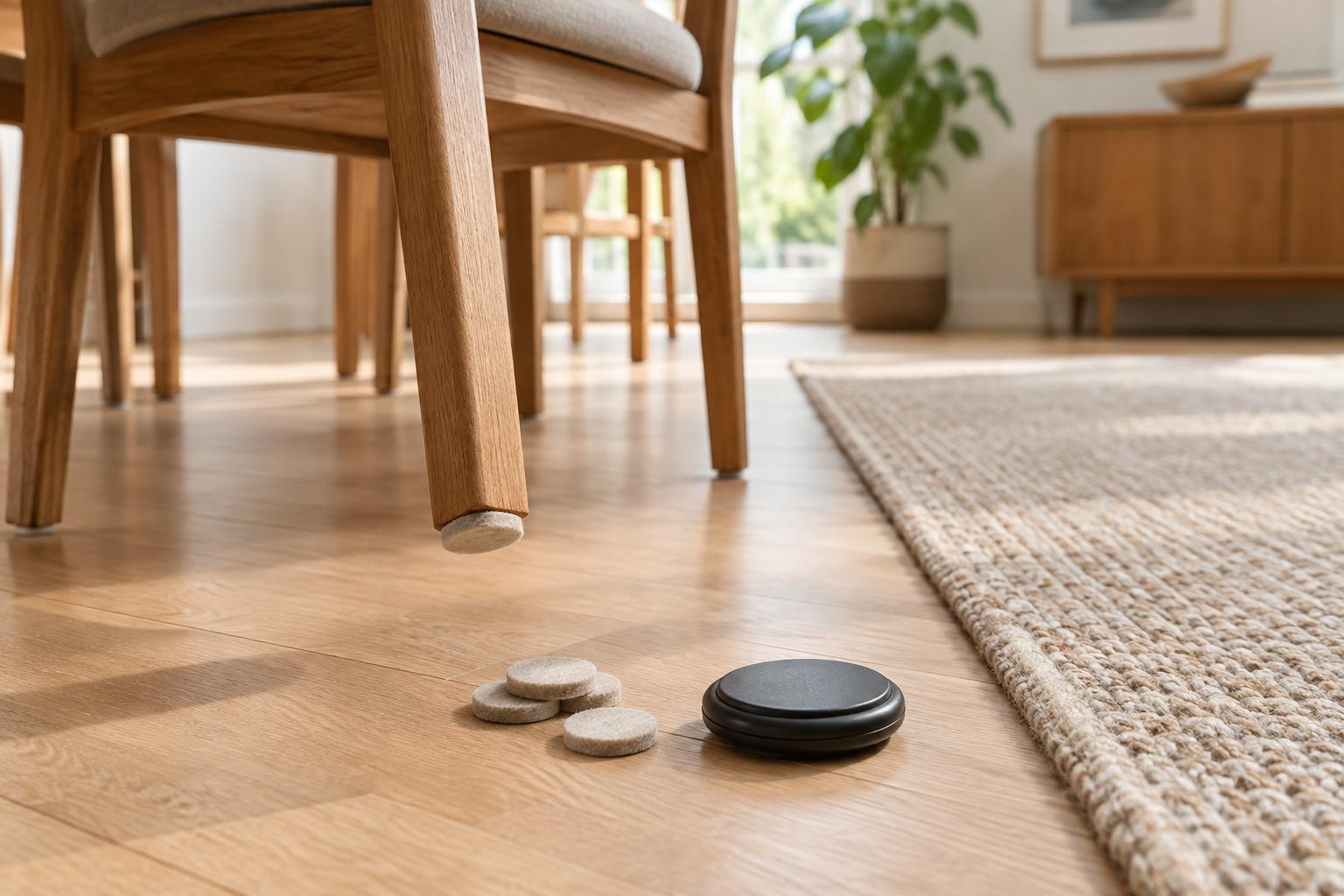
A dining chair that moves several times a day needs a different solution from a bookcase you shift once to rearrange a room. Felt pads stay on furniture legs to soften everyday contact with a hard floor. Furniture sliders are usually placed under a piece temporarily to help move it. Some products combine these roles, but checking the intended use makes shopping easier.
Before buying, look at the floor, the furniture’s weight, the shape of its feet, and how often it moves. A pad that is too small may leave an edge of the leg exposed. A thick pad on one leg and a thin pad on another can make furniture wobble. For a coordinated set, such as dining chairs, choose pads of the same thickness and check that every leg makes even contact.
Choose felt for everyday movement on hard floors
Felt pads are a useful starting point for chairs and small tables on wood, laminate, vinyl, or tile. Their soft surface reduces direct contact between the furniture foot and the floor. Look for dense felt that covers the full contact area without extending so far beyond the leg that its edges catch. Round and square pads suit simple feet; cut-to-size sheets help with unusual shapes.
Attachment matters as much as the felt. Adhesive pads are convenient for flat, clean feet, but may loosen on dusty, uneven, or frequently moved legs. Nail-in or screw-in pads can hold more securely on suitable wooden legs, although they require making a hole and may not suit valuable or delicate furniture. Slip-on caps can work for legs that fit them snugly. Whichever style you choose, inspect it occasionally: trapped grit or worn-through felt can undermine the protection you intended.
Match temporary sliders to the floor beneath
When moving furniture across carpet, a slider with a smooth, firm plastic underside generally travels more easily than felt. On a hard floor, choose a slider specifically intended for that surface, typically one with a soft felt-like underside. Do not assume a slider labeled simply “furniture slider” works on every floor. Check both its underside and its stated floor compatibility before putting weight on it.
Size the slider so each furniture foot rests securely within it. If a sofa or cabinet has a broad base rather than distinct feet, several sliders may be needed to support it evenly. Lift each corner just enough to position the slider; avoid dragging an exposed edge across the floor. Clear the route first, and ask for help with furniture that is too heavy or awkward to control comfortably. Remove temporary sliders after the move unless their instructions say they are suitable for ongoing use.
Account for floor texture and finish
A product that works on smooth tile may behave differently on textured tile or a floor with noticeable grout lines. Small pads can catch on ridges, while a large slider may bridge them more smoothly. On soft vinyl, a small furniture foot can concentrate pressure even when padded; a wider contact surface may be worth considering. Carpet also varies: a slider may glide over low pile but be less predictable on thick or uneven pile.
For wood and other finished floors, check any care guidance supplied with the flooring, particularly if a pad or slider will remain in place. Some materials or adhesives may not suit every finish. Test a new product in an inconspicuous spot when practical, and look underneath it during early use for residue, discoloration, or grit. If you notice a change, stop using it rather than waiting for a larger mark to appear.
Fit them well and keep them clean
To apply an adhesive felt pad, turn the furniture over if you can do so safely, then clean and dry the foot. Press the pad onto a flat surface and follow its packaging for any recommended setting time. Once the furniture is upright, check that it sits level and that the pads remain centered when you move it. For frequently used chairs, consider buying a few spares in the same size.
Pads and sliders are small objects, but they work best as part of a simple floor-care routine. Sweep up grit before moving furniture, check the underside of each pad now and then, and replace pieces that are compressed, peeling, or dirty beyond cleaning. The aim is not to make furniture slide as freely as possible; it is to make its ordinary movement controlled, comfortable, and gentler on the floor.