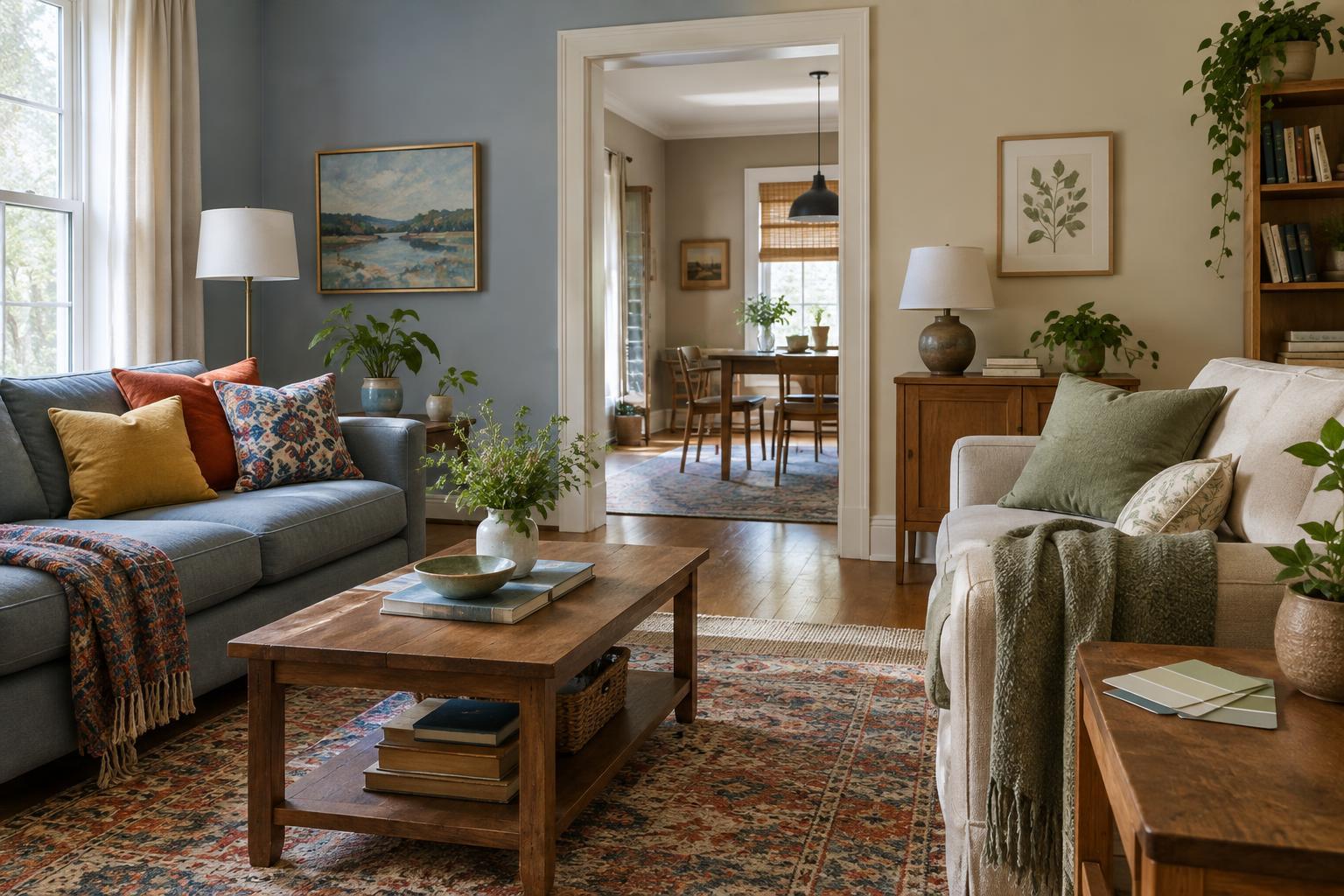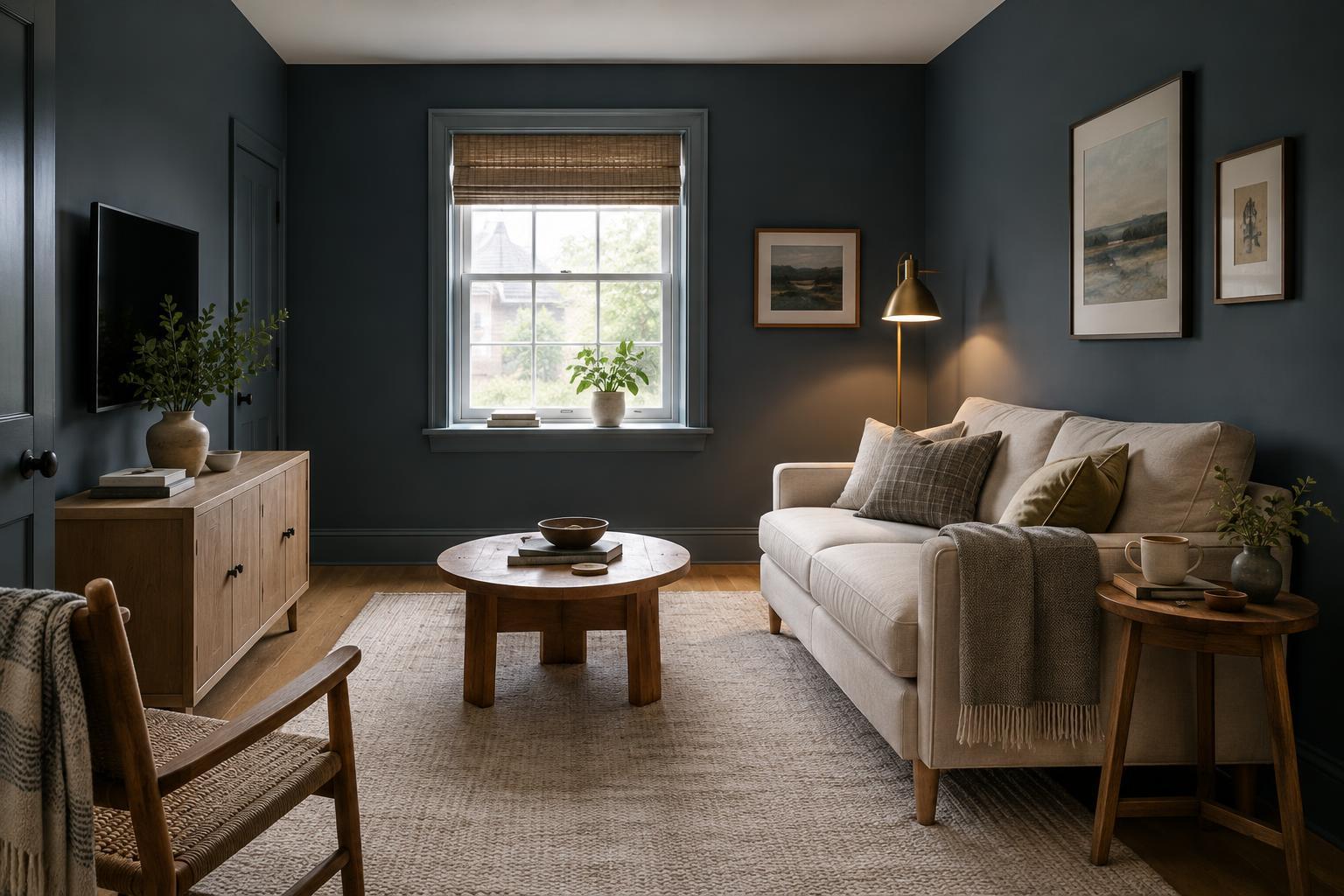
Start with what the room already gives you
Before choosing a paint color or buying cushions, look at the pieces that will stay. A sofa, dining table, rug or set of cabinets may occupy more of your view than any new accessory. Note their colors and finishes in ordinary terms: warm brown wood, blue-gray upholstery, cream walls, black metal. Include the floor and any large curtains or blinds. These surfaces form the starting palette, even if they were never chosen as a set.
Next, identify what feels off. Perhaps the room seems too cool, the furniture blends into the walls, or several accent colors compete for attention. A specific problem is easier to solve than a general wish for a new look. Take a photo in daylight and another with the lights you normally use in the evening. The difference can reveal whether the issue is the color itself or how it looks under your lighting.
Choose a direction, not a collection of favorite colors
Keep the main furniture color in your plan, then choose a background color and one or two accents to work alongside it. The background might be an existing wall color, a new coat of paint or the color of large curtains. Accents can appear in smaller places, such as a lampshade, artwork or cushions. Repeating an accent in a few spots helps those pieces feel connected without making everything match.
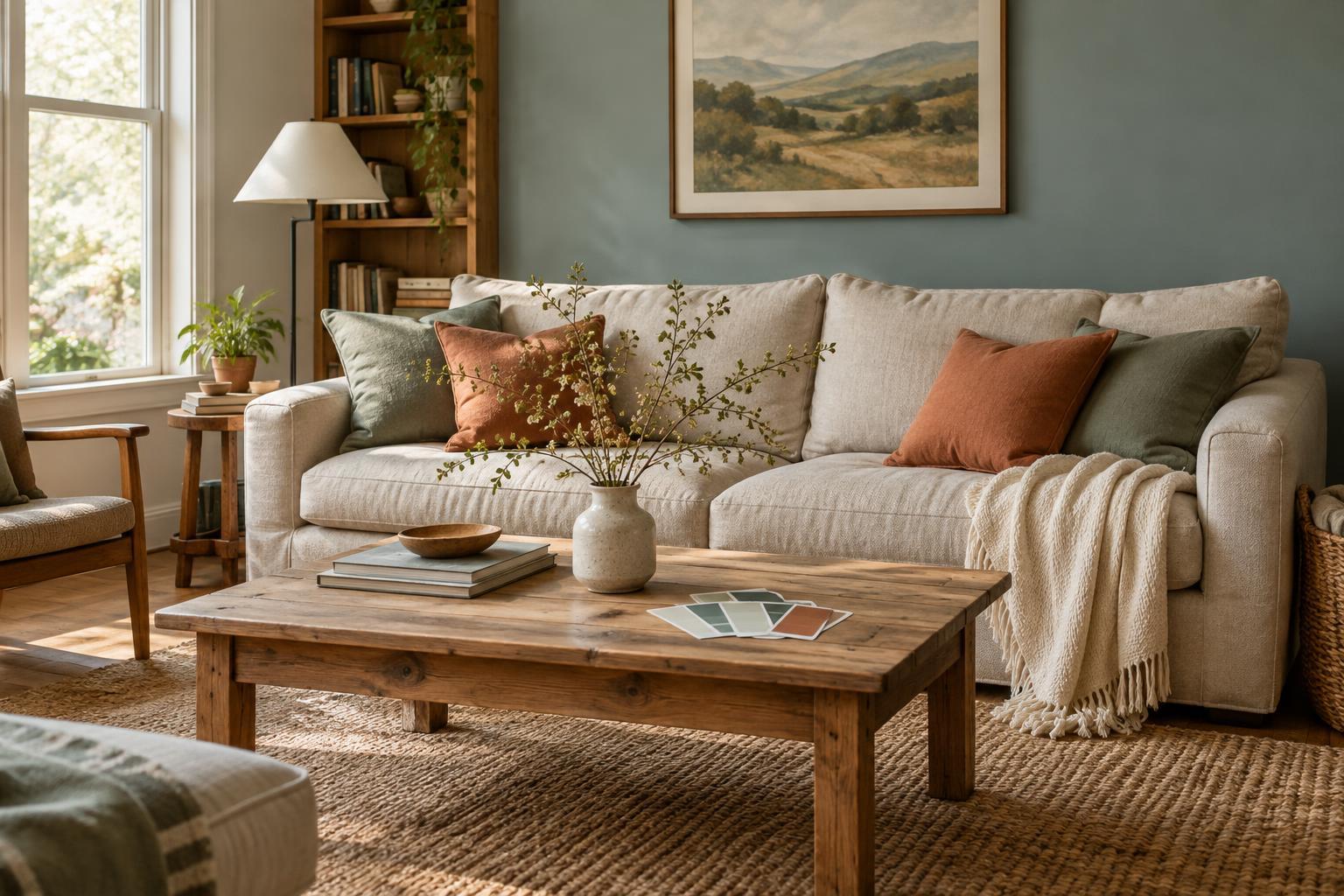
Pay attention to temperature and undertone. A warm beige sofa may sit more comfortably with muted terracotta, olive or soft cream than with a stark, icy white. A cool gray sofa might benefit from blue, deep green or a warmer accent that provides contrast. These are possibilities, not rules: put samples next to the actual furniture rather than relying on how colors look in a shop or on a screen. If the room already contains a strong color you cannot change, letting it be the focal point is often simpler than trying to compete with it.
Test color where you will live with it
Paint can make a large difference, but it is worth testing before committing. Place movable sample boards against more than one wall and check them in morning, afternoon and evening light. Look at the color beside the floor, upholstery and trim as well as on its own. A shade that looks subtle in isolation may feel much brighter across a whole wall.
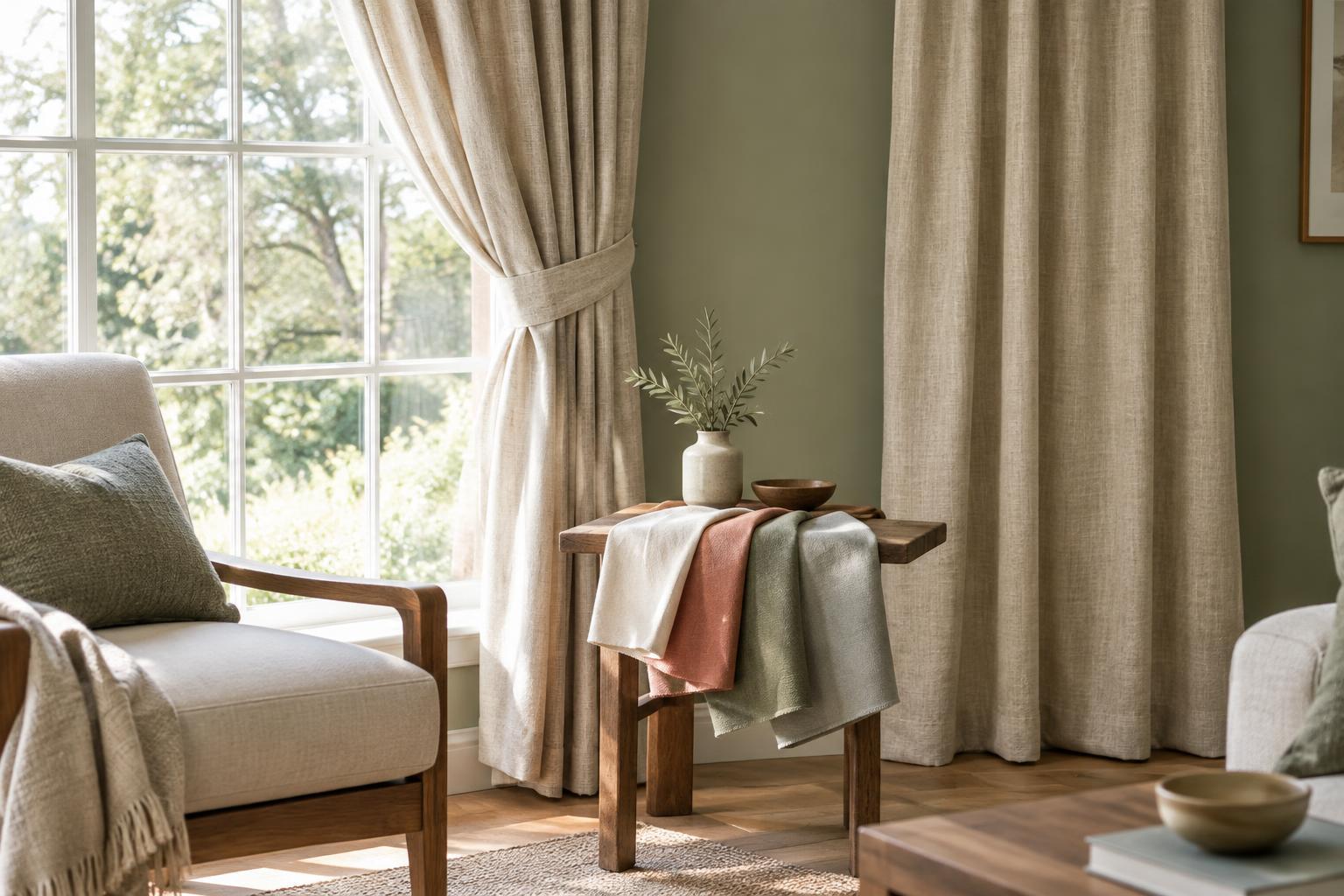
If painting is not practical, work with larger removable surfaces. Curtains can soften a high-contrast window; a rug can introduce a color beneath neutral furniture; a throw can interrupt a broad stretch of upholstery. Choose the surface that addresses the problem you identified first. If the room feels cold, for example, a warm-toned rug may do more than several small decorative objects. You do not need to change every surface to make the palette feel intentional.
Use textiles and objects to connect the palette
Textiles are useful because they bring color, texture and pattern together. A patterned cushion or rug can bridge colors that otherwise seem unrelated, provided it contains shades that echo the room. Mix patterns by varying their scale: a broad stripe can sit beside a small, irregular print without looking too busy. Leave some solid-colored areas so the eye has a place to rest.
Small objects work best when they support a choice you have already made. A bowl, framed print or lamp base can repeat an accent from a rug or curtain. Gather a few pieces in one area before distributing that color around the room; this makes it easier to judge whether you have enough or too much. If you are shopping, carry a fabric swatch or a clear photo of the existing furniture. A color does not have to be an exact match, but it should make sense beside the pieces that remain.
Edit slowly and check the room at different times
Lighting affects the finished scheme as much as the objects do. A warm lamp can make cream and wood feel inviting, while a cooler bulb may sharpen blues and grays. Aim for lighting that suits how you use the room, then assess the colors under those conditions. If one corner looks disconnected, moving a lamp or repeating a nearby accent may help before you buy anything else.
Make changes in stages: remove accessories that no longer fit, add one larger color element, then decide whether smaller accents are needed. Live with each change for a few days if you can. You may find that a new curtain color gives the old furniture enough contrast, or that clearing away competing objects was the most effective step. A successful refresh does not disguise the furniture you own; it gives those pieces a clearer place in the room.