What seasoning in layers means
Seasoning in layers means making small flavor decisions throughout cooking rather than asking one final pinch of salt to do all the work. You might season vegetables before they roast, add spices while onions soften, and finish the cooked dish with lemon juice. Each addition has a different job: early seasoning reaches ingredients as they cook, while late seasoning brings their flavors into focus.
This approach does not require a complicated recipe or a large spice collection. Start with modest amounts, taste when it is safe to do so, and leave room for adjustment. A dish can change considerably as liquid reduces, ingredients release moisture, or salty additions such as cheese and soy sauce go in.
Start with the ingredients, not the finished plate
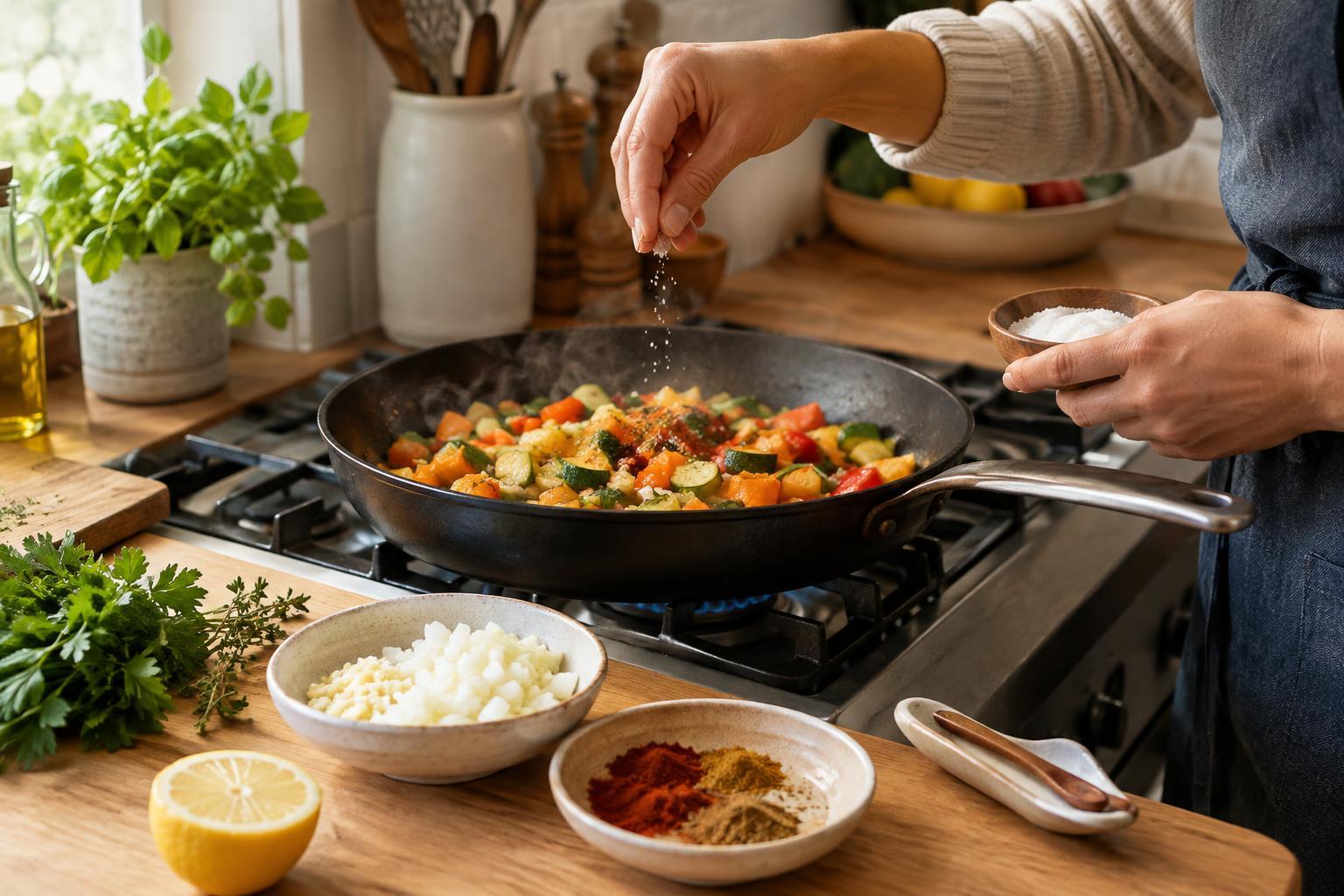
Salt is often the first layer. For roasted vegetables, toss the pieces with oil and a little salt before they enter the oven so the seasoning is spread across their surfaces. For a soup, lightly season the vegetables as they soften, then reassess after adding broth. Check the broth label or taste it first if you can; its saltiness may do much of the work for you.
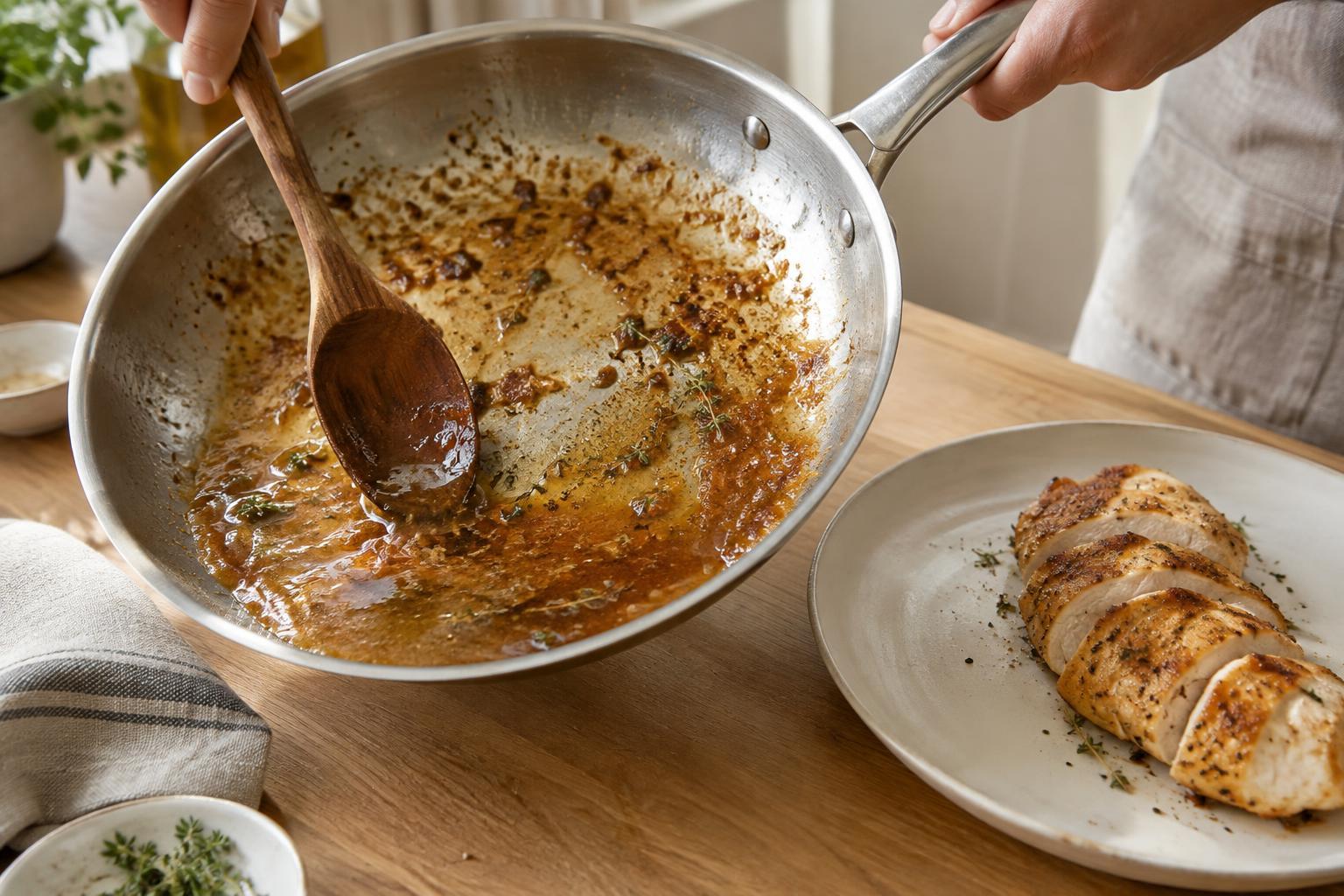
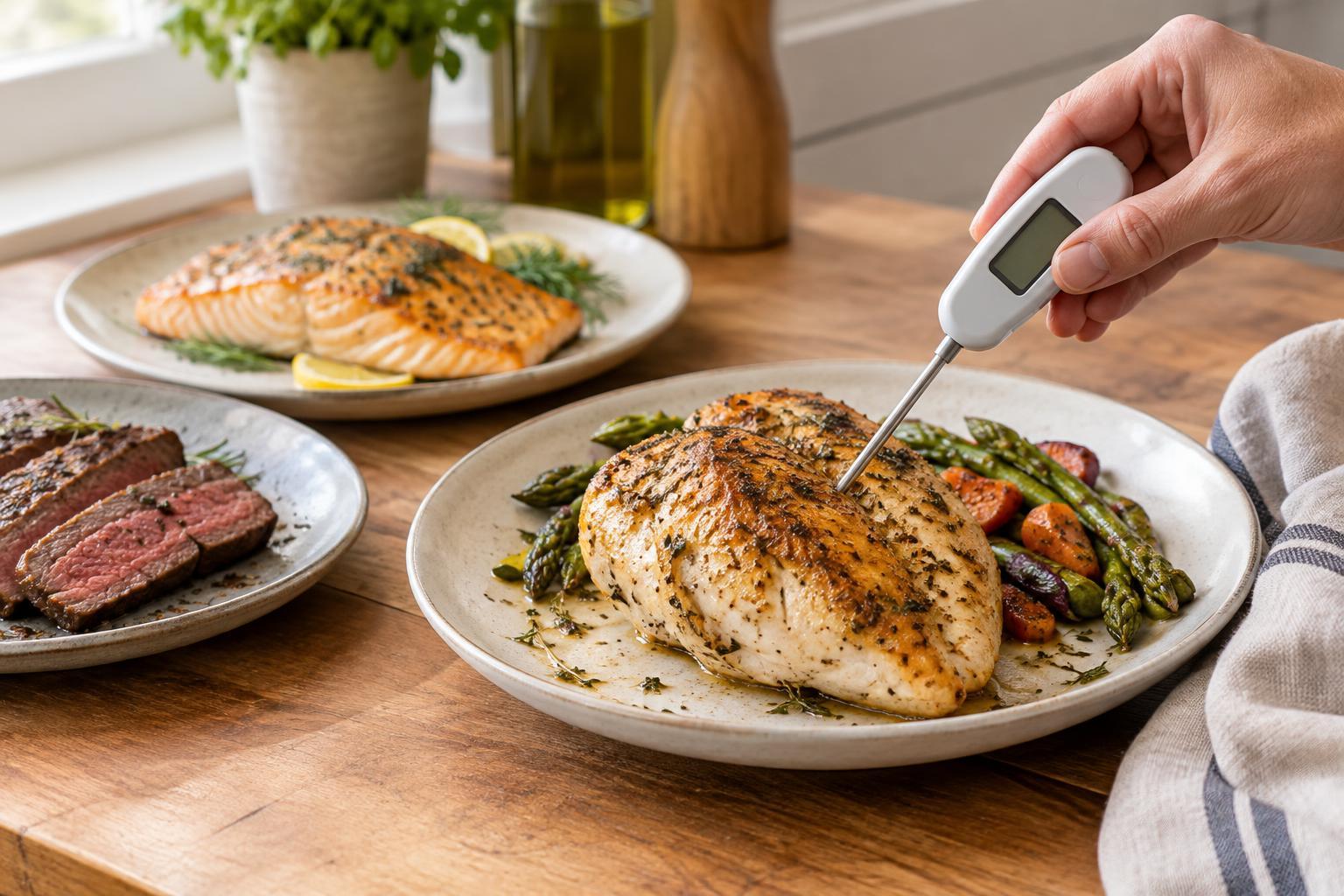
Use a lighter hand when a dish will cook down or receive salty ingredients later. Pasta sauce, for example, may become more concentrated as it simmers, and Parmesan added at the table will contribute more salt. If you are cooking meat, you can season its surface before cooking, but do not taste it raw to check. Wait until it is properly cooked, then taste a safe portion or the finished sauce.
Give aromatics and spices their own moment
Onions, garlic, ginger and dried spices often benefit from time in warm fat before the main liquid goes in. Softening onion in oil builds a gentle base. Adding garlic later keeps it from sitting in the pan too long and burning. Dried spices can be stirred in briefly so their aroma joins the oil and vegetables; keep the heat moderate and add liquid if they begin to catch.
Not every flavor belongs at the beginning. A long simmer can mellow a spice blend, which may be exactly what a stew needs, but it can also make fresh herbs less noticeable. Try adding sturdy herbs during cooking and tender herbs near the end. If you want both depth and freshness, divide an ingredient: cook some garlic or herbs into the dish, then add a little more at the finish.
Taste for balance before reaching for more salt
Near the end of cooking, take a small bite that includes more than just the liquid: a piece of vegetable, a spoonful of sauce, or a little of everything. Ask what seems missing. If the food tastes flat, salt may help, but so might a squeeze of lemon, a dash of vinegar, or a spoonful of yogurt. Acidity can make a rich dish feel brighter without making it simply saltier.
Add one adjustment at a time, stir, and taste again. If the dish is too sharp, a little fat or a naturally sweet ingredient may soften the edge; if it feels heavy, a fresh herb or acidic finish may help. Heat from chili is another layer to consider, not a substitute for the others. Keep it mild in the pot if you are feeding people with different preferences, and offer extra at the table.
Practice with one familiar meal
A simple pot of tomato-and-bean soup is a useful place to practice. Lightly salt chopped onion as it softens, then stir in garlic and a pinch of dried spice. Add tomatoes, beans and broth, remembering that canned ingredients may already contain salt. Simmer, taste a fully cooked spoonful, and adjust gradually. Just before serving, consider a little lemon juice or vinegar, then taste once more.
The same pattern works for many everyday meals: season the main ingredients, build an aromatic base when appropriate, account for salty additions, and finish for balance. You do not need to get every layer perfect. Leaving yourself a little room at each stage is what makes the final adjustment easy.