Start with meals, not a master list
An everyday pantry should make dinner easier on an ordinary evening. Before buying anything, think of three meals you already like making or would happily learn: perhaps pasta with tomato sauce, rice bowls with beans, and soup with toast. Write down the shelf-stable ingredients those meals share. That short list is a better starting point than a long checklist of foods that look useful but never find their way into your cooking.
Let your space, household size, budget, and tastes set the limits. A small cupboard with ingredients you use regularly is more helpful than an overflowing shelf. If you cook for one, try modest package sizes until you know how quickly you use something. If an ingredient appears in only one recipe, buy it when you plan to make that dish rather than treating it as an essential.
Choose a flexible foundation
Begin with a few bases that can carry different flavors. Pasta, rice, oats, or another grain you enjoy can become quick meals or simple breakfasts. You do not need every variety: one pasta shape and one grain may be plenty. Add a shelf-stable protein you like, such as canned beans, lentils, or canned fish, according to your preferences and dietary needs. Nuts or seeds can be useful for topping meals and snacks if you use them often.
Canned tomatoes, broth or bouillon, and a vegetable you will actually eat can help turn those basics into dinner. Frozen foods are worth considering alongside the pantry if you have freezer space: vegetables, bread, and other frequently used items can fill gaps without requiring a last-minute shop. Choose packages you can finish comfortably, and check labels for ingredients, allergens, and preparation needs that matter to your household.
Keep flavor within reach
A few well-chosen flavor builders make the same staples feel less repetitive. Cooking oil, salt, and a vinegar or citrus juice are useful starting points. Pick seasonings based on meals you make: dried oregano may suit tomato sauces, while cumin might be more useful for bean dishes. A sauce or condiment you already enjoy can do more work than a drawer full of unfamiliar spices.
Think in combinations rather than collecting single-purpose ingredients. Beans, canned tomatoes, and cumin can become a filling for wraps or a topping for rice. Pasta, oil, and a jarred sauce can make a meal with vegetables stirred in. Oats can be breakfast with fruit or an ingredient in simple baking. These are possibilities, not rules; the best pantry is one that supports your own familiar flavors.
Store what you buy so you can use it
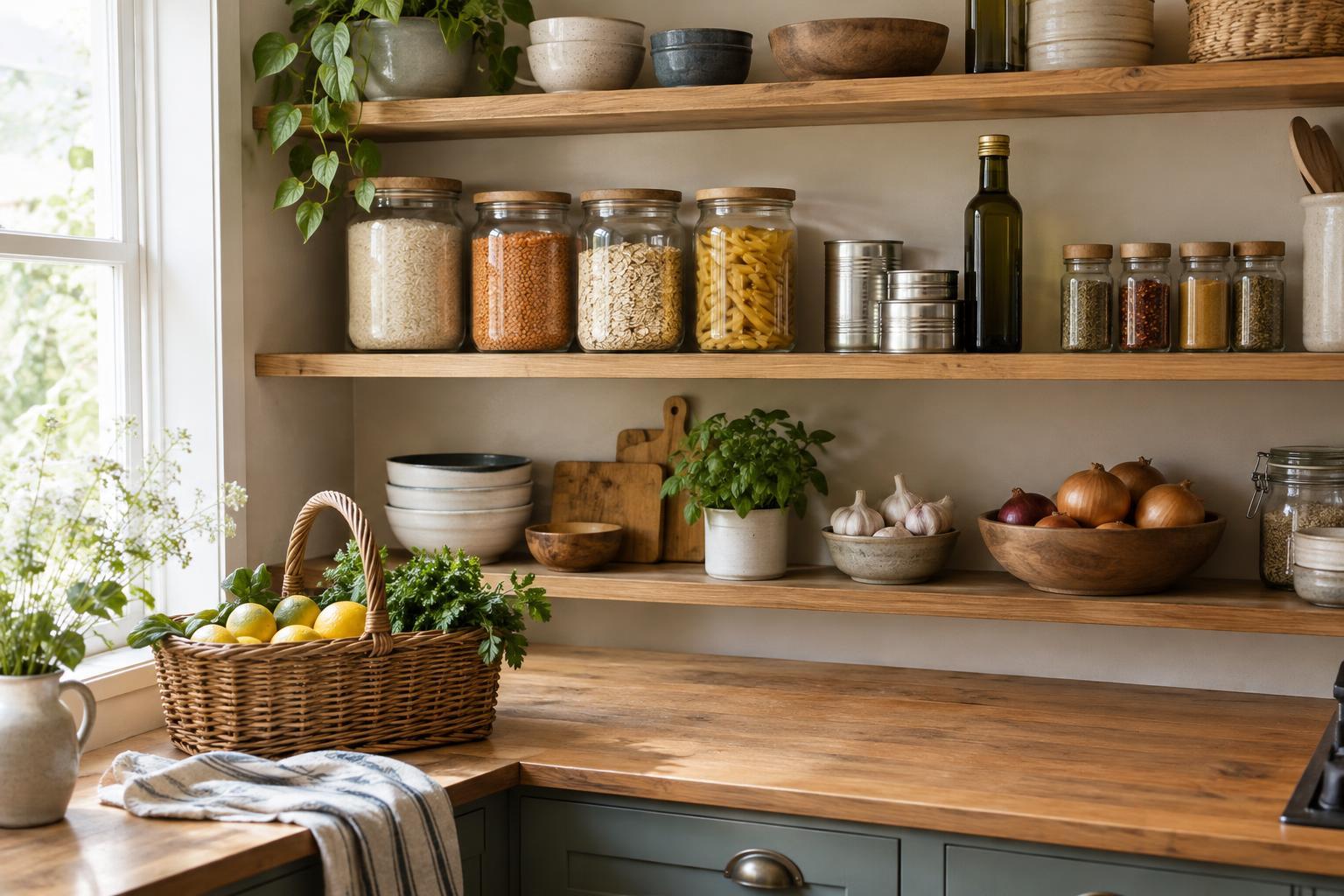
Give pantry food a cool, dry place away from strong heat and moisture, and follow the storage directions on its packaging. Keep newer purchases behind older ones so the next item to use is easy to spot. Once a package is open, close it securely or move its contents to a suitable container. If you transfer food out of its original package, label the container so you can identify what it is and keep any instructions you may need.
Visibility matters more than matching jars. Group foods by how you use them, such as breakfast basics, meal bases, canned goods, and flavorings. Put the ingredients for frequent dinners where you can reach them. Check packages before use, and follow label guidance for storage and use after opening. A tidy shelf helps, but its real purpose is to make food easy to find before it is forgotten.
Restock with a short, repeatable routine
As you cook, note when you open the last package of a staple. Before shopping, glance through the cupboard and plan a few meals around what is already there. Then replace the basics you used and buy only the extras needed for those meals. This approach leaves room for fresh ingredients and spontaneous plans without turning pantry shopping into a large project.
After a few weeks, notice what gets used and what stays put. If rice disappears quickly, keeping a spare bag may be convenient. If a particular grain or sauce goes untouched, there is no need to replace it just because it belongs on someone else’s pantry list. A useful everyday pantry changes with your cooking; its job is to make the next meal feel manageable, not to look complete.