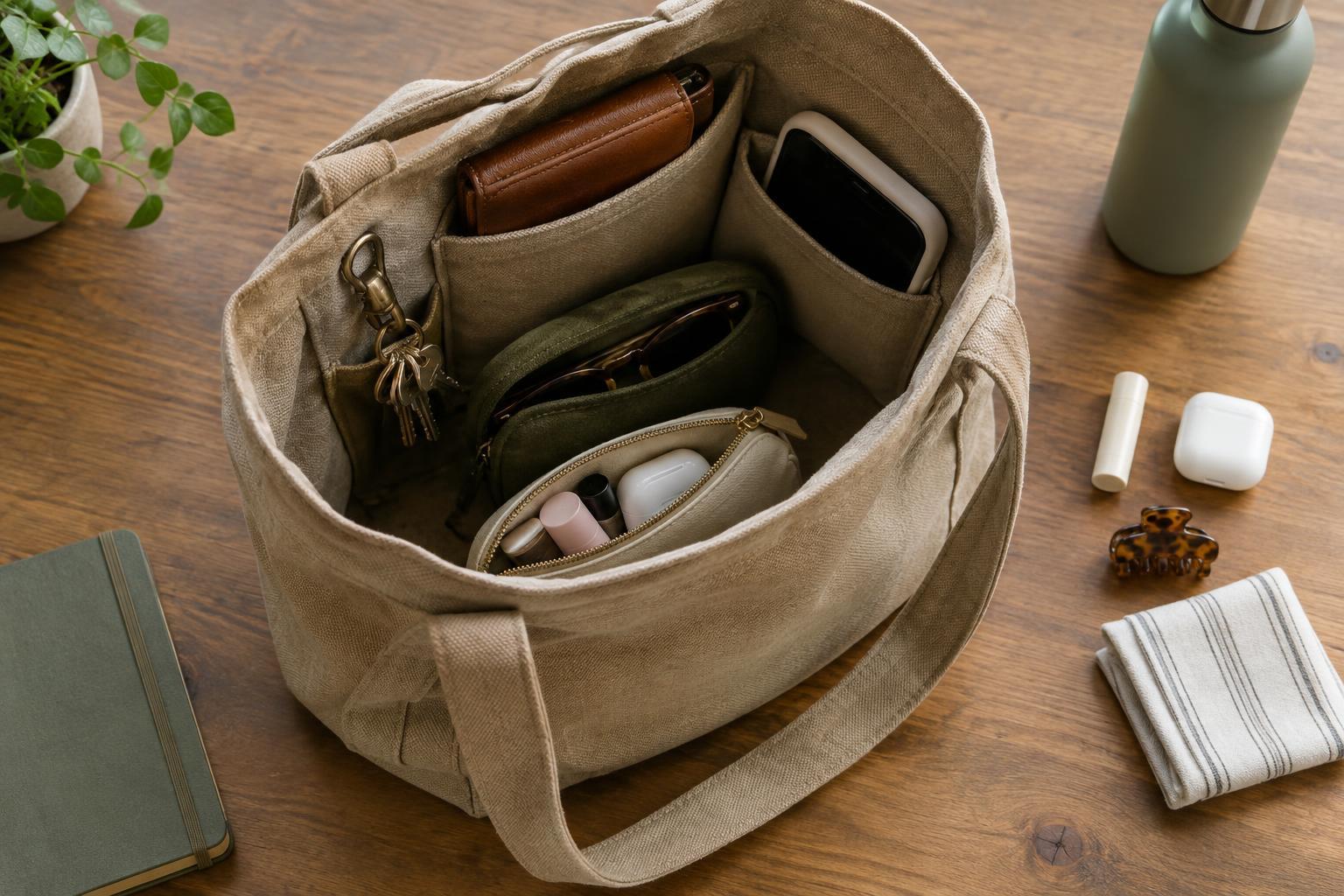
Start with what you really carry
Before choosing a shape or material, empty your current wallet onto a table. Separate the things you use most days from the things you keep “just in case.” Your everyday group might include an ID, a payment card, a transit card, and a little cash. Receipts, loyalty cards, spare keys, and old tickets may be taking up room without earning it. This quick edit gives you a more useful starting point than deciding based on appearance alone.
Think through where you use those items, too. Do you need to show an ID without removing everything else? Do you regularly pay with cash or collect paper receipts? Do you switch between a work bag and a smaller weekend bag? A cardholder suits a short, consistent list of essentials. A wallet offers breathing room when that list changes or includes folded notes, coins, or papers.
When a cardholder makes sense
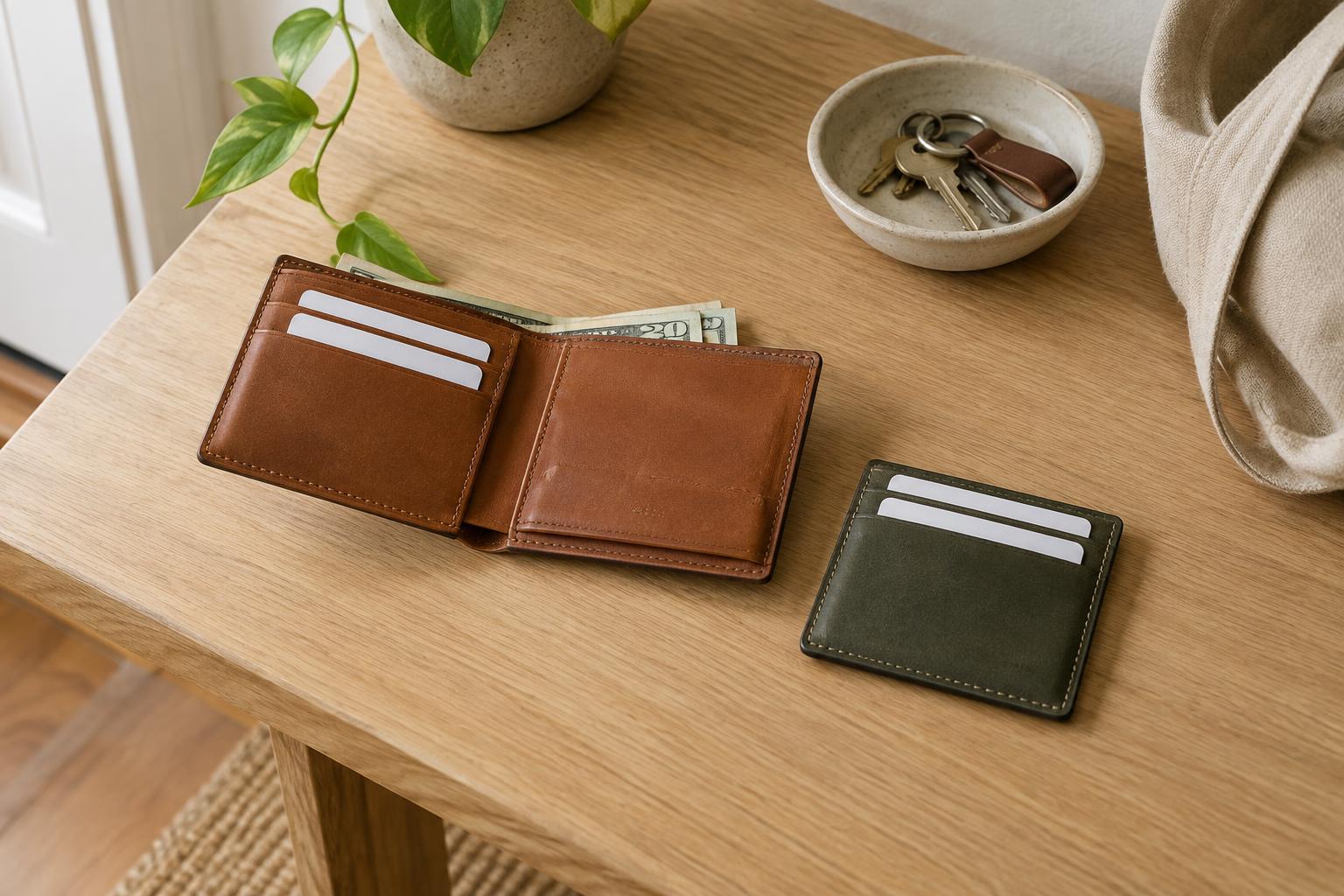
A cardholder is appealing because it asks you to carry less. Its slim shape can sit neatly in a front pocket, a compact bag, or a jacket without adding much bulk. If you mostly use cards and rarely need cash, it may give you quicker access to the few things you reach for. The constraint can also make it easier to notice when an unnecessary card has crept back into your daily carry.
Capacity varies, so check the layout rather than relying on the name. Some cardholders have open slots, some have a central pocket for folded notes, and others close with a flap or zip. Ask yourself whether a frequently used card can be removed without pulling out another one. If you carry several cards in one slot, the holder may become hard to use and stretch over time. Choose room for your real essentials, not the smallest option you can technically fill.
When a wallet earns its space
A wallet is often the more comfortable choice if your essentials include cash, coins, multiple IDs, or cards used for different parts of the day. Dedicated compartments help keep a receipt from sticking to a payment card and make it easier to find change at a counter. A bifold can offer a familiar balance of storage and portability; a zip-around style keeps loose items together but usually takes up more room.
Extra space is useful only when it has a purpose. If you want a wallet for occasional papers, check that they fit without being crushed and that the wallet still closes easily. If coins are part of your routine, look for a coin pocket you can actually open and search, not just one that looks tidy when empty. A larger wallet can also be easier to spot inside a tote, while a smaller one may work better when you change bags often.
Check the details you will handle every day
In a shop, or while reading product measurements online, picture the accessory in its busiest realistic state. Check its closed dimensions and thickness, then allow for the cards and cash you plan to add. A neatly photographed empty wallet may feel quite different once full. If possible, test whether you can grip the most-used card, open the closure, and put money away without a struggle. Smooth access matters more than an impressive number of pockets.
Materials and construction deserve the same practical attention. Leather, fabric, and synthetic materials can all be good choices, but their feel, flexibility, and care needs differ. Look for secure stitching, edges that appear well finished, and a closure that lines up without forcing it. A light color may be easy to find in a dark bag but show marks sooner; a textured surface may hide everyday scuffs better than a very smooth one. Pick a finish you will be happy to handle and maintain.
Make a choice that fits your routine
There is no need to make one accessory do every job. You might keep a cardholder for ordinary errands and use a roomier wallet when you expect to carry cash or travel documents. If you prefer to own just one, choose for the day you have most often, with a little space for predictable exceptions. Avoid buying much more capacity for situations that rarely arise.
Once you have chosen, give your setup a short trial. Notice whether anything is hard to reach, falls out, or makes the accessory uncomfortable to carry. Remove paper you no longer need and return seldom-used cards to a safe place at home. The right wallet or cardholder should make a small daily task feel simple: your essentials are where you expect them, and getting to them takes little thought.