Start with a quick sort
Fresh produce lasts longer when you store it according to what it needs, rather than putting everything away in one bag. After shopping, take a minute to sort your haul into three groups: items for the counter, items for the fridge, and anything ripe enough to eat soon. Check for bruises, leaks or soft spots. Set damaged items aside to use promptly, and discard anything showing signs of rot so it does not spoil nearby produce.
Keep whole, uncut tomatoes on the counter if you plan to eat them soon; refrigeration can change their texture. Let firm avocados and stone fruit ripen at room temperature, then move them to the fridge when ripe if you need more time. Store potatoes in a cool, dark, ventilated place rather than the refrigerator. Keep onions somewhere dry with airflow, apart from potatoes. Cut produce belongs in the fridge in a covered container.
Give refrigerated produce the right balance of moisture and air
The refrigerator slows spoilage, but a crowded drawer or a sealed, damp bag can leave produce slimy. Use crisper drawers to keep fruits and vegetables organized, and avoid packing them so tightly that air cannot circulate. If your drawers have humidity controls, a higher-humidity setting generally suits leafy greens and many vegetables, while a lower-humidity setting suits many fruits. The labels and settings vary by refrigerator, so a simple dry drawer and a few suitable containers are enough to get started.
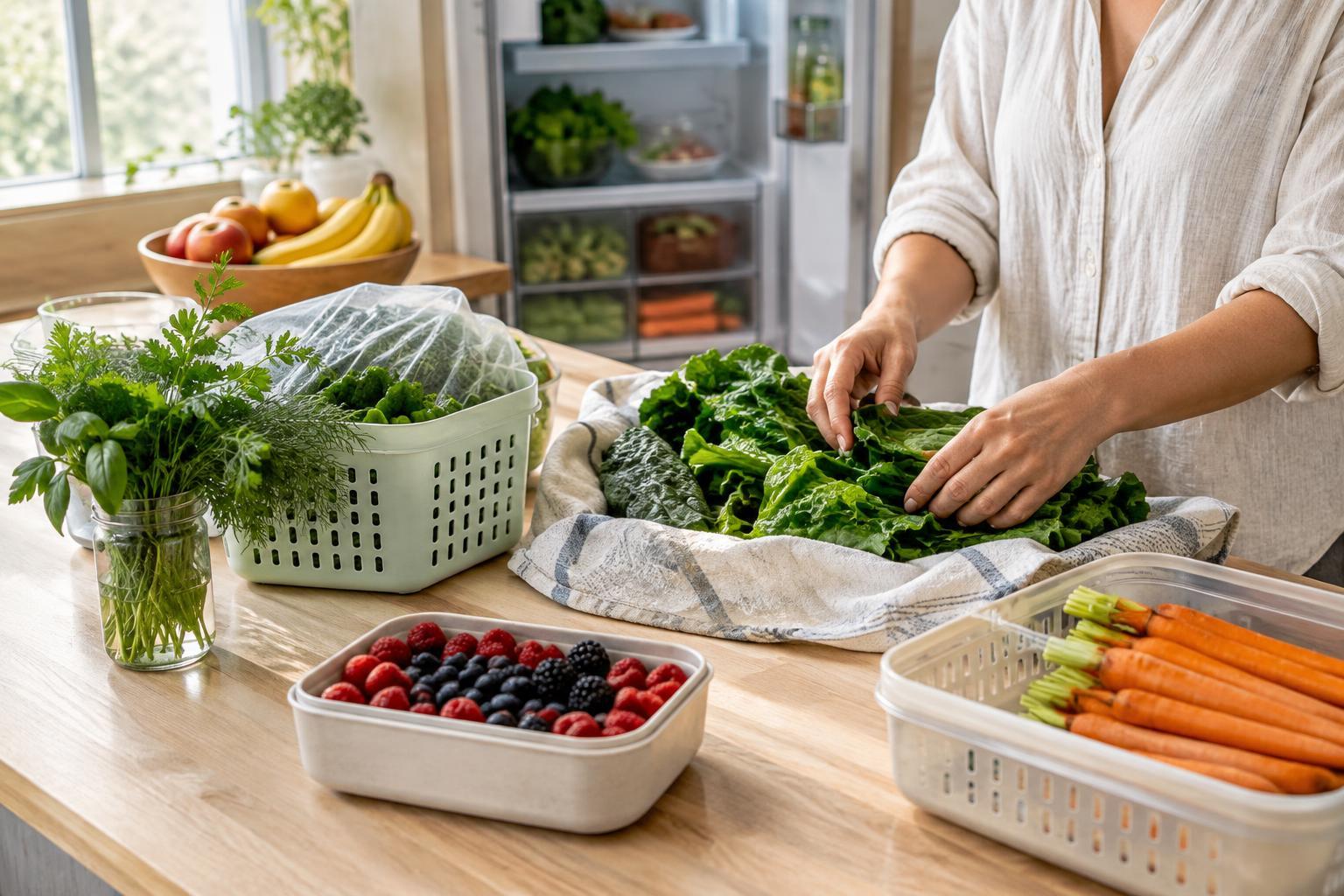
Leafy greens benefit from protection against excess surface moisture. Remove any wilted leaves, place the greens in a roomy container or bag with a clean, dry paper towel, and replace the towel if it becomes wet. For berries, sort out any crushed or moldy ones and refrigerate the rest in a shallow, ventilated container. Washing produce just before use is the simplest way to avoid putting it away wet. If you prefer to wash ahead, dry it thoroughly first.
Separate fruit that speeds ripening
Some fruits, including apples, bananas, pears and ripe avocados, release ethylene gas as they ripen. Other produce may soften or age faster when stored close to them. You do not need a complicated chart: keeping ripening fruit apart from leafy greens and other delicate vegetables is a useful rule. A fruit bowl on the counter and a separate space for vegetables in the fridge make that easier.
You can also use ripening to your advantage. If a firm pear or avocado needs a head start, leaving it near other ripening fruit may help. Check it daily and move it once it is ready. The goal is not to keep every item separate forever; it is to notice which foods need eating now and which you are trying to hold for later.
Handle herbs and tender produce gently
Soft herbs such as parsley and cilantro often do well with their stems in a small jar of water in the fridge, loosely covered so the leaves are protected. Change the water if it clouds and remove leaves that begin to decay. Basil is more sensitive to cold and may fare better on the counter, away from strong sun and heat. Whatever method you choose, check herbs often: their condition can vary with how fresh they were when purchased.
Tender items such as mushrooms and berries need space more than elaborate equipment. Keep mushrooms in a breathable paper bag in the fridge rather than a tightly sealed plastic bag that traps condensation. Avoid piling berries deep in a container where the bottom layer can get crushed. Clean storage containers are helpful, but you do not need to buy a matching set; reusable containers, bags and jars can all work when they suit the produce inside.
Make using produce part of the storage plan
Good storage buys time, but a visible plan helps you use it. Put the most fragile items where you will notice them, and choose a meal for them early in the week. A small “use first” spot in the fridge can hold ripe fruit, open packages and vegetables with minor bruises. Check that spot before making a shopping list or deciding what to cook.
If you cannot use produce while it is still in good condition, freezing may be a better option than waiting. Slice and freeze ripe bananas for blended drinks, or freeze chopped vegetables for cooked dishes when their texture after thawing will not matter. Label containers so you know what is inside. Before eating produce that has been stored for a while, inspect it and discard anything moldy, slimy or noticeably spoiled. A brief check-in every few days is often more useful than any single storage trick.