Start with a clear path for water
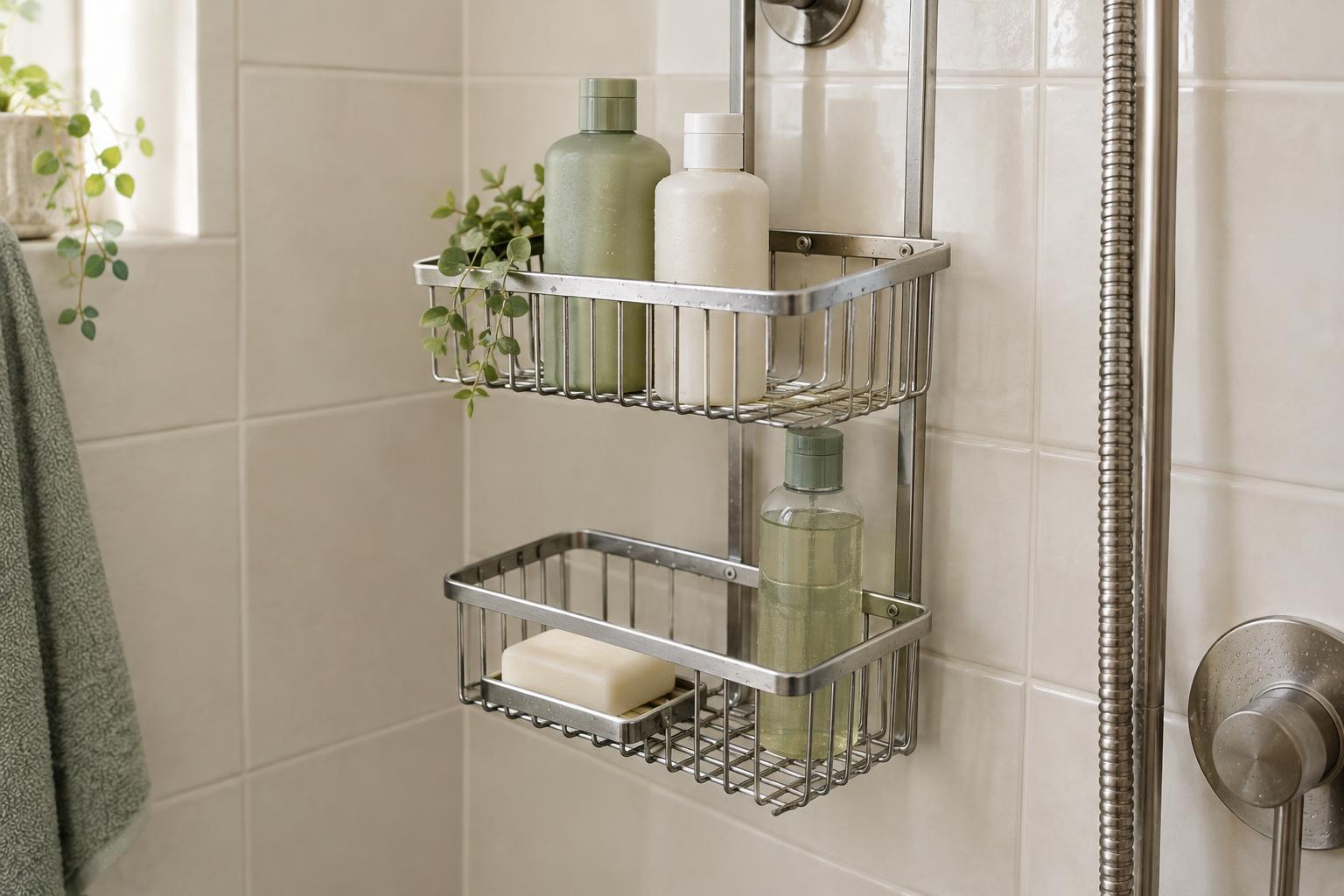
A shower caddy spends much of its life wet, so its most useful feature is a place for water to go. Open wire shelves and slotted trays usually let water pass through more readily than a solid, flat shelf. Look closely at the shelf from above and below: are there enough openings beneath the bottles, or does a raised rim create a shallow basin?
A solid tray can still work if its drain holes are well placed and its base directs water toward them. The important test is whether water has an obvious exit even when the caddy is loaded. Wide bottles can cover small holes, while a crowded shelf can trap water around their bases. A little space between containers makes drainage and drying easier.
Choose shapes you can actually reach
Drainage is only half the job. Soap, shampoo, and conditioner can leave residue on a caddy even when water runs away. Smooth surfaces, open corners, and simple shelf shapes are easier to wipe or brush than deep grooves and tightly joined pieces. Check whether you can reach the underside of each shelf, the area around the hooks, and any joints where a drip might settle.
Removable trays can make a thorough wash more convenient, provided they lift out without a struggle and sit securely when put back. If the caddy has small compartments, consider whether they suit what you actually store. A narrow slot for a razor may be handy; several tiny pockets may simply add places to clean. The best layout gives each item a home without making the caddy itself fussy.
Match the design to your bottles and shower
Before choosing a caddy, take stock of the containers you use regularly. Tall pump bottles need enough clearance above them, and heavier bottles benefit from a stable shelf with a protective edge. If you use bars of soap, a separate draining dish or an open section that keeps the bar out of standing water will be easier to manage than a flat pocket.
Think about where the caddy will sit, too. An over-the-showerhead model should hang without interfering with the shower controls or resting against the water stream. A corner caddy needs to fit the actual corner, not just the available floor space. Wall-mounted and suction styles should be compatible with the surface and installation method you are comfortable using. Whatever the style, leave enough room to reach behind or remove it for cleaning.
Consider materials and connections
No material eliminates the need to clean a shower caddy. Plastic can be light and straightforward to rinse, but molded seams and textured finishes may hold residue. Metal designs can feel sturdy and offer open drainage, though their finish and joints deserve attention in a consistently damp setting. If a coating is chipped or a joint is hard to dry, that spot may become troublesome over time.
Look beyond the main shelves to the connecting parts. Hooks, fasteners, suction cups, and adjustable brackets should be accessible for wiping and inspection. A caddy that comes off its mount easily may be more practical than one you must clean in place. Secure attachment matters just as much as convenience: check that the design stays steady when you pick up and put down your usual bottles.
Make cleaning a small, repeatable task
Even a well-designed caddy benefits from a simple routine. When a bottle is empty, remove it and wipe the shelf before replacing it. Periodically take everything off, rinse away loose residue, and wash the shelves and fittings according to the maker’s care guidance. A soft cloth or brush can help reach corners without relying on hard scraping.
As you put items back, keep only what you use in the shower. Fewer containers leave more room for water to drain and make it easier to notice a spill. If bottles repeatedly sit in puddles or you cannot reach a grimy corner, that is useful information for your next purchase. An easy-to-clean caddy is not necessarily the one with the most features; it is the one whose drainage, layout, and mounting make everyday upkeep feel manageable.