Start with the room, not the paint display
Before collecting samples, decide what the room needs from its color. A bedroom might call for a quiet backdrop, while a kitchen may need a shade that feels good beside cabinets and countertops. Notice which surfaces will stay: flooring, tile, large furniture, and window coverings all affect how a new wall color reads. You do not need to match everything, but you do need to see the colors together.
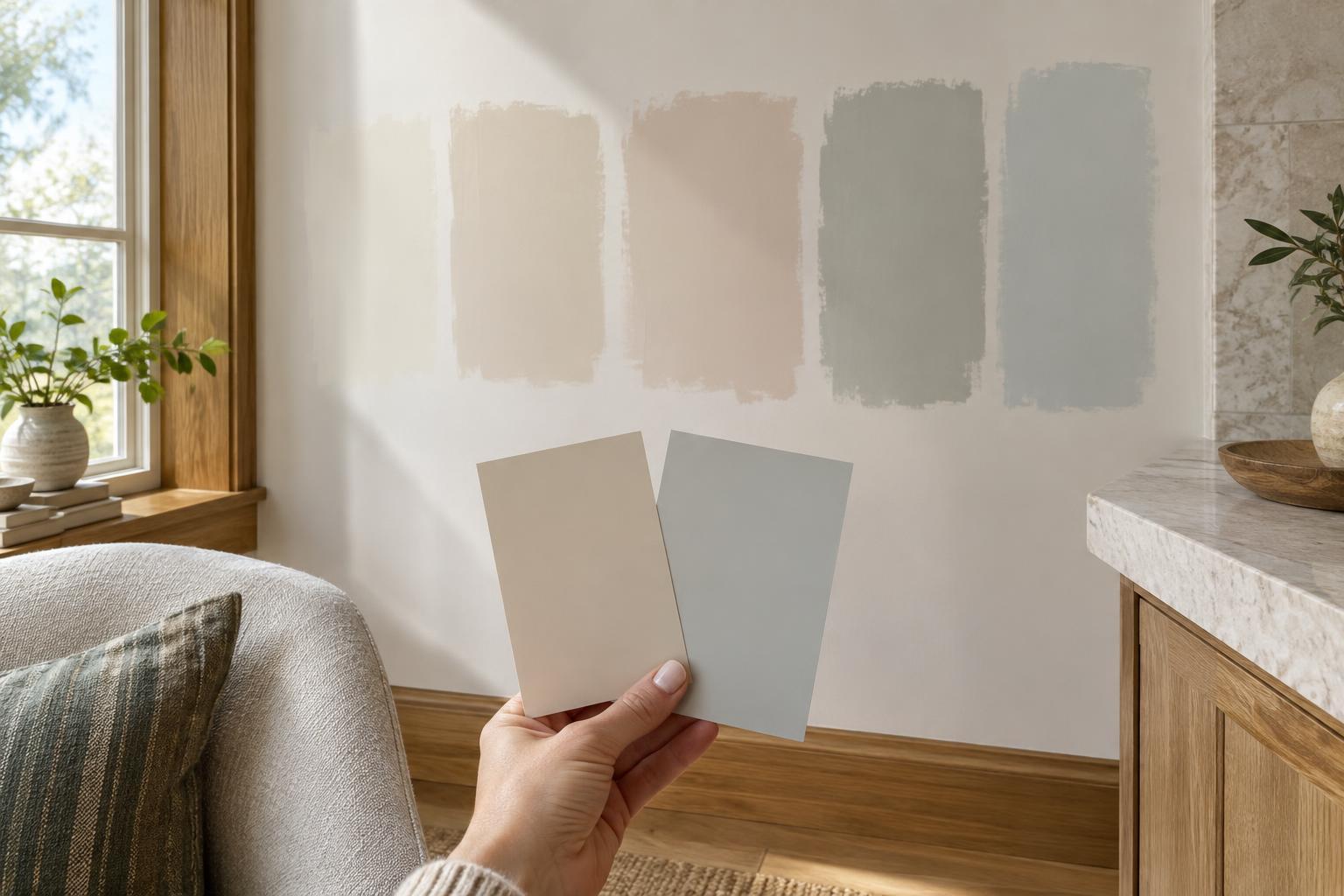
Choose a small shortlist rather than bringing home every appealing swatch. Two or three versions of the color you have in mind, plus one slightly lighter or more muted alternative, will give you useful comparisons. Look beyond the color name and ask what changes between options. Is one warmer, grayer, brighter, or deeper? Those differences are often easier to spot when the samples sit next to one another.
Make samples you can move
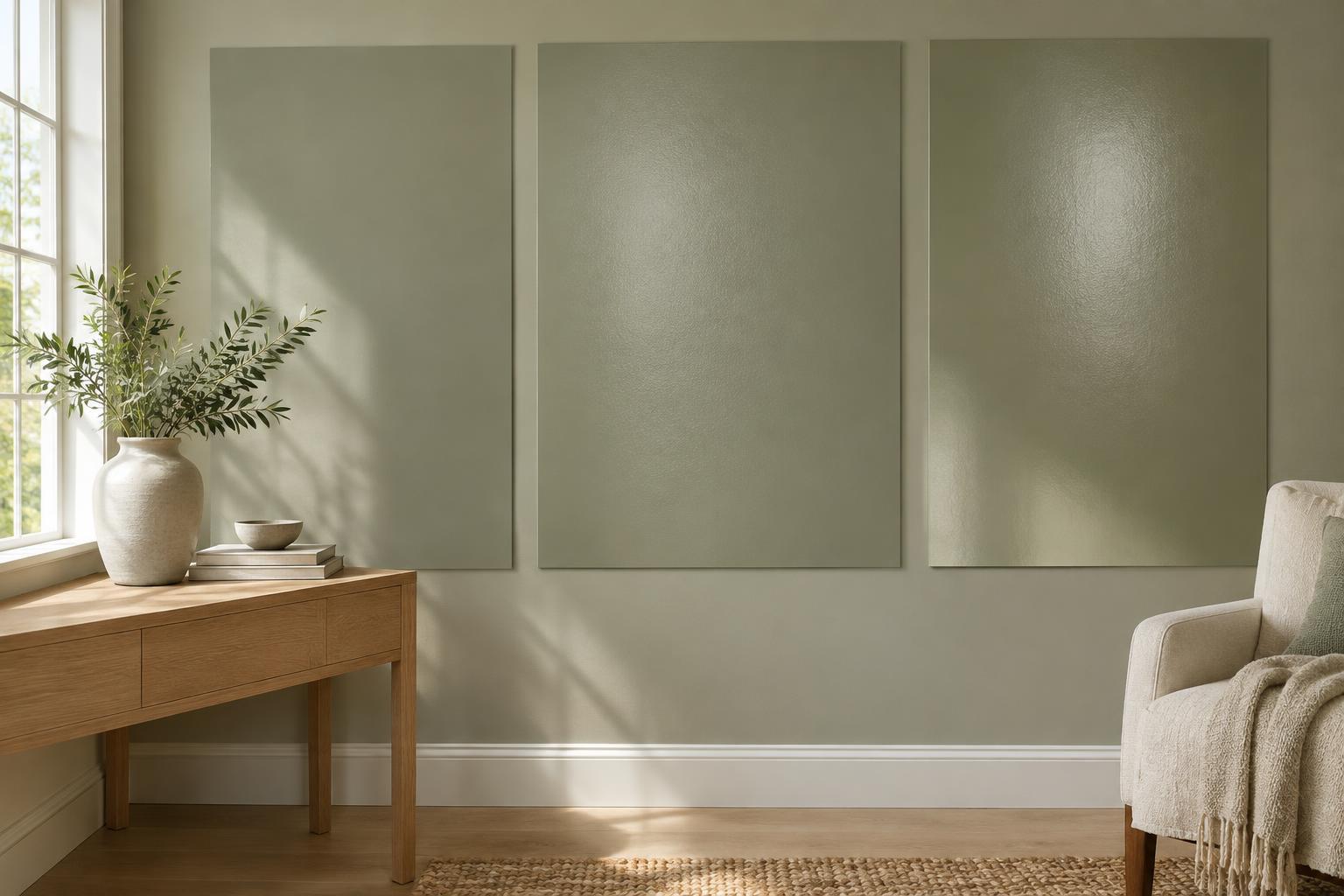
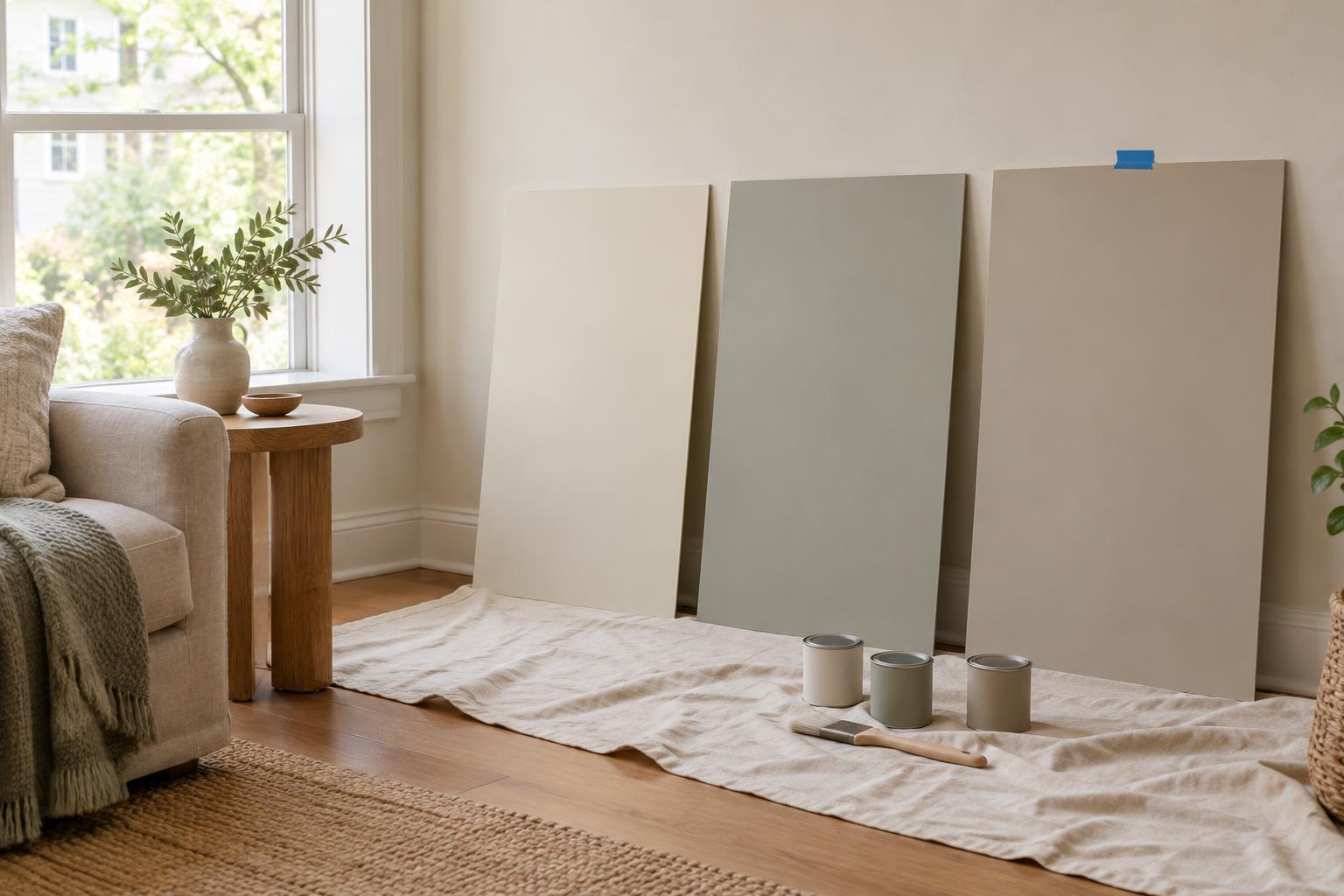
A small printed swatch is a starting point, not a final test. For a more useful view, paint each candidate onto a separate piece of sturdy poster board or another paintable sample surface. Label the back with the color and finish, and use enough coats to cover the surface as directed on the sample container. Let the paint dry before judging it; wet paint may not show the color you will live with.
Movable boards let you compare a color in several parts of the room without leaving patches across every wall. Hold them against the wall rather than laying them flat on a table, where they will catch light differently. Give each board some space from the others when evaluating it on its own. If the wall underneath is very bold or dark, a larger board can help you see the sample without that existing color dominating its edges.
If you prefer to paint directly on the wall, choose a few generous test areas and keep a record of which color is which. Be aware that sample patches may need priming or extra coats when you paint the room, especially if they contrast sharply with the original wall.
Check the color as the light changes
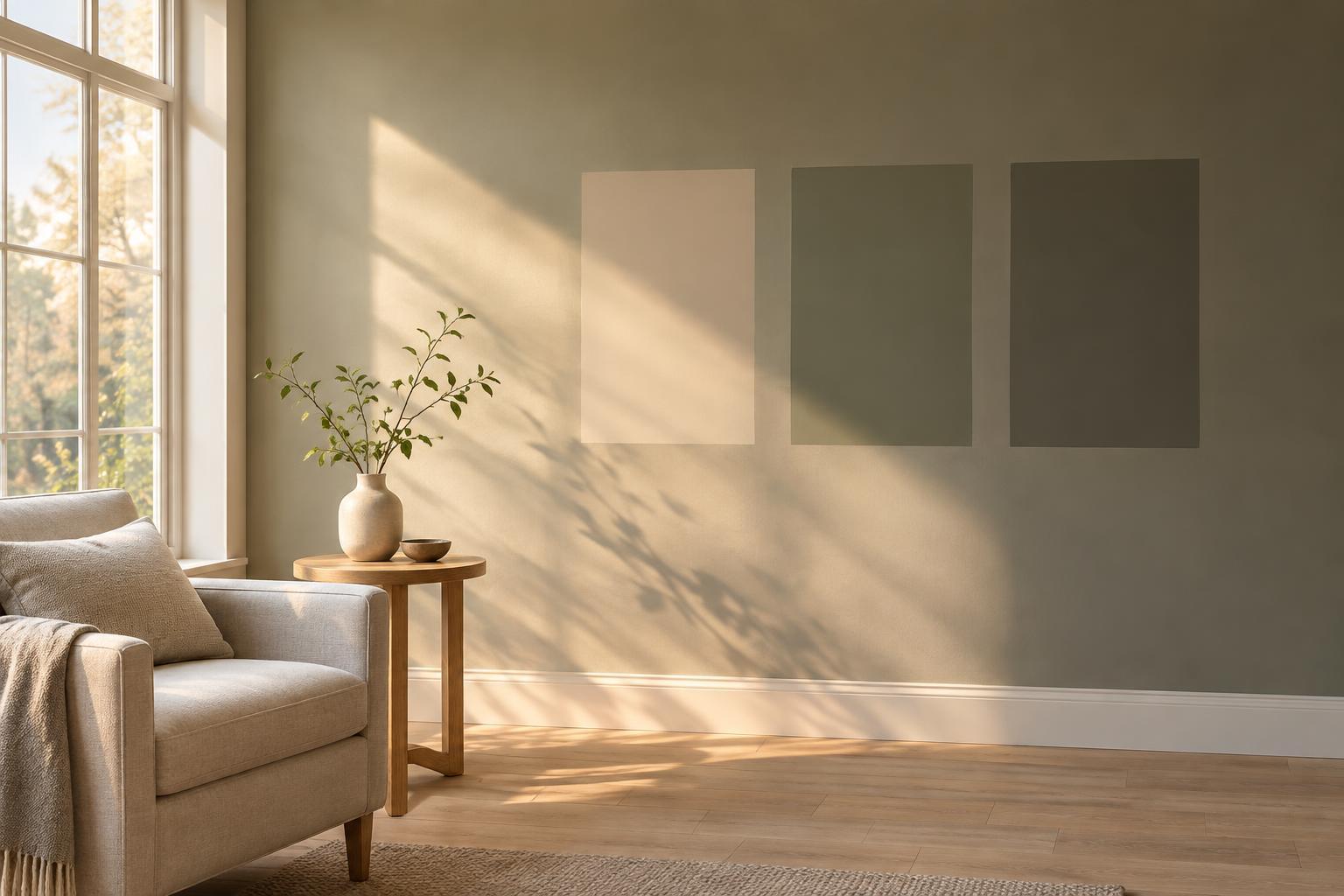
Place each sample where the finished paint would actually be seen: near a window, on a wall away from daylight, and beside any fixed feature that matters. Look at the samples in the morning, later in the day, and after turning on the lights you normally use. A color that feels soft in daylight may seem stronger under a lamp, while a subtle shade may look quite different on a shaded wall.
Try to observe the room during ordinary use, not only when you have arranged it for a test. Open and close the curtains as you normally would. If the room has more than one kind of bulb, switch on the combinations you use most often. There is no need to find a color that appears identical at every hour. The goal is to choose one whose changes you still like.
Compare samples with what will remain
Bring the sample boards close to the floor, trim, cabinetry, sofa, or bedding. A near-white wall can look noticeably warm beside cool white trim; a muted green might bring out a pink tone in wood. These effects are not necessarily problems. They are clues about how the room’s colors interact, and they are easier to consider before painting an entire wall.
Also think about finish. Matte and eggshell surfaces can give the same color a different appearance because they reflect light differently. If you know the finish you plan to buy, test that finish when possible. Consider the practical demands of the room as well: a wall that gets frequent contact may call for a different finish than a low-traffic space. Check the paint maker’s guidance for the product you choose.
Make the decision manageable
After a day or two of looking, remove the colors you consistently dislike. Compare the remaining options separately rather than staring at a crowded row of samples. Ask simple questions: Which one works with the fixed surfaces? Which looks comfortable in the light you use most? Which would you be happy to see across a larger area, not just on a small board?
If you are torn between close shades, you may not need a perfect winner. Choose the one that fits the room’s main purpose and your existing furnishings, then note its exact name, product, and finish before buying. Keep the labeled board until the project is complete. A considered sample test cannot guarantee that a full room will look exactly as imagined, but it can make the choice far less surprising.