Give the afternoon a loose shape
Start with one clear idea: people are coming over to spend time together, not to attend a production. An afternoon gathering can be coffee and cake, snacks on the patio, or a late lunch that stretches into conversation. Choose the version that suits your space and energy. It gives you a useful boundary when you are deciding what to prepare.
Send an invitation that answers the practical questions: when to arrive, roughly when things will wind down, and whether you are serving a meal or lighter food. A broad window, such as a couple of hours, feels easygoing while helping guests plan. If shoes are usually left at the door, outdoor space is involved, or children are welcome, mention that too. Clear expectations do more for a relaxed atmosphere than a clever theme.
Prepare the places people will actually use
Before worrying about decorations, walk through the visit as a guest would. Is there somewhere to put a coat or bag? Can people find the bathroom and a place to sit? Clear a path through the main room, make space around the food, and put out enough glasses or cups. A quick clean of these shared areas is usually more useful than tidying every shelf.
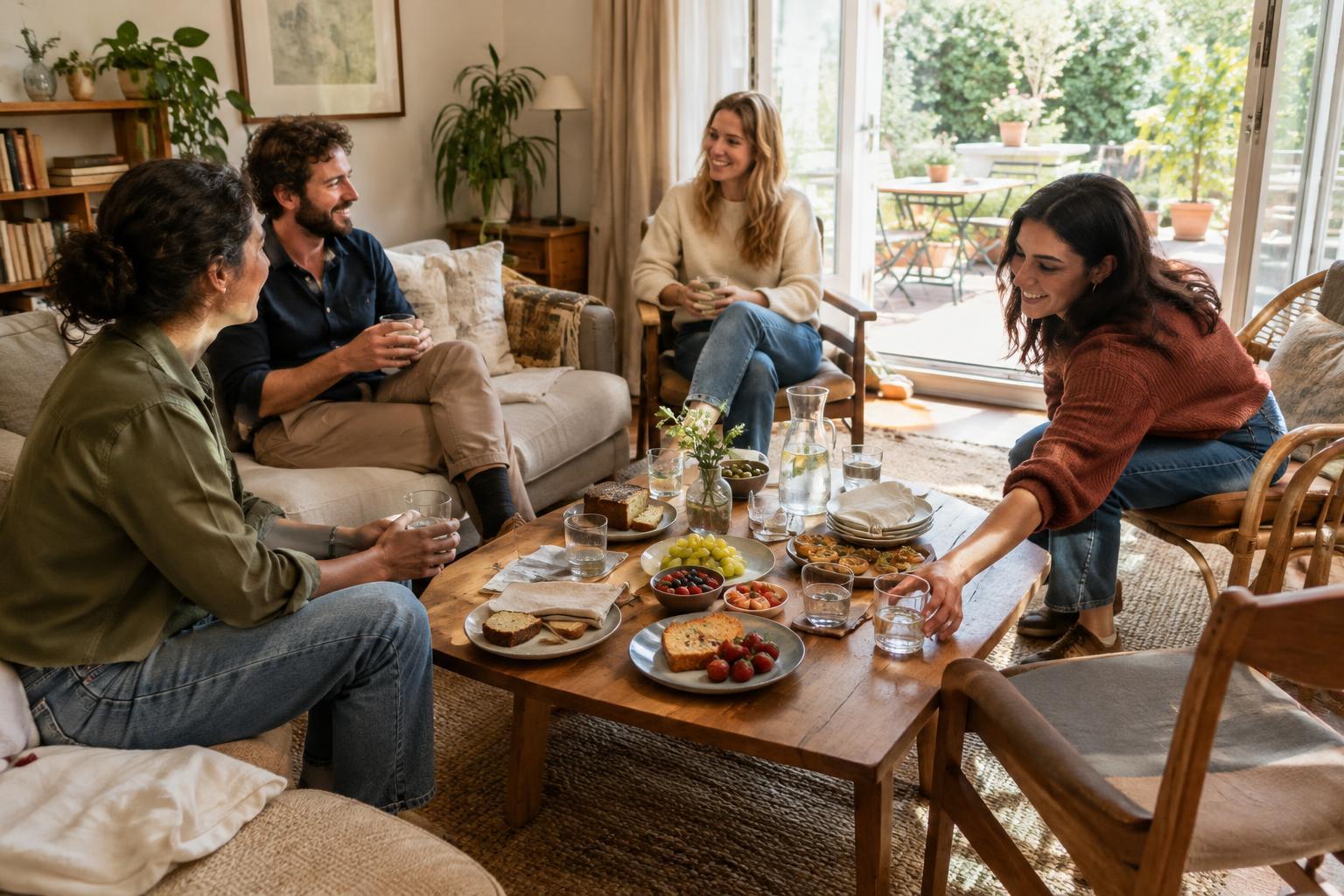
Aim for seating that lets small conversations form. Move a chair closer to the sofa, add a cushion to a firm seat, or pull a side table within reach of drinks. If you expect more people than chairs, decide where a few guests can perch comfortably rather than leaving them to improvise. Gentle background music can make arrivals feel less awkward, but keep it low enough that nobody has to speak over it.
Build a menu you can mostly finish beforehand
Pick a small mix of foods that can wait on the table: something substantial, something crisp or fresh, and a sweet option if you like. That might mean sandwiches, cut vegetables with a dip, and a store-bought dessert. It is fine to combine homemade and ready-made items. The best menu is one you can serve without disappearing into the kitchen each time someone arrives.
Choose serving dishes and utensils before guests come, and make space for them on a counter or table. For food that needs chilling or warming, keep it stored appropriately until it is time to serve rather than leaving it out all afternoon. If guests have shared dietary needs, label a dish or set aside a suitable option where it will not be confused with the others. You do not need to anticipate every preference, but it helps to make the choices visible.
Drinks can be just as simple. Set out water where guests can help themselves, then offer one or two other choices you are happy to keep stocked. Put a small spot for used cups near the sink or drinks area. These little arrangements let you join the conversation instead of repeatedly managing the table.
Use a short preparation plan
Overplanning often starts with a long list that treats every task as equally important. Make a shorter one instead: invite people, decide on food, shop, clear the gathering area, and set up serving pieces. Do what you can the day before, especially shopping and anything you plan to cook. On the day, leave time to get yourself ready and sit down for a few minutes before the first arrival.
Keep one backup that reduces pressure rather than adding work. An extra packet of crackers can stretch a snack board; a clean tray can quickly gather cups; a spare chair can be brought in if the group shifts rooms. You are not preparing for every possible outcome. You are making it easy to handle ordinary surprises without interrupting the afternoon.
Let the gathering be a gathering
When guests arrive, point out the drinks, food, and seating, then let them settle. You do not need an activity unless the group would genuinely enjoy one. If conversation slows, asking someone about a recent project, a favorite place to walk, or what they have been cooking can open a new thread. People can also be comfortable with a quiet moment while they eat or look around.
As the planned end approaches, you can signal it naturally by putting away food or offering a final drink. Thank guests as they leave, and save the full cleanup for afterward. A casual afternoon succeeds when people feel welcome and you have enough ease to enjoy their company. The table need not be perfect for that to happen.