Start with the ingredient that needs to build flavor
One-pot cooking does not mean adding everything at the same time. Ingredients cook at different speeds, and the first few minutes can establish the flavor of the whole dish. Before turning on the heat, roughly group what you have into aromatics, ingredients you want to brown, ingredients that need a long simmer, and ingredients that cook quickly.
Begin with a little oil and sturdy aromatics such as onion, leek or celery over moderate heat. Give them time to soften, stirring often enough to prevent scorching. Add garlic, grated ginger or ground spices later, once the first vegetables have softened; these smaller or drier ingredients can burn if left in a hot pot for too long. If a browned flavor suits the meal, let the aromatics pick up a little color before moving on. For a gentler soup, soften them without browning.
Brown when it helps, then release what sticks
If you are using meat, mushrooms or another ingredient that benefits from browning, add it before the pot fills with liquid. Pat wet surfaces dry where practical, use enough heat to create a sizzle, and avoid crowding the pot. Crowded ingredients tend to release moisture and steam instead. Work in batches if needed, setting browned pieces aside while you prepare the rest.
Browning is a choice, not a requirement for every one-pot dinner. Beans, delicate fish and many vegetables can go straight into a simmering base. When browned bits remain on the bottom of the pot, add a splash of water, stock or another suitable liquid and scrape gently with a spoon. Those bits can contribute flavor, but anything that has burned black and smells bitter is better removed than stirred through the meal.
Give firm ingredients a head start
Once the base is ready, add liquid and the ingredients that take longest to become tender. Diced potatoes, carrots and other firm vegetables generally need more time than peas or leafy greens. Cut similar ingredients into similar-sized pieces so they cook at a predictable pace. Keep the liquid at a steady simmer rather than a vigorous boil, especially if the pot contains tender pieces that could break apart.
The order changes with the size of the pieces and the dish you want. Small carrot dice may finish sooner than large potato chunks; thinly sliced cabbage cooks differently from a thick wedge. Check progress by piercing a piece or tasting it, rather than relying only on the clock. If an ingredient is tender before everything else, you can lift it out temporarily and return it near the end. This small step is often easier than accepting a pot of overcooked vegetables.
Treat grains and pasta as liquid managers
Rice, pasta and other starches absorb liquid while they cook, so adding them changes the pot. Put them in when there is enough liquid for them to move and cook evenly, then stir occasionally to check that nothing is catching on the bottom. Add more hot water or stock in small amounts if the mixture thickens before the starch is tender.
For a brothy soup, cooking pasta or rice separately and adding it to each bowl can keep leftovers from becoming too thick. For a cohesive, risotto-like pot, cooking the starch in the main liquid may be exactly what you want. Read any package guidance as a starting point, but check the texture in your pot: heat level, pot shape and the other ingredients all affect how quickly liquid disappears.
Finish with the ingredients that need little heat
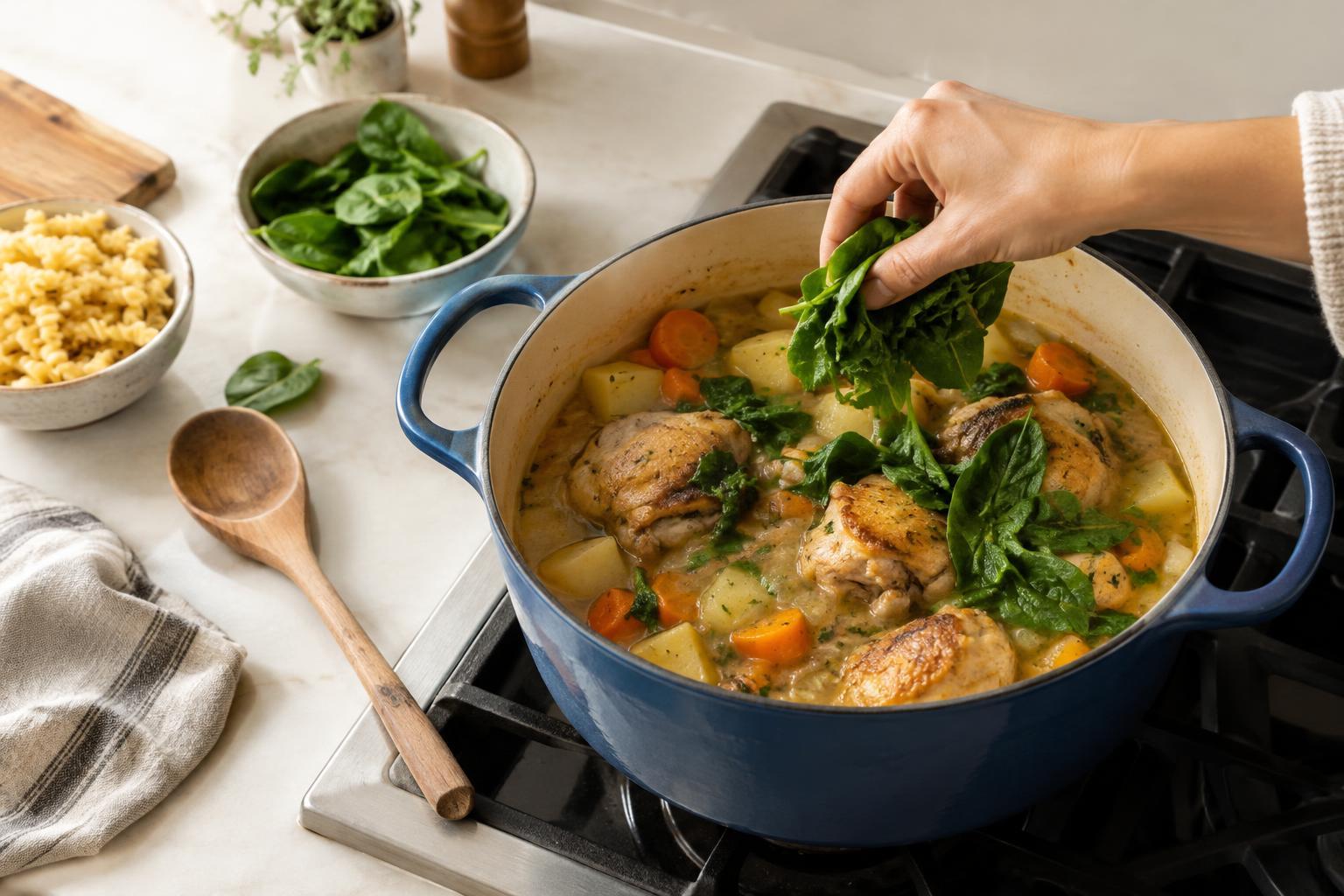
Quick-cooking additions belong at the end. Stir in peas, spinach or tender herbs when the longer-cooking ingredients are nearly ready. Add delicate seafood late enough that it does not sit through a long simmer, and make sure it is properly cooked before serving. Dairy can also be easier to manage over low heat or after the pot comes off the burner, particularly if the mixture is very hot or acidic.
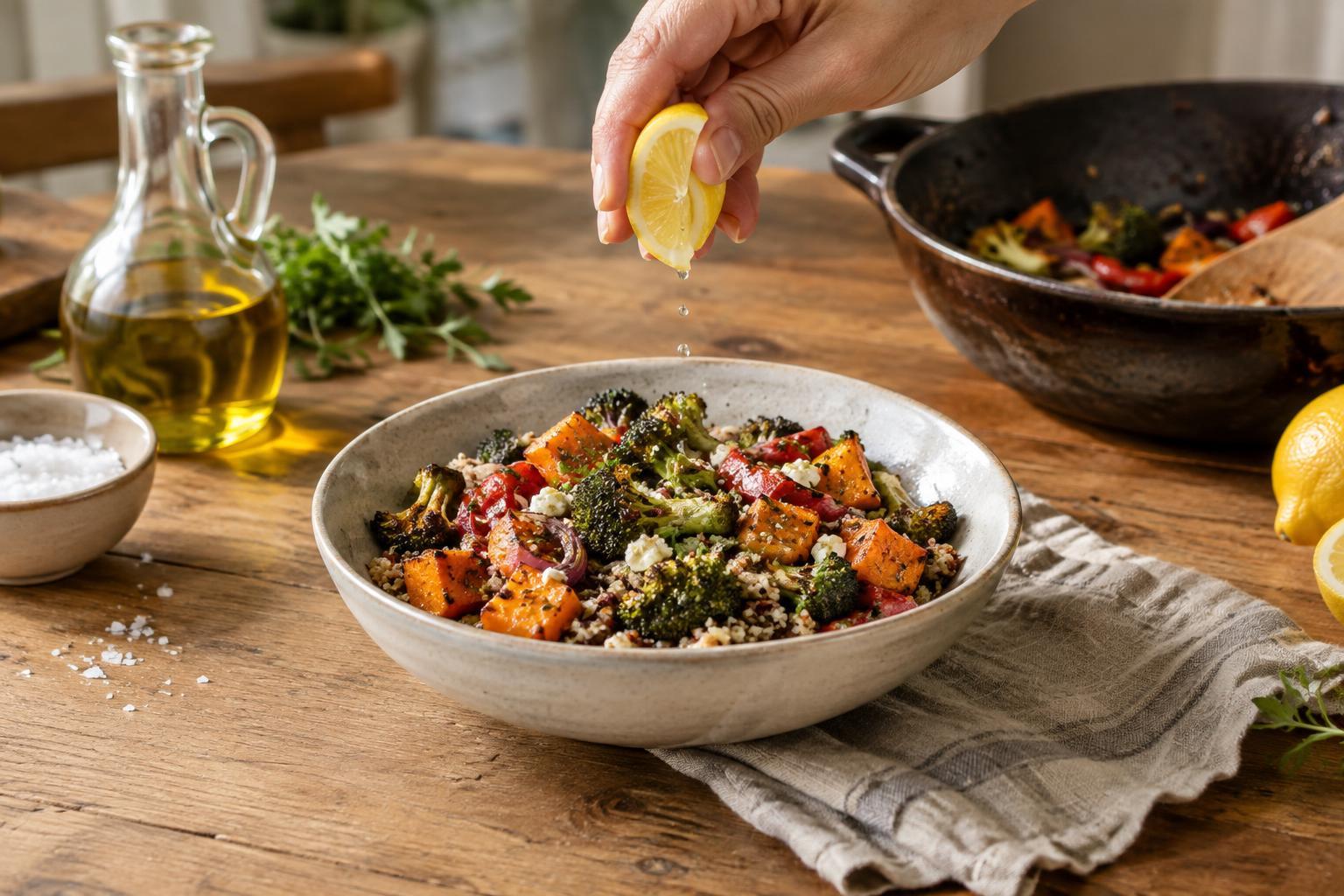
Taste only after the main ingredients have cooked, then adjust seasoning gradually. A squeeze of lemon or a small splash of vinegar can brighten a heavy pot; fresh herbs or a drizzle of oil can make it feel finished without another pan. For your next one-pot meal, remember the broad sequence: soften, brown if useful, simmer what is firm, cook what absorbs liquid, and finish with what is tender. It is a flexible guide, not a rigid recipe.