Start with the place you’ll keep it
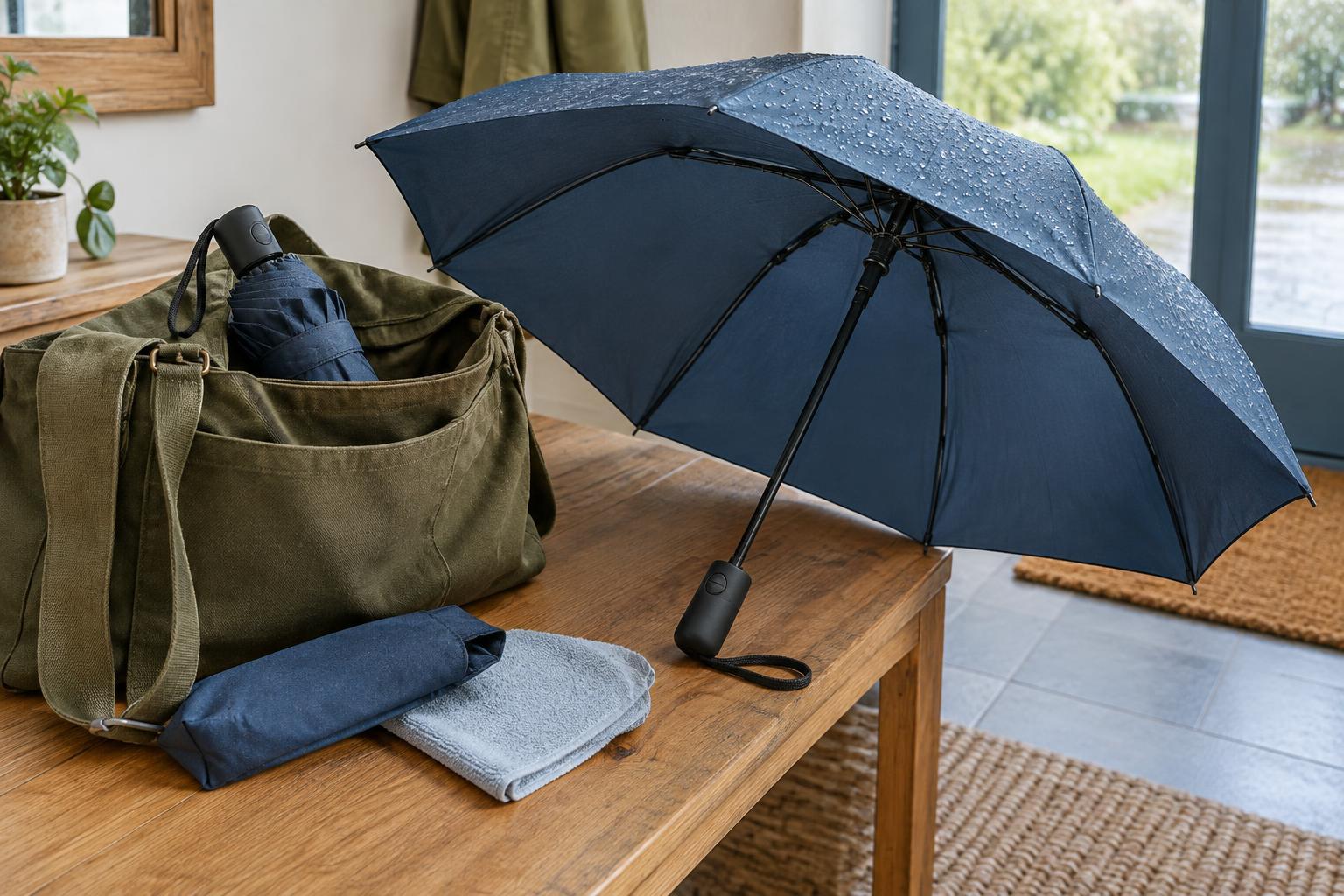
The most useful umbrella is the one you will actually bring along. Before comparing styles, decide where yours will live: a small handbag, a work tote, a coat pocket, or a car door compartment. Check the packed length and thickness against that space, not just the product’s description as “compact.” An umbrella that fits only when your bag is empty may be too inconvenient for daily use.
Weight matters most if you carry the umbrella all day. A lighter model is pleasant in a crowded bag, but the smallest option is not automatically the best choice. Very short handles can be awkward to grip, and a tiny canopy may leave your shoulders or bag exposed. If you can handle the umbrella in person, hold it as you would while walking and see whether the balance feels comfortable.
Match the canopy to your route
Packed size tells only half the story; compare the umbrella’s open dimensions as well. Think about what you usually carry in the rain. If you walk with a backpack or a wide shoulder bag, you may want more coverage than someone taking a short trip with a phone and keys. A broader canopy offers more shelter, though it can also be harder to maneuver on narrow pavements or in busy spaces.
Look at the canopy shape when it is open. It should sit evenly over the frame, without loose fabric or obvious gaps where panels meet. You need room to hold it at a natural height without tilting it sharply toward every passing shower. If two models pack to a similar size, the one that gives you more usable coverage without feeling unwieldy may be the better everyday choice.
Make opening and closing part of the test
A compact umbrella often gets used while you are managing a bag, a door, or a ticket. Try its controls with that situation in mind. A manual model should slide open smoothly and lock securely without requiring your fingers near a pinch point. An automatic button can be convenient when one hand is occupied, but check what the button actually does: some umbrellas open automatically yet still need to be pushed closed by hand.
Closing is just as important as opening. Notice how much force it takes to shorten the shaft and whether the canopy folds neatly enough to secure with its strap. A wide, easy-to-find button and a comfortable handle can make repeated use less fiddly. If a mechanism feels sticky or unpredictable when new, do not assume it will become easier to manage on a wet day.
Look for sound construction, not just a feature label
Inspect the frame where the ribs meet the shaft and where the folding sections join. The parts should move freely when you open and close the umbrella, without catching or looking visibly misaligned. Flexible ribs may help an umbrella recover from a gust, but no compact design is immune to strong wind. “Windproof” is best treated as a feature to examine rather than a promise that it cannot turn inside out.
The canopy fabric should feel securely attached at the rib ends and seams. Check that the handle gives your hand enough purchase, especially if you expect to wear gloves. A wrist loop can be helpful when you need to free a hand briefly, while a bright or distinctive color may make the umbrella easier to spot among your belongings. These small details often affect how pleasant it is to use.
Plan for the wet trip home
A compact umbrella still needs a place to go after the rain stops. Check whether its sleeve is easy to slide on, rather than so tight that packing becomes a chore. A sleeve can help keep nearby belongings separate from a damp canopy, but it will not make a wet umbrella dry. If you regularly carry books or electronics, consider where the umbrella will sit in your bag after use.
When you get home, open the umbrella where it can dry safely before folding it away for longer storage. Let the sleeve dry too. This simple habit helps prevent a damp umbrella from becoming unpleasant to handle. The right choice is ultimately a balance: small enough to bring, large enough to help, and straightforward enough that you will not hesitate to use it.