Start with the floor, not the broom
A broom that works well on one surface can feel frustrating on another. Before comparing colors or materials, think about where you sweep most often and what you pick up. Kitchen crumbs on smooth tile call for a different approach than grit in textured entryway flooring. If you have several floor types, choose for the area you clean most frequently rather than expecting one broom to be perfect everywhere.
For smooth, hard floors, a broom with fine, flexible bristles can collect small crumbs and dust without simply pushing them ahead. On textured tile or rougher surfaces, slightly firmer bristles may do a better job reaching into shallow grooves. Very stiff bristles can scatter light debris and may be an uncomfortable choice for delicate finishes, so check your flooring’s care guidance if you are unsure. A broom is not a substitute for every cleaning tool: deeply grouted tile and carpets may need another method.
Look closely at the broom head
Broom width affects how the tool feels in use. A broad head covers an open room efficiently but can be awkward between chair legs or beside cabinets. A narrower head is easier to steer in tight spaces, though larger areas will take more passes. If you mainly sweep along baseboards and under tables, imagine the broom moving through those spots before choosing the widest option on the shelf.
Check how the bristles are attached and how the head meets the handle. Bristles that are densely and evenly set offer fewer obvious gaps for debris to slip through. An angled head can make corners easier to reach, while a straight head may feel simpler for long, open runs. Neither shape is automatically better. If possible, hold the broom at your normal sweeping angle: the bristles should meet the floor comfortably without forcing you to bend or press hard.
Choose a dustpan that meets the floor
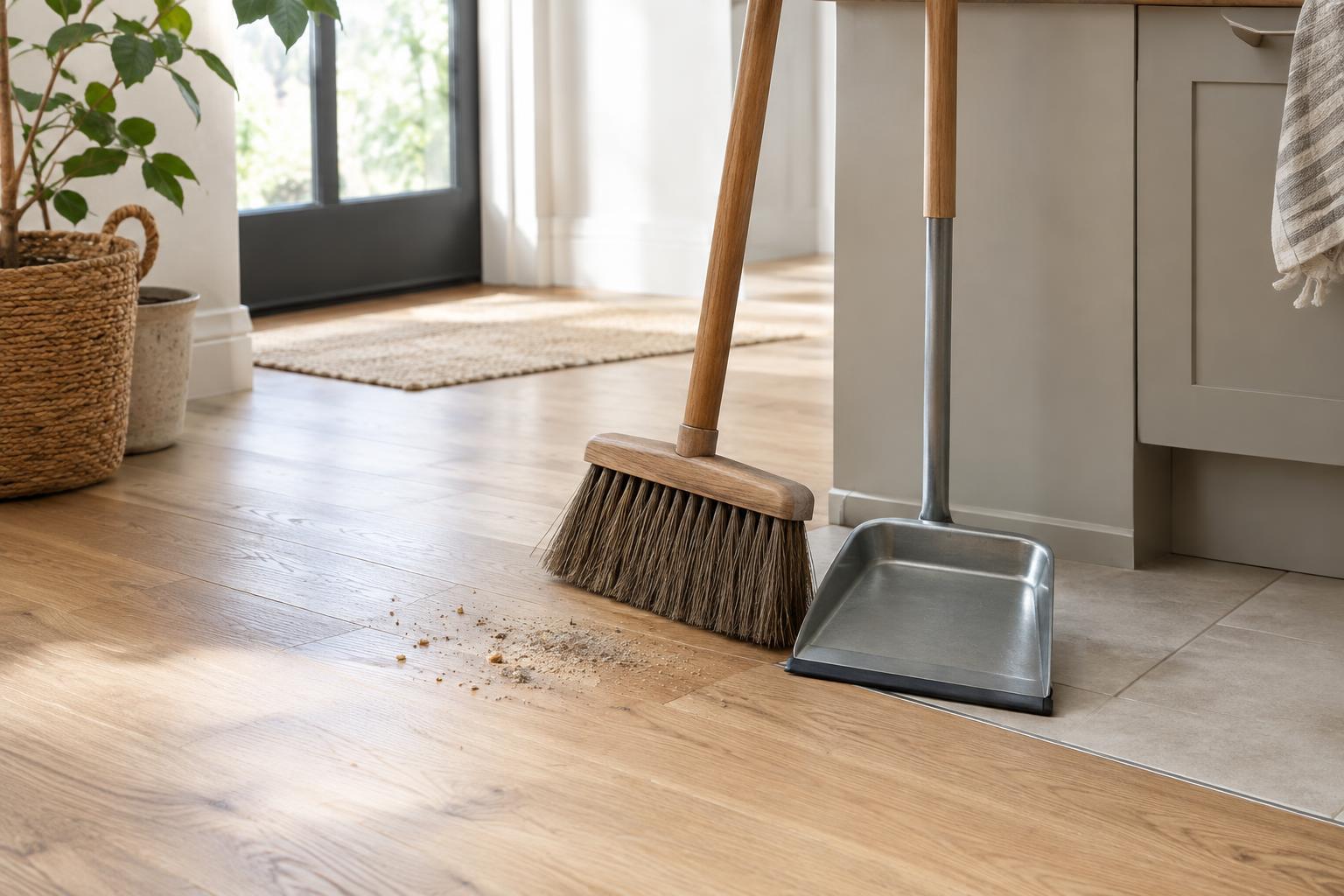
The front edge of a dustpan matters as much as the broom. A thin, flexible lip that rests flat against the floor helps reduce the familiar line of dust left behind. An edge that curls upward or does not touch evenly can turn a quick sweep into several attempts. The pan should also be wide enough for your broom head to push debris into it without spilling around the sides.
Consider capacity and handling, too. A shallow pan is easy to tuck away and may be plenty for daily crumbs; a deeper pan is handier for leaves, tracked-in grit, or bigger cleanup jobs. A comfortable grip makes it easier to keep the edge steady. If you dislike bending, a long-handled dustpan may be worth the storage space. Check that it stands securely when you set it down, since a pan that tips over creates more work.
Make the pair fit your routine and storage
Brooms and dustpans sold together are convenient, but a matching set is only useful if both pieces work well. Check whether the broom fits neatly inside the pan for storage and whether its bristles stay off the floor when hung or clipped in place. Bristles held against the floor for long periods can bend out of shape. A hanging loop, secure clip, or freestanding design can help keep a cleaning corner orderly.
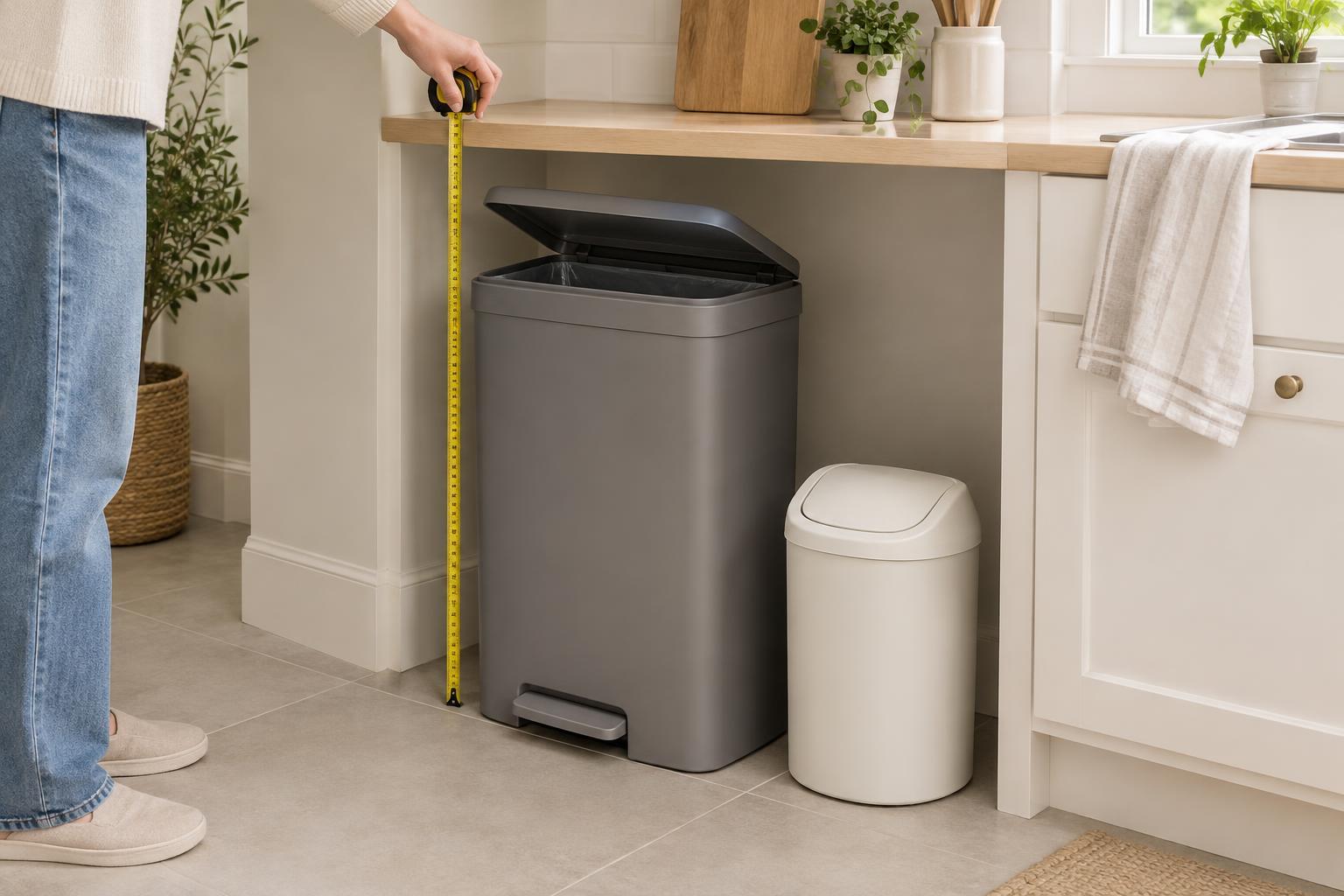
Handle length deserves a moment of attention. A full-length handle lets many people sweep upright, while a short hand broom is useful for a small kitchen spill or tabletop crumbs. If storage is limited, measure the cupboard or wall space before buying a long-handled set. A detachable handle may save room, but its connection should feel firm rather than wobbly. Choose a weight you can guide easily; a tool that feels cumbersome is less likely to be used for quick tidy-ups.
Check the details that make cleanup easier
Look for a dustpan shape that lets you empty debris without catching it in sharp inside corners. A small comb-like edge on the pan can help pull hair or lint from broom bristles, although you can also remove buildup by hand. For a broom used near an exterior door, consider how readily the bristles can be cleaned after collecting damp leaves or dirt. Materials that tolerate an occasional rinse can be practical, provided you let the broom dry thoroughly before storing it.
The best choice is often an unremarkable pair that makes an ordinary task easy: bristles suited to your floor, a pan that sits flush, handles that feel comfortable, and a storage arrangement you will actually use. When comparing options, picture a specific cleanup in your home rather than choosing by appearance alone. A few minutes spent checking those details can spare you the repeated sweep of dust that refuses to enter the pan.